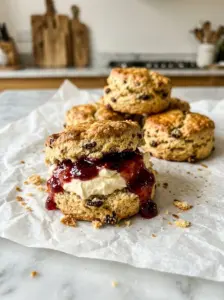

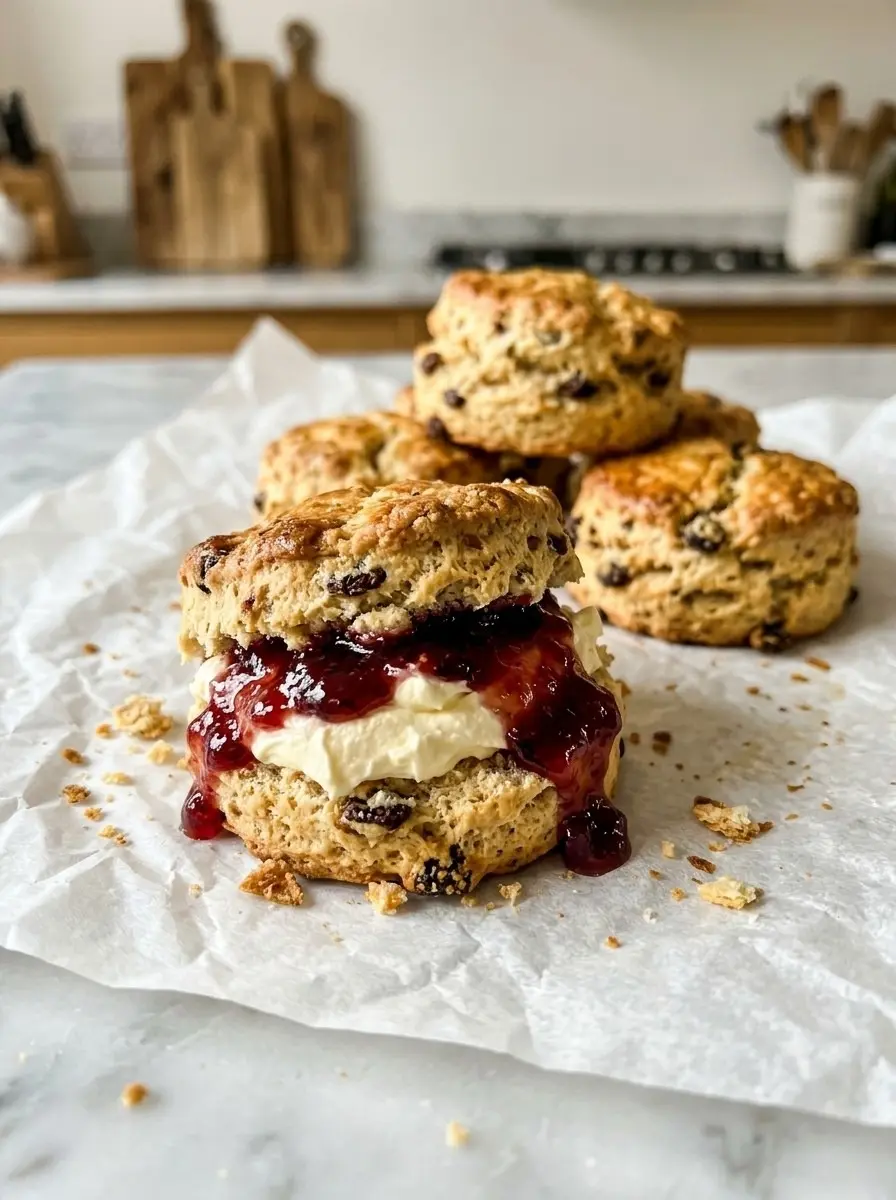
There is nothing quite like a warm, golden scone straight from the oven, split open and spread with creamy Irish butter and a spoonful of jam. These traditional Irish scones are simple, tender, and lightly sweet, with plump raisins and a buttery crumb that is soft inside with a golden, slightly crisp top. They are a classic of the Irish tea table and are on every bakery and farmhouse kitchen counter across the country.
Irish scones are a little different from the tall, flaky British-style scones you might know. They are typically a bit softer and more tender, closer to a cross between a biscuit and a cake, with a moist crumb that does not need clotted cream to taste rich. The dough comes together quickly, with cold butter rubbed into the flour, and bakes in a hot oven for only about 15 minutes.
This recipe uses a handful of everyday ingredients and takes less than 40 minutes from start to finish, so you can have fresh scones on the table for breakfast, afternoon tea, or a lazy weekend brunch. They are best the day they are made, and they are especially wonderful still warm.
Why You’ll Love This Recipe
- Soft, tender, buttery scones with a golden, egg-washed top
- Made from simple pantry ingredients
- Ready in under 40 minutes, with no chilling or rising
- Lightly sweet with juicy raisins in every bite
- Perfect with butter, jam, and a pot of tea
- No special equipment, just a bowl and a round cutter
- Easy to adapt with currants, sultanas, or plain dough
They are also a great beginner baking project, since the method is quick and forgiving.
What Do Traditional Irish Scones Taste Like?
Traditional Irish scones taste buttery, mildly sweet, and comforting. The crumb is soft and tender, slightly cakey, and just crumbly enough to hold butter and jam. The raisins add little bursts of sweet fruit, and the egg-washed top bakes into a glossy, golden crust with a gentle crunch. They are less sweet than a cake, which makes them perfect for pairing with jam and a hot cup of tea.
Recipe Overview
- Prep time: About 20 minutes
- Bake time: About 14 to 17 minutes
- Yield: 6 large scones
- Difficulty: Easy
- Method: Rubbed-in butter scone dough baked in a hot oven
Ingredients
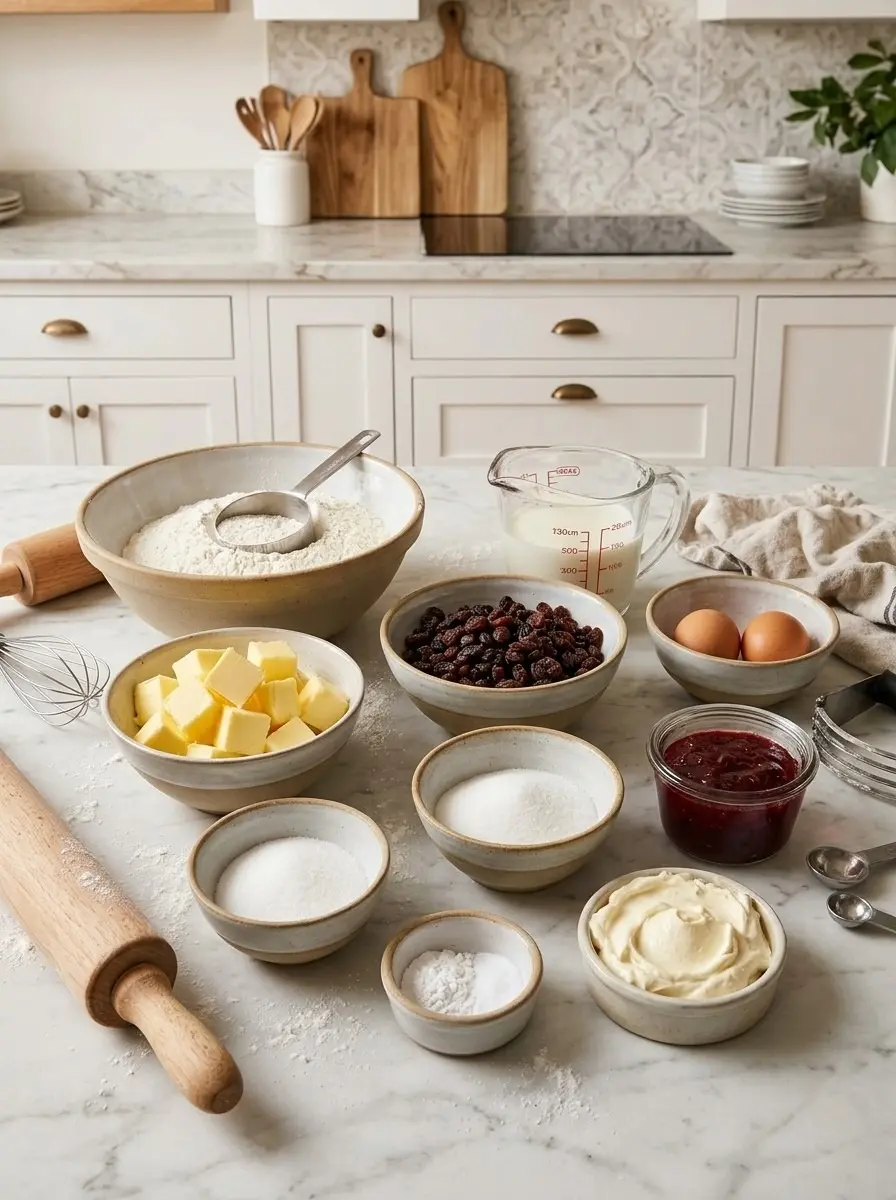
- 1 3/4 cups (about 8 ounces / 225 g) all-purpose flour, plus more for dusting
- 1/4 cup (50 g) granulated sugar
- 2 teaspoons baking powder
- 1/2 teaspoon salt
- 4 tablespoons (57 g) cold butter, cut into small pieces
- 1/3 cup (50 g) raisins
- 1/2 cup (120 ml) whole milk
- 2 large eggs (1 for the dough, 1 beaten for brushing)
- Irish butter and jam, for serving
Ingredient Notes
Flour: Plain all-purpose flour works well. In Ireland, scones are often made with plain flour or a soft flour, which gives a tender crumb. Measure by weight, or spoon and level the cups, so the dough is not too dry.
Butter: It must be cold. Cold butter creates small pockets of fat that make the scones tender and slightly flaky. Irish butter, with its higher butterfat and rich flavor, is traditional if you can find it.
Baking powder: It makes the scones rise. Check that yours is fresh, since old baking powder gives flat scones.
Milk: Whole milk gives the best flavor and tenderness. The dough should be soft and moist but not sticky.
Eggs: One goes into the dough for richness, and the second is beaten and brushed on top for a golden shine.
Raisins: They are traditional, but you can use sultanas or currants. If they are very dry, soak them in warm water for 10 minutes, drain, and pat dry.
Kitchen Tools You’ll Need
- Large mixing bowl
- Whisk and fork
- Baking sheet
- Parchment paper or butter for greasing
- 3-inch (7.5 cm) round cutter
- Pastry brush
- Wire cooling rack
- Rolling pin, optional
Substitutions and Variations
- Plain scones: Leave out the raisins for a classic plain scone to serve with jam and cream.
- Currants or sultanas: Use them in place of raisins.
- Buttermilk: Replace the milk with buttermilk for a slightly tangier, more tender scone. This has not been tested here with this exact recipe.
- Lemon or orange zest: Add a teaspoon of zest to the dry ingredients for a citrus note.
- Sugar topping: Sprinkle a little coarse sugar over the egg wash for sparkle.
- Cranberries: Use dried cranberries for a tarter fruit.
- Mini scones: Cut smaller rounds and shorten the baking time, starting to check at about 10 minutes.
How to Make Traditional Irish Scones
The method is quick and simple. You rub cold butter into the dry ingredients, stir in the raisins, add the milk and egg, pat the soft dough to a thick round, cut out scones, and bake in a hot oven. The secret to tender scones is to handle the dough as little as possible.
Step-by-Step Instructions
- Heat the oven. Preheat the oven to 425°F (220°C). Lightly butter a baking sheet or line it with parchment paper.
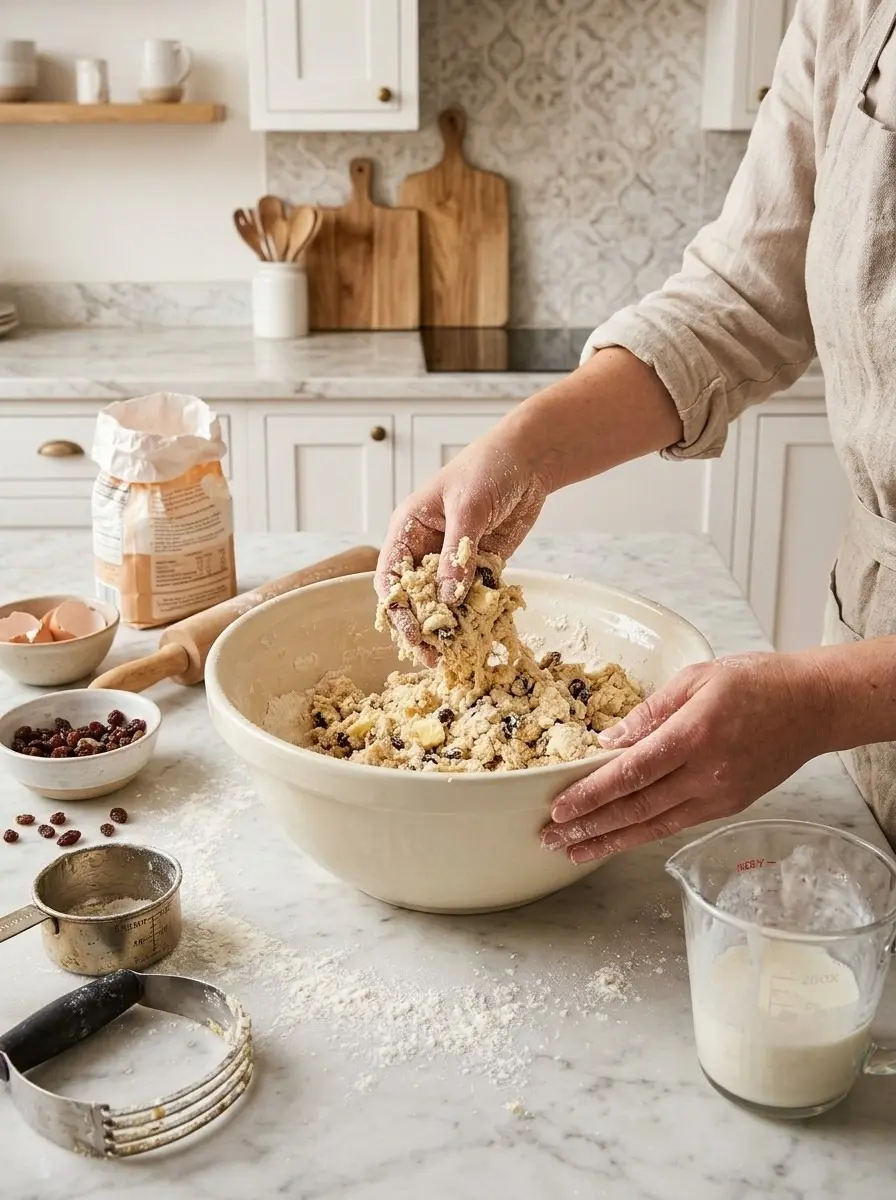
- Rub in the butter. In a large bowl, whisk the flour, sugar, baking powder, and salt. Add the cold butter and rub it in with your fingertips until the mixture looks like coarse crumbs.
- Add the raisins. Stir in the raisins.
- Mix the dough. Whisk the milk with 1 of the eggs. Make a well in the center of the dry ingredients, pour in the milk mixture, and stir just until a soft, moist dough forms.
- Pat out the dough. Turn the dough onto a lightly floured surface and knead gently once or twice. Pat it out to about 1 1/2 inches (4 cm) thick.
- Cut. Cut into rounds with a floured 3-inch (7.5 cm) cutter, pressing straight down without twisting, and place them on the baking sheet. Gather and gently re-cut the scraps.
- Brush. Brush the tops with the remaining beaten egg.
- Bake. Bake for 14 to 17 minutes, until the scones are risen and golden brown.
- Serve. Cool on a wire rack for a few minutes and serve warm with Irish butter and jam.
Tips for Success
- Keep the butter cold, and rub it in quickly with your fingertips so it does not melt.
- Mix the dough only until it comes together. Overmixing makes tough scones.
- Pat the dough thick, about 1 1/2 inches, so the scones rise tall.
- Press the cutter straight down and lift straight up. Twisting seals the edges and keeps them from rising evenly.
- Do not let egg wash drip down the sides, which can glue the scones to the pan.
- Use a hot oven so the scones rise quickly.
- Place the scones close together on the baking sheet for taller sides, or farther apart for crispier edges.
- Serve them fresh, since scones are at their best on the day they are baked.
How to Know It’s Done
The scones are done when they are risen, deep golden on top, and lightly browned on the bottom. They should feel firm and sound hollow when you tap the bottom. If they look pale on top after 15 minutes, give them another minute or two, watching closely so they do not overbrown.
What to Serve With Traditional Irish Scones
These scones are wonderful with:
- Irish butter and strawberry or raspberry jam
- Clotted cream or softly whipped cream
- A pot of hot tea or a cup of coffee
- Fresh berries on the side
- Lemon curd for a tangy topping
For an afternoon tea spread, add a slice of Never Fail Pound Cake and a savory option such as Savory Cheddar & Herb Cottage Cheese Scones.
Storage Instructions
Store the cooled scones in an airtight container at room temperature for up to 2 days. They are best fresh, so reheat them in a 300°F oven for 5 to 8 minutes before serving to bring back their soft, warm texture.
Freezing Instructions
Freeze baked, cooled scones in a freezer bag for up to 2 months. Thaw at room temperature and reheat in a warm oven. You can also freeze the unbaked, cut scones on a tray, then transfer them to a bag and bake from frozen, adding a few minutes. Freezing has not been tested for this exact recipe.
Common Mistakes
- Warm butter. It melts into the flour and makes dense, greasy scones.
- Overmixing. It develops gluten and makes tough scones.
- Rolling too thin. Thin dough makes flat, dry scones. Pat to 1 1/2 inches.
- Twisting the cutter. It seals the edges and stops the scones from rising evenly.
- A cool oven. The scones spread and turn dense. Make sure the oven is fully preheated.
- Old baking powder. The scones will not rise properly.
- Overbaking. The scones turn dry. Take them out when golden.
Frequently Asked Questions
What makes Irish scones different from other scones?
Irish scones are usually softer and more tender, closer to a biscuit-cake hybrid, and are often made with raisins. They are not as tall and flaky as some British scones.
Should I use buttermilk?
Some Irish recipes use buttermilk and baking soda. This recipe uses milk and baking powder, as in the Kerrygold version it is adapted from.
Why are my scones flat?
The dough may have been too wet or rolled too thin, the baking powder may be old, or the oven may not have been hot enough.
Can I make the dough ahead?
It is best to bake the scones right away, since baking powder starts to work as soon as it is wet. You can freeze the cut, unbaked scones and bake from frozen.
Can I leave out the raisins?
Yes. Plain scones are also traditional, and are delicious with jam and cream.
How do I get a shiny, golden top?
Brush the tops with beaten egg or milk before baking. Be careful not to let it drip down the sides.
Can I use self-rising flour?
Self-rising flour is used in many Irish and British scone recipes. You would leave out the baking powder and salt, but this version has not been tested here.
How many scones does this make?
About 6 large scones with a 3-inch cutter. A smaller cutter makes more.
Recipe Background
Scones have long been part of the tea tables of Ireland, Scotland, and England, and the Irish scone has its own character: tender, lightly sweet, and often studded with raisins or sultanas. They are traditionally served warm with butter, jam, and a pot of tea, and are a fixture in Irish homes, cafes, and hotels. Irish butter, made from the milk of grass-fed cows, is famous for its rich flavor and is the traditional partner for scones. This recipe is adapted from the Irish Scones recipe published by Kerrygold.
Conclusion
These traditional Irish scones are easy, buttery, and perfect with a cup of tea. With a few simple ingredients and about 35 minutes, you can bake a batch of golden raisin scones that taste like they came from an Irish farmhouse kitchen. Serve them warm with butter and jam, and share them with someone you love. If you try them, leave a comment and tell me your favorite topping.
More Delicious Recipes You’ll Love
- Perfectly Fluffy Raisin Scones
- Fluffy & Irresistible Scones with Oil
- Irresistibly Delicious Date and Walnut Scones
- Irresistible Coconut Scones
- Traditional Scottish Clootie Dumpling
Follow Poulef on Pinterest
Loved this recipe? Save it for later and follow @PoulefRecipe on Pinterest for more cozy, comforting bakes: https://www.pinterest.com/poulefrecipe/
Nutritional Information
Nutrition is an approximate estimate per scone (6 scones, without butter and jam), calculated from standard ingredient values. Actual numbers will vary with the brands you use.
| Nutrient | Amount per Serving |
|---|---|
| Calories | 294 |
| Carbohydrates | 45g |
| Protein | 6g |
| Fat | 10g |
| Saturated Fat | 6g |
| Cholesterol | 69mg |
| Sodium | 329mg |
| Fiber | 1g |
| Sugar | 14g |
Traditional Irish Scones
- Total Time: 37 minutes
- Yield: 6 scones 1x
Description
Tender, lightly sweet Irish scones made with cold butter, milk, an egg, and raisins, brushed with egg wash and baked until golden, ideal with butter and jam.
Ingredients
1 3/4 cups (about 8 ounces / 225 g) all-purpose flour, plus more for dusting
1/4 cup (50 g) granulated sugar
2 teaspoons baking powder
1/2 teaspoon salt
4 tablespoons (57 g) cold butter, cut into small pieces
1/3 cup (50 g) raisins
1/2 cup (120 ml) whole milk
2 large eggs (1 for the dough, 1 beaten for brushing)
Irish butter and jam, for serving
Instructions
1. Preheat the oven to 425°F (220°C). Lightly butter a baking sheet or line it with parchment paper.
2. In a large bowl, whisk the flour, sugar, baking powder, and salt. Add the cold butter and rub it in with your fingertips until the mixture looks like coarse crumbs.
3. Stir in the raisins.
4. Whisk the milk with 1 of the eggs. Make a well in the center of the dry ingredients, pour in the milk mixture, and stir just until a soft, moist dough forms.
5. Turn the dough onto a lightly floured surface and knead gently once or twice. Pat it out to about 1 1/2 inches (4 cm) thick.
6. Cut into rounds with a floured 3-inch (7.5 cm) cutter, pressing straight down without twisting, and place them on the baking sheet. Gather and gently re-cut the scraps.
7. Brush the tops with the remaining beaten egg.
8. Bake for 14 to 17 minutes, until the scones are risen and golden brown.
9. Cool on a wire rack for a few minutes and serve warm with Irish butter and jam.
Notes
Adapted from the Irish Scones recipe published by Kerrygold USA (1 3/4 cups flour, 1/4 cup sugar, 2 teaspoons baking powder, 1/2 teaspoon salt, 4 tablespoons cold butter, 1/3 cup raisins, 1/2 cup whole milk, an egg, and an extra beaten egg for brushing; patted to 1 1/2 inches thick and baked at 425°F), with the 14 to 17 minute bake time from a reprint of the same recipe and the 3-inch round cutter from another traditional recipe. The yield of 6 scones and the method order are estimates, and the recipe has not been tested.
Do not overwork the dough, or the scones will be tough.
Press the cutter straight down without twisting so the scones rise evenly.
Nutrition is an approximate estimate per scone (6 scones), without butter and jam.
- Prep Time: 20 minutes
- Cook Time: 17 minutes
- Category: Breakfast
- Method: Baking
- Cuisine: Irish
Nutrition
- Serving Size: 1 scone
- Calories: 294
- Sugar: 14g
- Sodium: 329mg
- Fat: 10g
- Saturated Fat: 6g
- Carbohydrates: 45g
- Fiber: 1g
- Protein: 6g
- Cholesterol: 69mg
Table of Contents

Gianna Poulef
I’m Gianna Poulef from Poulef Recipes. I love sharing perfected dishes from my kitchen. I’m sure they’ll earn a spot in your heart. Let’s savor this journey together!.
Let’s be friends!