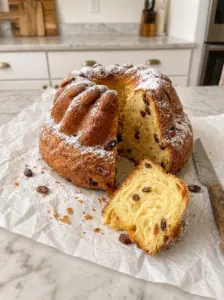

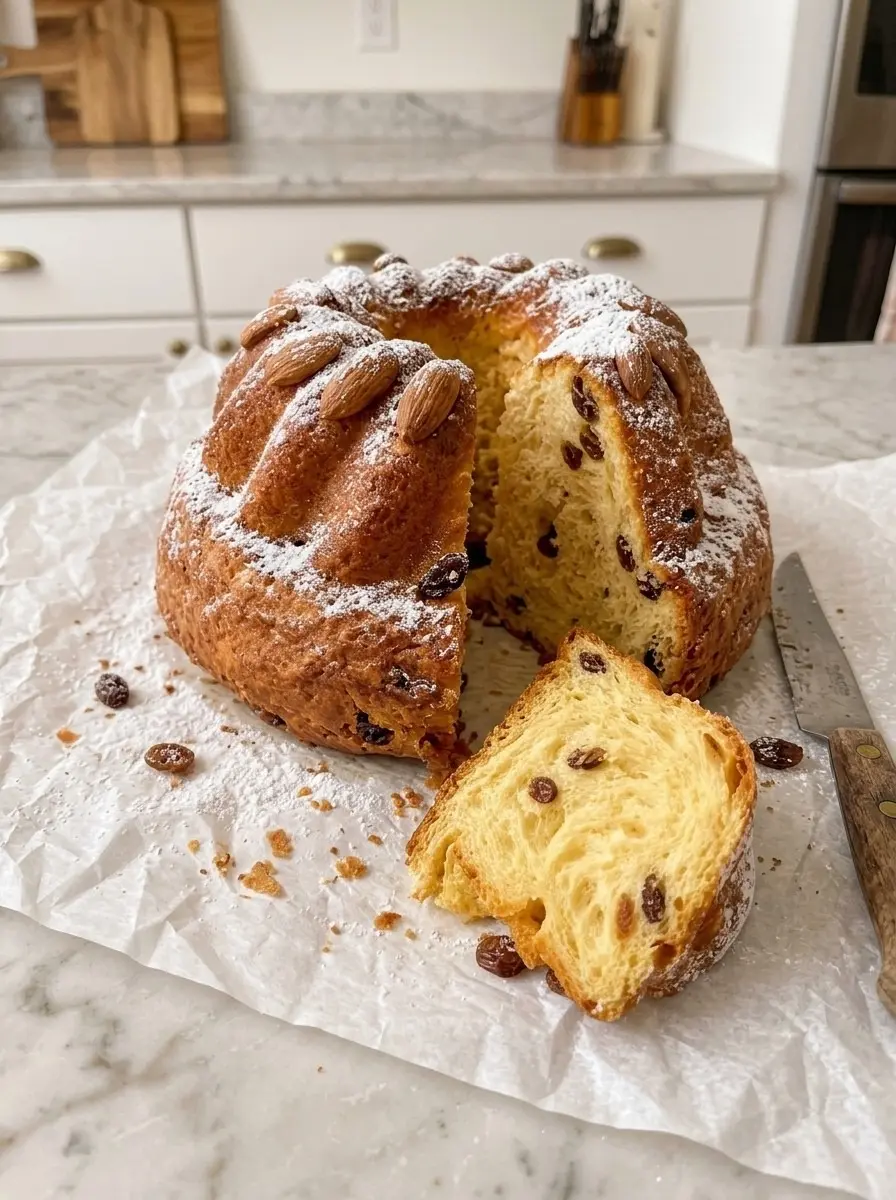
Alsatian kugelhopf is one of France’s great yeast cakes, a soft, buttery, brioche-style bread baked in a tall fluted mold and crowned with whole almonds. Its golden crumb is rich with eggs and butter and dotted with plump raisins, and it is traditionally dusted with powdered sugar. In Alsace it is served for breakfast, at Sunday brunch, with afternoon coffee, and at celebrations.
Kugelhopf, also spelled kouglof or gugelhupf, sits somewhere between a bread and a cake. It is made from an enriched dough like brioche, kneaded until smooth and elastic, then raised twice before baking in its distinctive turban-shaped mold. The result is tender and fragrant, with a thin, golden crust and a crumb that tears into soft, buttery threads.
The recipe takes time, mostly in waiting for the dough to rise, but the hands-on work is simple. Make the dough in the afternoon, bake it in the evening, or prepare it ahead and bake the next morning for a showpiece breakfast.
Why You’ll Love This Recipe
- A traditional French brioche-style cake with real Alsatian character
- Soft, buttery, tender crumb with raisins and toasted almonds
- Beautiful fluted shape that makes a stunning centerpiece
- Perfect for breakfast, brunch, tea, or coffee
- Made from simple ingredients, with no special equipment except a mold
- Keeps well and is delicious toasted the next day
- A wonderful bake for the holidays and special occasions
It is also a great way to practice working with enriched yeast dough.
What Does Kugelhopf Taste Like?
Kugelhopf tastes like a lightly sweet brioche with fruit and nuts. The crumb is soft, rich, and buttery, with a gentle sweetness and the aroma of yeast and vanilla-like butter. Plump raisins add little bursts of sweetness, and the toasted almonds on the crust add a nutty crunch. It is less sweet than a typical cake, which makes it perfect with coffee, tea, or a glass of sweet white wine.
Recipe Overview
- Prep time: About 45 minutes of active time
- Rising time: About 3 hours in total
- Bake time: About 50 to 60 minutes
- Yield: 1 kugelhopf, about 12 slices
- Difficulty: Moderate
- Method: Enriched yeast dough baked in a fluted mold
Ingredients
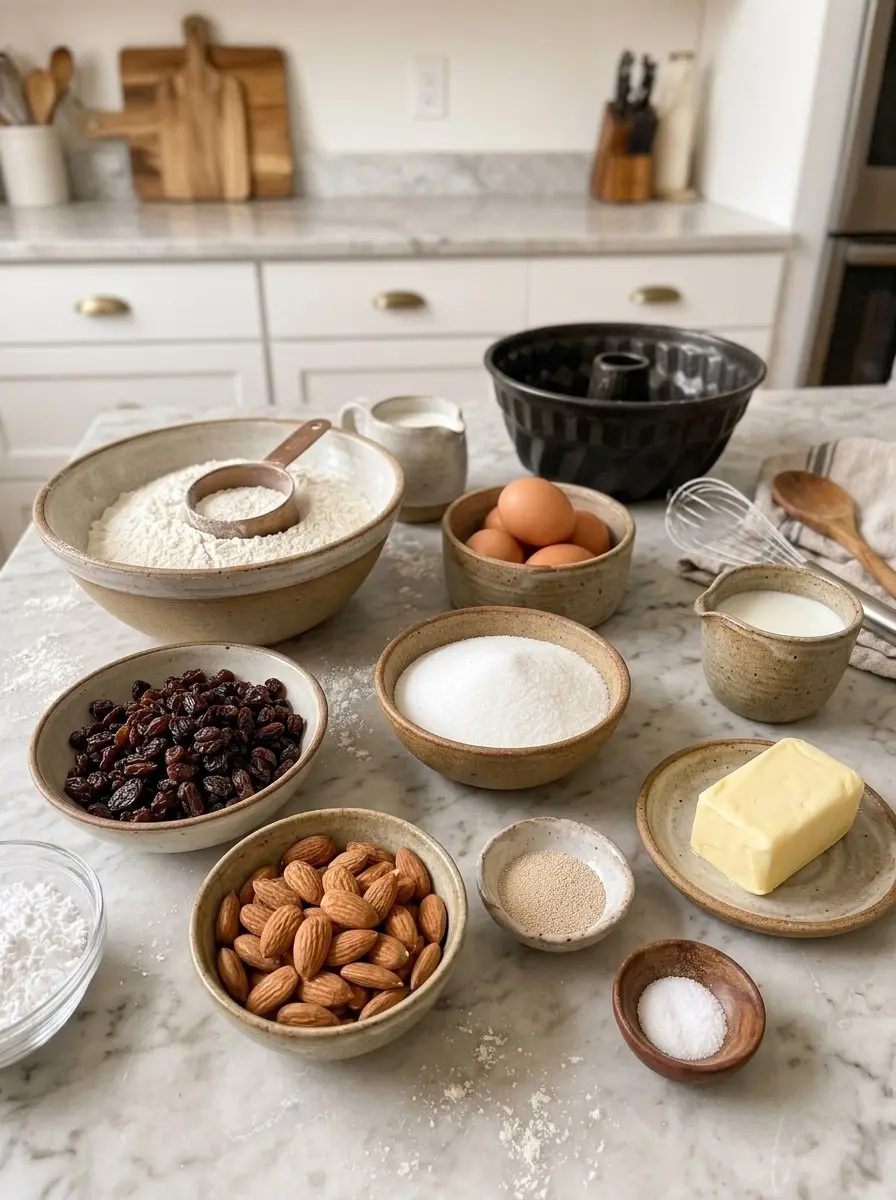
- 500 g (about 4 cups) all-purpose flour
- 250 ml (1 cup) lukewarm milk
- 25 g fresh yeast (or about 7 g / 2 1/4 teaspoons instant dry yeast)
- 75 g (about 1/3 cup plus 1 tablespoon) granulated sugar
- 1 teaspoon salt
- 3 large eggs
- 250 g (about 1 cup plus 1 tablespoon) soft unsalted butter, plus more for the mold
- 80 g (about 1/2 cup) raisins
- 50 g (about 1/3 cup) whole blanched almonds
- Powdered sugar, for dusting
Ingredient Notes
Flour: Plain all-purpose flour works, and a slightly higher-protein flour gives a chewier, more bread-like crumb. Measure by weight for best results, since the dough is delicate.
Yeast: Fresh yeast is traditional. If you cannot find it, use about 7 g of instant dry yeast, which can be mixed directly into the flour. Active dry yeast should be dissolved in the warm milk first.
Milk: It should be lukewarm, about body temperature. Hot milk can kill the yeast, and cold milk will slow it down.
Butter: A kugelhopf is a butter-rich dough. Use good-quality unsalted butter at a soft, spreadable room temperature so it blends smoothly into the dough.
Eggs: They add richness, color, and structure. Use room-temperature eggs so they blend easily.
Raisins: Soaking them in warm water or rum makes them plump and juicy and keeps them from drawing moisture out of the dough.
Almonds: Whole blanched almonds pressed into the buttered mold make a pretty pattern on the finished cake. Traditionally one almond sits in each groove of the mold.
Kitchen Tools You’ll Need
- Kugelhopf mold or 8 to 10 cup fluted bundt pan
- Stand mixer with dough hook, or strong arms and a large bowl
- Kitchen scale
- Large bowl for rising
- Pastry brush for buttering the mold
- Wire cooling rack
- Skewer for testing doneness
- Fine sieve for powdered sugar
Substitutions and Variations
- Rum-soaked raisins: Soak the raisins in rum instead of water for a boozy, traditional flavor.
- Mixed fruit: Use golden raisins, currants, or chopped candied orange peel.
- Lemon zest: Add the zest of a lemon to the dough for brightness.
- Vanilla: Add a teaspoon of vanilla extract or the seeds of a vanilla bean.
- Savory kugelhopf: Replace the raisins with diced ham or bacon and walnuts, and omit the sugar topping, as in the savory Alsatian version. This has not been tested here.
- Instant yeast: Use 7 g of instant dry yeast in place of fresh yeast.
- Mini kugelhopfs: Bake in small fluted molds for a shorter time, starting to check at about 25 minutes. This has not been tested here.
How to Make Alsatian Kugelhopf
The process is similar to making brioche. You build a smooth, elastic dough, add the butter gradually, fold in the raisins, and let the dough rise slowly. After shaping it into the mold, a second rise gives it its light, airy texture. Baking in a cold oven helps it expand gently.
Step-by-Step Instructions
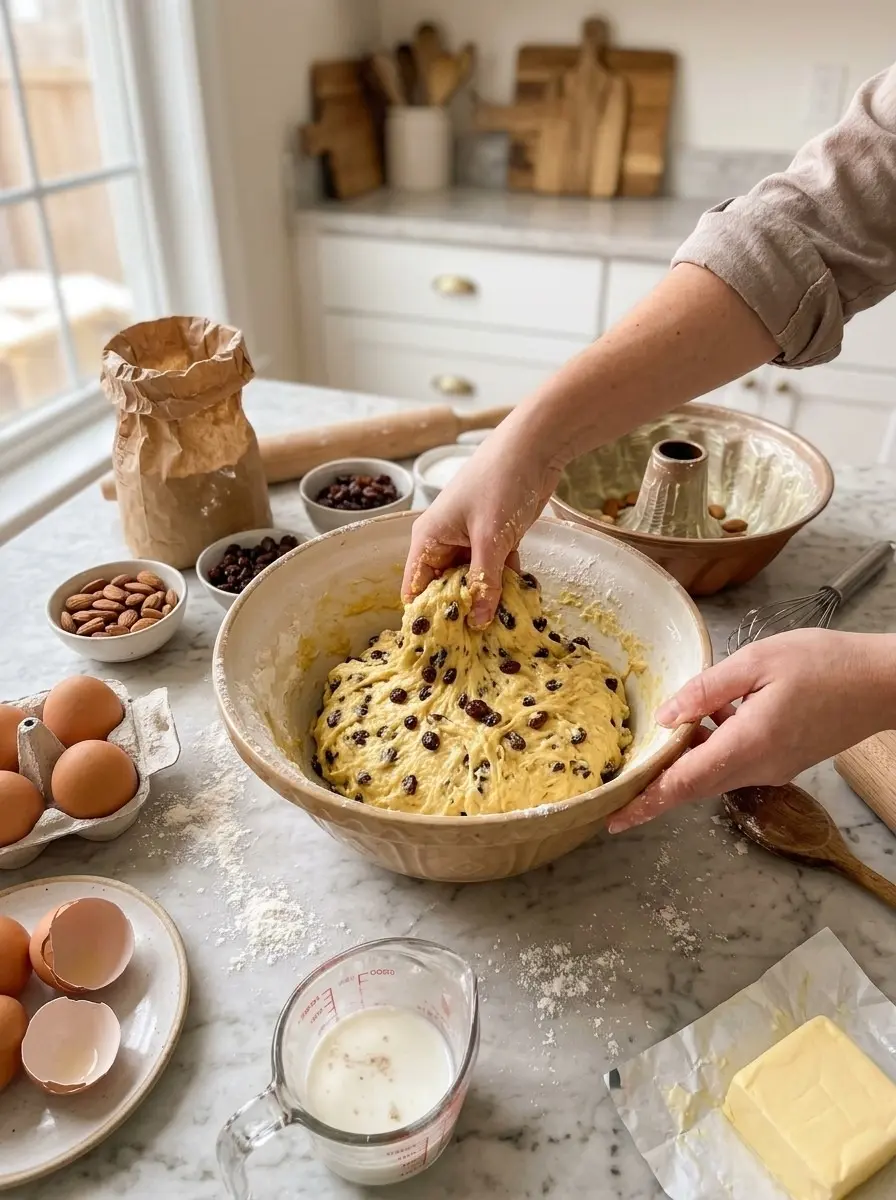
- Soak the raisins. Soak the raisins in warm water (or rum) for about 15 minutes, then drain well and pat dry.
- Activate the yeast. Dissolve the yeast in the lukewarm milk.
- Start the dough. In a large bowl or stand mixer, mix the flour, sugar, and salt. Add the yeast milk and the eggs and knead for about 5 minutes until a dough forms.
- Add the butter. Add the soft butter a little at a time, kneading after each addition, and continue kneading for about 10 to 15 minutes, until the dough is smooth and elastic and pulls away from the sides of the bowl.
- Add the raisins and rise. Fold in the drained raisins. Cover and let the dough rise in a warm place until doubled, about 1 1/2 to 2 hours.
- Prepare the mold. Generously butter a 2-liter (8 to 10 cup) kugelhopf or fluted bundt mold and press the whole almonds into the grooves.
- Shape and rise again. Deflate the dough gently, shape it into a ball, press a hole through the center, and place it in the mold. Cover and let it rise again until it nearly reaches the top of the mold, about 45 to 60 minutes.
- Bake. Place the mold in a cold oven, set to 350°F (180°C), and bake for 50 to 60 minutes, until deep golden and a skewer comes out clean. Cover loosely with foil if it browns too quickly.
- Cool and finish. Cool in the mold for 10 minutes, then turn out onto a wire rack and cool completely. Dust with powdered sugar before serving.
Tips for Success
- The dough is soft and sticky, so resist the urge to add more flour. Keep kneading until it comes together.
- Add the butter slowly so it fully absorbs before the next piece.
- Make sure the butter is soft but not melted, or the dough will turn greasy.
- Let the dough rise fully, since the rise time depends on how warm your kitchen is.
- Butter the mold generously, including every groove, so the cake releases cleanly.
- Do not overfill the mold. The dough should fill about half to two-thirds before the second rise.
- Start in a cold oven so the cake rises gently before the crust sets.
- Let the cake cool completely before slicing for the best texture.
How to Know It’s Done
The kugelhopf is done when it is deep golden brown, the crust sounds hollow when tapped on the bottom, and a skewer inserted into the thickest part comes out clean. It should be well risen and have pulled slightly away from the edges of the mold. If the top browns too quickly, cover loosely with foil for the last part of baking.
What to Serve With Kugelhopf
Kugelhopf is lovely on its own and also pairs well with:
- Strong coffee, café au lait, or hot tea
- Soft butter and jam
- A glass of Alsatian Riesling or sweet white wine
- Fresh fruit such as plums, apricots, or berries
- Whipped cream or crème fraîche
Leftover slices are wonderful toasted, or used in a Cinnamon Raisin Bread Pudding. For a simple everyday loaf alongside it, try Easy Homemade White Bread.
Storage Instructions
Wrap the cooled kugelhopf tightly or store it in an airtight container at room temperature for up to 3 days. It is best on the first day, but it keeps well and is excellent toasted. Dust with powdered sugar just before serving.
Freezing Instructions
Wrap the completely cooled cake, whole or sliced, tightly in plastic wrap and then foil, and freeze for up to 3 months. Thaw at room temperature for a few hours, or toast slices straight from the freezer. Freezing has not been tested for this exact recipe.
Common Mistakes
- Adding too much flour. It makes the cake dry and dense. The dough should be soft and sticky.
- Adding the butter too fast. The dough can separate and turn greasy.
- Using hot milk. It kills the yeast and the dough will not rise.
- Not letting it rise fully. The cake will be heavy and tight-crumbed.
- Skipping the mold prep. The cake sticks in the grooves. Butter generously.
- Overbaking. The crumb dries out. Cover with foil if the crust darkens.
- Unmolding too soon or too late. Cool for about 10 minutes, since a hot cake can tear and a cold cake can stick.
Frequently Asked Questions
Is kugelhopf the same as brioche?
They are similar. Both are rich, buttery, egg-enriched yeast doughs. Kugelhopf is typically baked in a special fluted mold and includes raisins and almonds, and its dough is usually a little less buttery than a classic brioche.
Can I make it without a kugelhopf mold?
You can use a standard fluted bundt pan. A loaf pan also works, though the shape and baking time will differ, and this has not been tested here.
Can I make the dough ahead?
Yes. After the first rise, you can refrigerate the dough overnight, then shape it, let it rise again, and bake the next day. This has not been tested for this exact recipe.
Can I use instant yeast?
Yes. Use about 7 g (2 1/4 teaspoons) of instant dry yeast and mix it into the flour.
Why is my dough so sticky?
A kugelhopf dough is naturally soft and sticky because of the butter and eggs. Keep kneading until it becomes smooth and pulls away from the bowl.
Why didn’t my kugelhopf rise?
The yeast may be old, the milk too hot or cold, or the kitchen too cool. Make sure the yeast is fresh and give the dough more time.
Can I leave out the raisins?
Yes. It will still be a delicious buttery brioche-style cake.
How do I keep it from drying out?
Do not overbake, wrap it well once cool, and eat it within a few days or toast older slices.
Recipe Background
Kugelhopf, also known as kouglof, gugelhupf, or kugelhupf, is a traditional yeast cake from Alsace in eastern France, and is also popular in Germany, Austria, and across Central Europe. It is baked in a special fluted ring mold with a central tube, which gives it its turban-like shape. In Alsace, it is a classic breakfast and brunch bread, traditionally made with raisins and almonds, and the molds themselves are often handmade ceramic. According to legend, it was brought to Alsace long ago, and it is still a symbol of Alsatian baking. This recipe is adapted from the Authentic Alsatian Kugelhopf on alsatian-cuisine.com.
Conclusion
Alsatian kugelhopf is a beautiful, buttery, brioche-style cake that turns a few simple ingredients into something special. The soft, raisin-studded crumb and the almond crown make it a perfect centerpiece for brunch or tea. Plan ahead for the rising time, bake it in the pretty fluted mold, and enjoy a taste of Alsace at home. If you try it, leave a comment and tell me how you served it.
More Delicious Recipes You’ll Love
- Heavenly Homemade Brioche Bread
- 2-Hour German Butterkuchen
- Old-Fashioned Raisin Cake
- Best Vanilla Raisin Loaf Cake
- Soft & Sweet Condensed Milk Bread
Follow Poulef on Pinterest
Loved this recipe? Save it for later and follow @PoulefRecipe on Pinterest for more cozy, comforting bakes: https://www.pinterest.com/poulefrecipe/
Nutritional Information
Nutrition is an approximate estimate per slice (12 slices), calculated from standard ingredient values. Actual numbers will vary with the brands you use.
| Nutrient | Amount per Serving |
|---|---|
| Calories | 407 |
| Carbohydrates | 47g |
| Protein | 8g |
| Fat | 21g |
| Saturated Fat | 11g |
| Cholesterol | 94mg |
| Sodium | 223mg |
| Fiber | 2g |
| Sugar | 13g |
Alsatian Kugelhopf (Traditional French Brioche Cake)
- Total Time: 1 hour 40 minutes
- Yield: 1 kugelhopf (12 slices) 1x
Description
A traditional Alsatian yeast cake rich with butter and eggs, studded with raisins, baked in a fluted kugelhopf mold with whole almonds in the grooves, and dusted with powdered sugar.
Ingredients
500 g (about 4 cups) all-purpose flour
250 ml (1 cup) lukewarm milk
25 g fresh yeast (or about 7 g / 2 1/4 teaspoons instant dry yeast)
75 g (about 1/3 cup plus 1 tablespoon) granulated sugar
1 teaspoon salt
3 large eggs
250 g (about 1 cup plus 1 tablespoon) soft unsalted butter, plus more for the mold
80 g (about 1/2 cup) raisins
50 g (about 1/3 cup) whole blanched almonds
Powdered sugar, for dusting
Instructions
1. Soak the raisins in warm water (or rum) for about 15 minutes, then drain well and pat dry.
2. Dissolve the yeast in the lukewarm milk.
3. In a large bowl or stand mixer, mix the flour, sugar, and salt. Add the yeast milk and the eggs and knead for about 5 minutes until a dough forms.
4. Add the soft butter a little at a time, kneading after each addition, and continue kneading for about 10 to 15 minutes, until the dough is smooth and elastic and pulls away from the sides of the bowl.
5. Fold in the drained raisins. Cover and let the dough rise in a warm place until doubled, about 1 1/2 to 2 hours.
6. Generously butter a 2-liter (8 to 10 cup) kugelhopf or fluted bundt mold and press the whole almonds into the grooves.
7. Deflate the dough gently, shape it into a ball, press a hole through the center, and place it in the mold. Cover and let it rise again until it nearly reaches the top of the mold, about 45 to 60 minutes.
8. Place the mold in a cold oven, set to 350°F (180°C), and bake for 50 to 60 minutes, until deep golden and a skewer comes out clean. Cover loosely with foil if it browns too quickly.
9. Cool in the mold for 10 minutes, then turn out onto a wire rack and cool completely. Dust with powdered sugar before serving.
Notes
Adapted from the Authentic Alsatian Kugelhopf on alsatian-cuisine.com (about 500 g flour, 250 ml milk, 250 g butter, 3 eggs, 75 g sugar, 80 g raisins, 50 g almonds, and 25 g fresh yeast), with the cold-oven 180°C bake of 50 to 60 minutes from French Moments and the almonds-in-the-mold and raisin-soaking steps common to Alsatian recipes. The salt, rise times, kneading times, mold size, and yield of 12 slices were not available in the source excerpts and are estimates, and the recipe has not been tested.
A traditional kugelhopf dough is soft and sticky, so keep kneading rather than adding extra flour.
Starting the cake in a cold oven helps it rise gently without browning too fast.
Nutrition is an approximate estimate per slice (12 slices).
- Prep Time: 45 minutes (plus about 3 hours rising)
- Cook Time: 55 minutes
- Category: Breakfast
- Method: Baking
- Cuisine: French (Alsatian)
Nutrition
- Serving Size: 1 slice
- Calories: 407
- Sugar: 13g
- Sodium: 223mg
- Fat: 21g
- Saturated Fat: 11g
- Carbohydrates: 47g
- Fiber: 2g
- Protein: 8g
- Cholesterol: 94mg
Table of Contents

Gianna Poulef
I’m Gianna Poulef from Poulef Recipes. I love sharing perfected dishes from my kitchen. I’m sure they’ll earn a spot in your heart. Let’s savor this journey together!.
Let’s be friends!