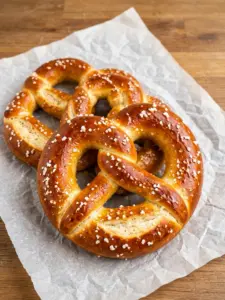

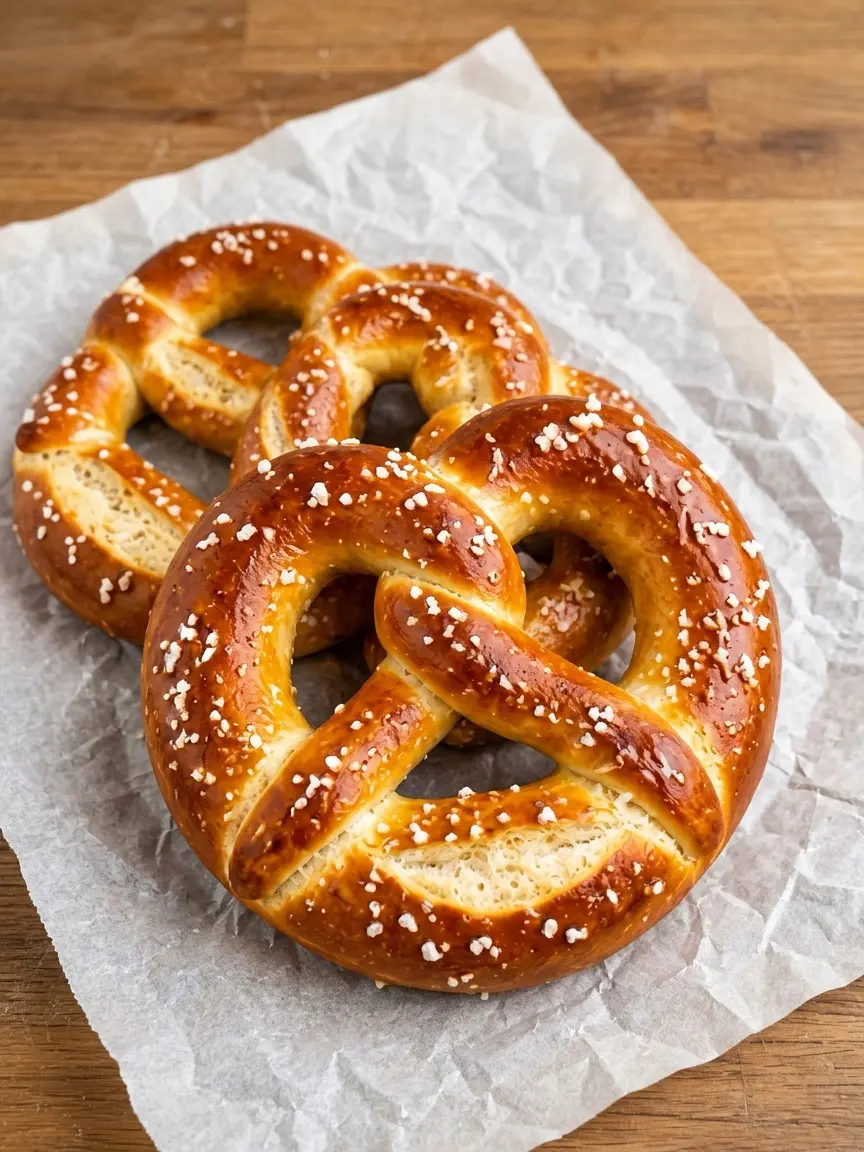
Traditional German brezels, known in Germany as Laugenbrezel, are soft, chewy pretzels with a deep mahogany crust, a tender inside and a scatter of coarse salt on top. They are shaped by hand from a simple yeast dough, brushed with a baking soda solution that browns the crust, slashed along the thick part and baked until dark and glossy. Serve them warm, with butter, and they are hard to resist.
This version follows a tested recipe closely. The dough is made from barley malt syrup (or molasses), yeast, warm water, butter, flour and a little salt, and it takes only about 6 minutes in a stand mixer or 8 minutes by hand. After a short rise, each pretzel is brushed with a hot baking soda wash and baked on a preheated stone or pan. The recipe makes two large pretzels, or 8 to 10 smaller ones if you prefer.
Why You’ll Love These German Brezels
- Real pretzel flavor and color. The baking soda wash gives the traditional brown crust and slightly tangy taste.
- Soft and chewy. A tender, bready inside under a thin, chewy crust.
- Simple ingredients. Flour, yeast, water, butter, salt and a little malt syrup or molasses.
- Short rise. The dough proofs for only 20 to 30 minutes after shaping.
- Flexible size. Make 2 large pretzels or 8 to 10 small ones with the same dough.
- Many ways to serve. With butter, mustard, honey mustard, cheese sauce, or even cinnamon sugar.
What Do Traditional German Brezels Taste Like?
A good brezel has a deep brown, slightly shiny crust with a gentle chew, a soft and slightly dense crumb, and a savory, malty flavor, with salt crystals that crunch on top. The baking soda wash contributes a distinctive pretzel taste that plain bread does not have. Warm from the oven with a little butter, they are especially good.
Ingredients
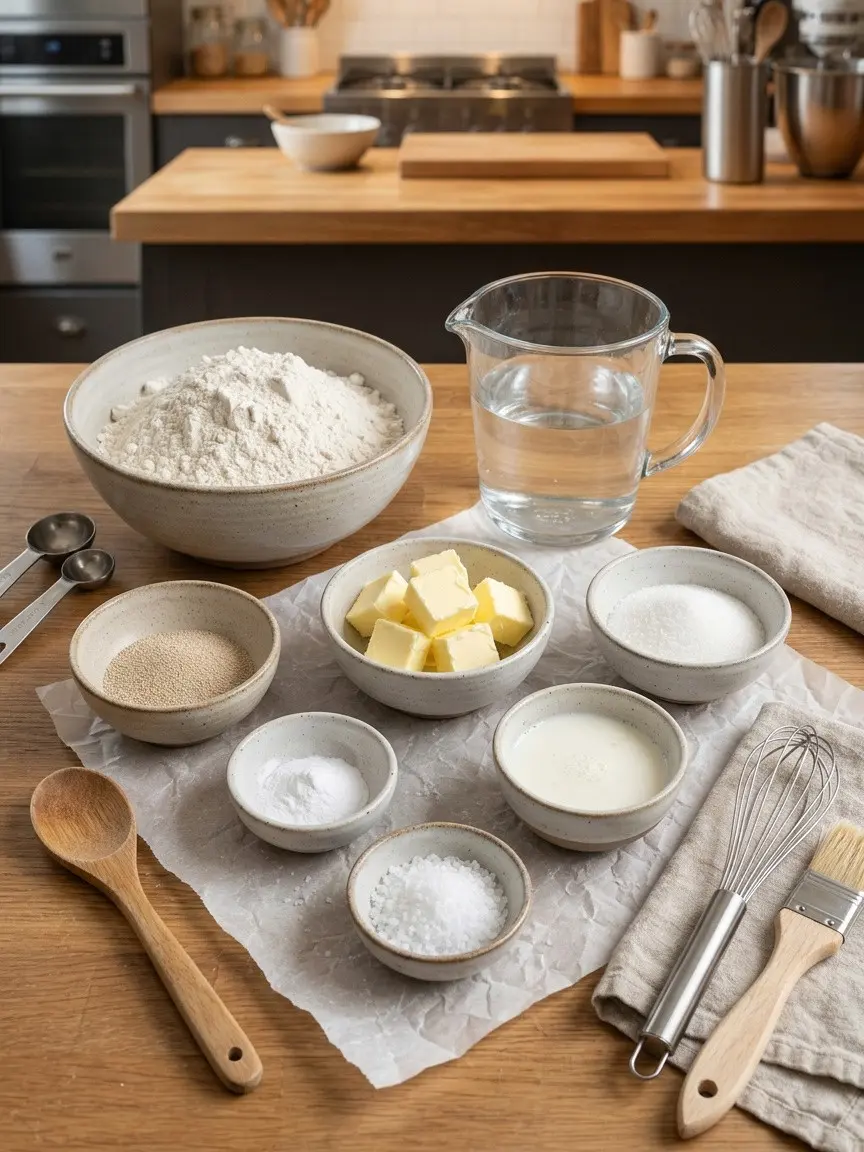
For the dough
- 1 1/2 tablespoons barley malt syrup, or substitute 2 1/2 to 3 teaspoons molasses
- 1 1/2 cups warm water
- 2 1/4 teaspoons active dry yeast (1 package, 1/4 ounce)
- 3 tablespoons butter, salted or unsalted, softened, plus more for serving
- 4 cups all-purpose flour (unbleached), plus more for dusting
- 1/4 teaspoon kosher salt
- Pretzel salt or coarse kosher salt, for sprinkling
For the pretzel wash
- 2 tablespoons baking soda
- 1 cup boiling water
Ingredient Notes
Barley malt syrup or molasses
Barley malt syrup feeds the yeast and adds a malty depth and color. If you cannot find it, the recipe says to use 2 1/2 to 3 teaspoons of molasses instead.
Active dry yeast
The recipe uses 2 1/4 teaspoons, which is one standard 1/4-ounce package. It is stirred into the warm water and syrup and left until foamy, about 10 minutes, which shows the yeast is alive.
Butter
Three tablespoons of softened butter go into the dough, and you can use salted or unsalted. More butter is for serving.
All-purpose flour
Four cups of unbleached all-purpose flour make the dough, plus extra for dusting your work surface.
Salt
A small amount of kosher salt goes into the dough. Coarse pretzel salt, or coarse kosher salt, is sprinkled on top before baking.
Baking soda wash
Two tablespoons of baking soda are dissolved in 1 cup of water that is simmered, and brushed over the shaped pretzels. The recipe stresses that this wash is what browns the pretzel, which is why you slash the dough after brushing.
Equipment
- A baking stone, or a high-quality sheet pan that will not warp at high heat
- A large bowl, or a stand mixer with a dough hook
- A work surface for kneading and rolling
- Parchment paper
- A 2-quart saucepan for the baking soda wash
- A pastry brush
- A sharp paring knife
- Damp paper towels or a tea towel
A Note About This Recipe
The recipe we were given lists ingredients, method, serving ideas, make-smaller instructions, storage, freezing and reheating tips, and nutrition for 1 serving. It does not give a total prep time, and the serving size for the nutrition is not defined. The prep and total times in the recipe card are our own estimates, apart from the stated rest, proof, cooling and baking times. It uses a baking soda wash, not lye, and we have kept it that way.
Step-by-Step Instructions
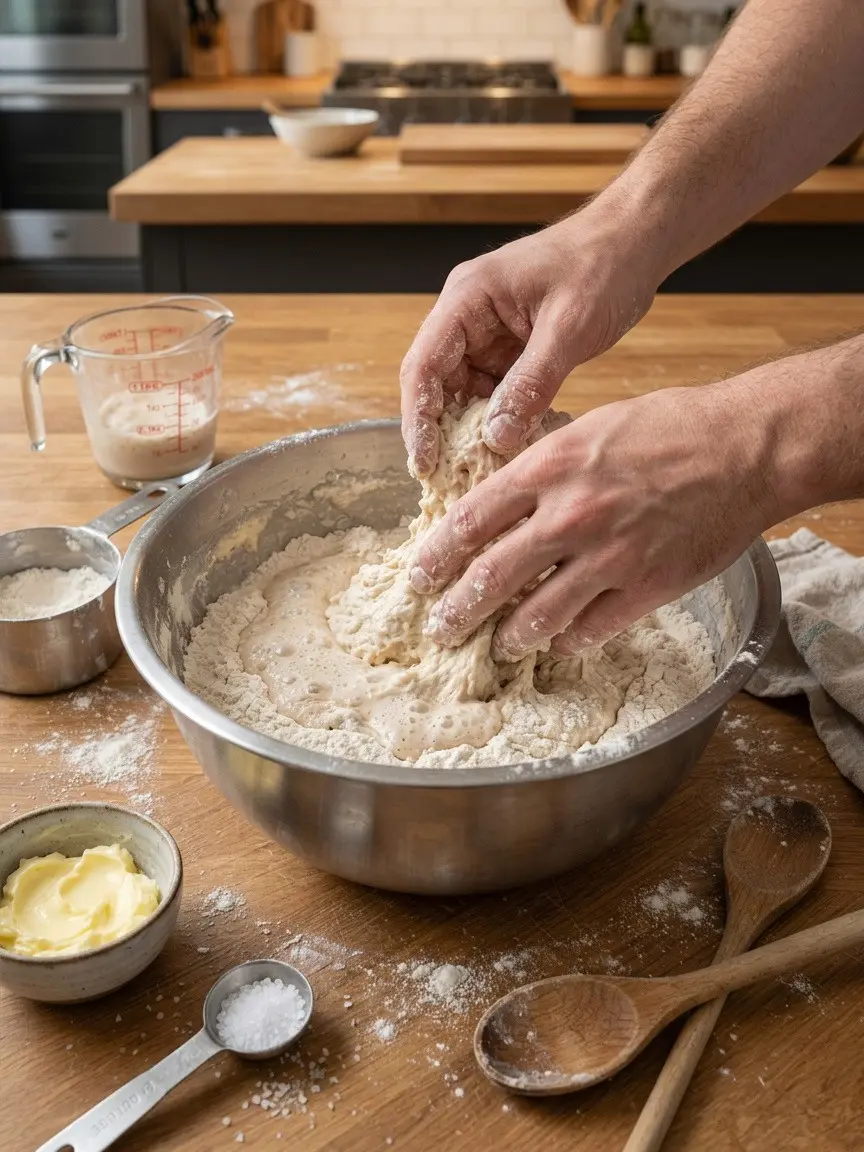
Prepare the oven and the dough
- Heat a baking stone on the middle rack of the oven to 450 to 500°F (230°C). If you have no baking stone, put a sheet pan in the oven instead, and use a high-quality pan that will not warp at high temperatures.
- In a large bowl, stir together the barley malt syrup (or molasses), yeast and 1 1/2 cups warm water. Let sit until foamy, about 10 minutes.
- Add the butter, flour and kosher salt to the yeast mixture and stir until a dough forms. In a stand mixer, mix on low until smooth and sticky, then attach the dough hook and knead for about 6 minutes on low.
- If not using a mixer, once the mixture is combined, transfer it to a lightly floured surface and knead until smooth and elastic, about 8 minutes.
Shape the pretzels
- Cut the dough in half. Working with one piece at a time, roll the dough into a rope about 4 feet long and about 1 inch thick.
- Place the rope on the bottom edge of a large sheet of parchment paper, keeping the center of the rope on the paper. Pick up both ends, cross one end over the other about 2 inches from the ends, and twist. Attach each end to the sides of the pretzel. Repeat with the remaining dough.
- Cover with damp paper towels or a tea towel and let the pretzels proof in a warm place for 20 to 30 minutes.
Wash, slash and bake
- Bring the baking soda and 1 cup of water to a simmer in a 2-quart saucepan over medium-high heat, stirring constantly until the baking soda dissolves. Be careful, because it can foam over quickly and make a mess.
- Brush each pretzel generously all over with the baking soda solution and sprinkle with coarse pretzel salt. Using a sharp paring knife, make a 6-inch slash, about 1/4 inch deep, across the bottom edge of the pretzel. For the traditional brown and tan look, slash after brushing, because the baking soda solution is what browns the pretzel.
- Working one at a time, slide the pretzel on its parchment onto the hot stone. Bake at 450 to 500°F until dark brown, about 15 minutes. Repeat with the remaining pretzel.
- Let cool for about 10 minutes and serve warm with butter.
Tips for the Best German Brezels
- Use a very hot oven. The recipe calls for 450 to 500°F and a preheated stone or pan.
- Let the yeast foam. About 10 minutes tells you it is active.
- Knead until smooth. About 6 minutes in a mixer, or 8 minutes by hand until smooth and elastic.
- Keep the center of the rope on the paper. It makes shaping and transferring easier.
- Cover the shaped pretzels. Damp paper towels or a tea towel keep the surface from drying out while they proof.
- Watch the baking soda wash. It foams up fast, so stir constantly and use a deep enough pot.
- Brush generously, then slash. The wash is what browns the crust, so slash after brushing.
- Butter at the end. Brush with melted butter just before serving, because butter too soon melts the salt and wrinkles the tops.
- Find a warm spot. The oven’s proof setting (75 to 80°F) works, or use the short oven trick in the notes.
Variations
- Smaller pretzels (from the recipe). Divide the dough into 8 or 10 equal portions, roll ropes 12 to 15 inches long, shape, brush with the baking soda water and sprinkle with pretzel salt. Let rise 15 to 20 minutes and bake at the same temperature for the same time as the large pretzels.
- Cinnamon sugar (from the recipe). Sprinkle with cinnamon sugar instead of salt.
- Dips (from the recipe). Mustard, honey mustard or cheese sauce.
- Butter (from the recipe). Melted or warm butter.
Substitutions
- Barley malt syrup: 2 1/2 to 3 teaspoons of molasses.
- Butter: salted or unsalted.
- Pretzel salt: coarse kosher salt.
- Baking stone: a high-quality sheet pan.
- Stand mixer: knead by hand for about 8 minutes.
Serving Suggestions
Serve the brezels warm, with soft butter alongside, as a snack, with a beer-friendly meal, or alongside soup. Mustard, honey mustard and cheese sauce are all good dips, and cinnamon sugar makes a sweet version. If you enjoy German baking, try our Lebkuchen Bars and Mini German Quark Stollen Cookies.
Storage
- Room temperature: a bread box lets in just enough air to keep them fresh without drying out. A paper bag or a container also works. Eat them within 3 to 4 days.
- Refrigerator: once cooled, keep them in a resealable bag, wrapped in foil or plastic wrap, or in a container, stacked with parchment paper in between. They keep for about a week. Salt on top may “melt” into the surface, which changes the look but not the taste.
Freezing
Once cooled, wrap the pretzels in plastic or foil and put them in a labeled storage bag. They will keep for up to three months.
Reheating
- Thawing: let them sit in the fridge overnight, or skip this if you are in a hurry.
- Oven: sprinkle with water, wrap in foil and heat at 325°F for about 5 minutes. Remove the foil for the last minute or two for extra crunch.
- Microwave: put the pretzels on a plate, sprinkle with water or cover with a damp paper towel, and microwave in 15-second bursts until warm.
Common Mistakes to Avoid
- Slashing before brushing. The baking soda wash is what browns the pretzel, so brush first.
- Using too cool an oven. The pretzels will not brown properly.
- Skipping the foaming check. If the yeast does not foam, the dough will not rise well.
- Letting the wash boil over. It foams quickly, so stay with it.
- Buttering too soon. The butter melts the salt and wrinkles the tops.
- Letting the dough dry out. Keep it covered while it proofs.
- Using a pan that warps. Choose a sturdy sheet pan if you have no stone.
Frequently Asked Questions
What is a Laugenbrezel?
It is the German name for a lye pretzel. In this recipe, a baking soda solution gives the same dark, chewy crust.
Does this recipe use lye?
No. It uses a baking soda and water wash, brushed on before baking.
What can I use instead of barley malt syrup?
The recipe says to substitute 2 1/2 to 3 teaspoons of molasses.
Can I make the dough in a stand mixer?
Yes. Mix on low until smooth and sticky, then knead with the dough hook for about 6 minutes.
How long do the pretzels need to rise?
After shaping, they proof for 20 to 30 minutes in a warm place.
What temperature do I bake them at?
450 to 500°F (230°C), until dark brown, about 15 minutes.
How many pretzels does this make?
Two large pretzels, or 8 to 10 smaller ones if you divide the dough into more portions.
Why are my pretzels not brown?
Make sure you brush them generously with the baking soda solution, and slash after brushing.
How should I store them?
At room temperature for 3 to 4 days, in the fridge for about a week, or frozen for up to three months.
How many calories are in a brezel?
The source lists 279 calories per serving, but does not say how large a serving is.
Recipe Background
The brezel, or pretzel, is one of Germany’s best-known baked goods, especially in Bavaria and southern Germany, where it is traditionally sold fresh from bakeries and served at beer gardens. The classic Laugenbrezel gets its dark, glossy crust from an alkaline bath before baking, and it is finished with coarse salt and often cut along the thick part of the knot so it opens as it bakes.
This recipe is adapted from the Traditional German Pretzels (Laugenbrezel) recipe provided to us, written here in our own words with the same ingredients, amounts and method.
Share Your Creation
Did you make these traditional German brezels? Leave a comment below and tell us how they turned out. Did you make large or small pretzels, and how did you serve them? Your tips help other readers.
Conclusion
Traditional German brezels are well worth making at home. Stir together a simple yeast dough, shape it into ropes, twist the pretzels, brush them with baking soda wash, slash, salt and bake on a very hot stone until dark brown. Serve them warm with butter, mustard or cheese sauce, and enjoy a taste of a German bakery.
More Delicious Recipes You’ll Love
- Lebkuchen Bars
- Mini German Quark Stollen Cookies
- Soft Buttery Dinner Rolls
- Soft & Irresistible Condensed Milk Bread Rolls
- Apple and Custard Cinnamon Ring
Follow Poulef on Pinterest
Loved this recipe? Save it for later and follow @PoulefRecipe on Pinterest for more baking ideas: https://www.pinterest.com/poulefrecipe/
Nutritional Information
Nutrition values are from the recipe provided, for 1 serving. The source does not say how large a serving is, so treat these as a guide.
| Nutrient | Amount per Serving |
|---|---|
| Calories | 279 |
| Carbohydrates | 51g |
| Protein | 7g |
| Fat | 5g |
| Saturated Fat | 3g |
| Cholesterol | 11mg |
| Sodium | 934mg |
| Fiber | 2g |
| Sugar | 3g |
Traditional German Brezels (Laugenbrezel)
- Total Time: 1 hour 25 minutes
- Yield: 2 large pretzels, or 8 to 10 small 1x
Description
Soft, chewy German pretzels with a deep brown crust from a baking soda wash, finished with coarse pretzel salt and served warm with butter.
Ingredients
1 1/2 tablespoons barley malt syrup, or substitute 2 1/2 to 3 teaspoons molasses
1 1/2 cups warm water
2 1/4 teaspoons active dry yeast (1 package, 1/4 ounce)
3 tablespoons butter, salted or unsalted, softened, plus more for serving
4 cups all-purpose flour (unbleached), plus more for dusting
1/4 teaspoon kosher salt
Pretzel salt or coarse kosher salt, for sprinkling
For the pretzel wash: 2 tablespoons baking soda
For the pretzel wash: 1 cup boiling water
Instructions
1. Heat a baking stone on the middle rack of the oven to 450 to 500°F (230°C). If you have no baking stone, put a sheet pan in the oven instead, and use a high-quality pan that will not warp at high temperatures.
2. In a large bowl, stir together the barley malt syrup (or molasses), yeast and 1 1/2 cups warm water. Let sit until foamy, about 10 minutes.
3. Add the butter, flour and kosher salt to the yeast mixture and stir until a dough forms. In a stand mixer, mix on low until smooth and sticky, then attach the dough hook and knead for about 6 minutes on low.
4. If not using a mixer, once the mixture is combined, transfer it to a lightly floured surface and knead until smooth and elastic, about 8 minutes.
5. Cut the dough in half. Working with one piece at a time, roll the dough into a rope about 4 feet long and about 1 inch thick.
6. Place the rope on the bottom edge of a large sheet of parchment paper, keeping the center of the rope on the paper. Pick up both ends, cross one end over the other about 2 inches from the ends, and twist. Attach each end to the sides of the pretzel. Repeat with the remaining dough.
7. Cover with damp paper towels or a tea towel and let the pretzels proof in a warm place for 20 to 30 minutes.
8. Bring the baking soda and 1 cup of water to a simmer in a 2-quart saucepan over medium-high heat, stirring constantly until the baking soda dissolves. Be careful, as it can foam over quickly.
9. Brush each pretzel generously all over with the baking soda solution and sprinkle with coarse pretzel salt. Using a sharp paring knife, make a 6-inch slash, about 1/4 inch deep, across the bottom edge of the pretzel. Slash after brushing, because the baking soda solution is what browns the pretzel.
10. Working one at a time, slide the pretzel on its parchment onto the hot stone. Bake at 450 to 500°F until dark brown, about 15 minutes. Repeat with the remaining pretzel.
11. Let cool for about 10 minutes and serve warm with butter.
Notes
Adapted from the Traditional German Pretzels (Laugenbrezel) recipe provided, rewritten in our own words with the same ingredients, amounts and method.
Rising spot: set the oven to its proof setting (usually 75 to 80°F). Without one, turn the oven to 100°F while you make the dough, let it come to temperature, then turn it OFF before placing the dough inside to rise.
Smaller pretzels: divide the dough into 8 or 10 equal portions, roll ropes 12 to 15 inches long, shape, brush with the baking soda water, sprinkle with pretzel salt, and let rise 15 to 20 minutes. Bake on a stone or pan at the same temperature for the same time as large pretzels.
Serve with melted or warm butter, or sprinkle with cinnamon sugar instead of salt. Dip in mustard, honey mustard or cheese sauce.
Brush with melted butter just before serving. If you do it too soon, the butter melts the pretzel salt and makes the pretzels wrinkly.
Storage: at room temperature for 3 to 4 days in a bread box, paper bag or container. In the refrigerator for about a week, in a resealable bag or container with parchment between the pretzels. Freeze up to 3 months, wrapped in plastic or foil in a labeled bag.
Reheating: thaw overnight in the fridge, or skip this if in a hurry. Oven: sprinkle with water, wrap in foil and heat at 325°F for about 5 minutes, removing the foil for the last minute or two. Microwave: sprinkle with water or cover with a damp paper towel and heat in 15-second bursts.
The source gave no prep time, total time or yield beyond the two large pretzels (or 8 to 10 small). Prep and total times shown are our own estimates, apart from the 10 minute yeast rest, the 20 to 30 minute proof, the 10 minute cool and the 15 minute bake, which are from the source.
Nutrition is from the source, for 1 serving. The source does not say how large a serving is.
- Prep Time: 30 minutes
- Cook Time: 15 minutes
- Category: Snack
- Method: Baking
- Cuisine: German
Nutrition
- Serving Size: 1 serving
- Calories: 279
- Sugar: 3g
- Sodium: 934mg
- Fat: 5g
- Saturated Fat: 3g
- Carbohydrates: 51g
- Fiber: 2g
- Protein: 7g
- Cholesterol: 11mg
Table of Contents

Gianna Poulef
I’m Gianna Poulef from Poulef Recipes. I love sharing perfected dishes from my kitchen. I’m sure they’ll earn a spot in your heart. Let’s savor this journey together!.
Let’s be friends!