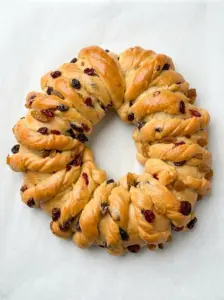

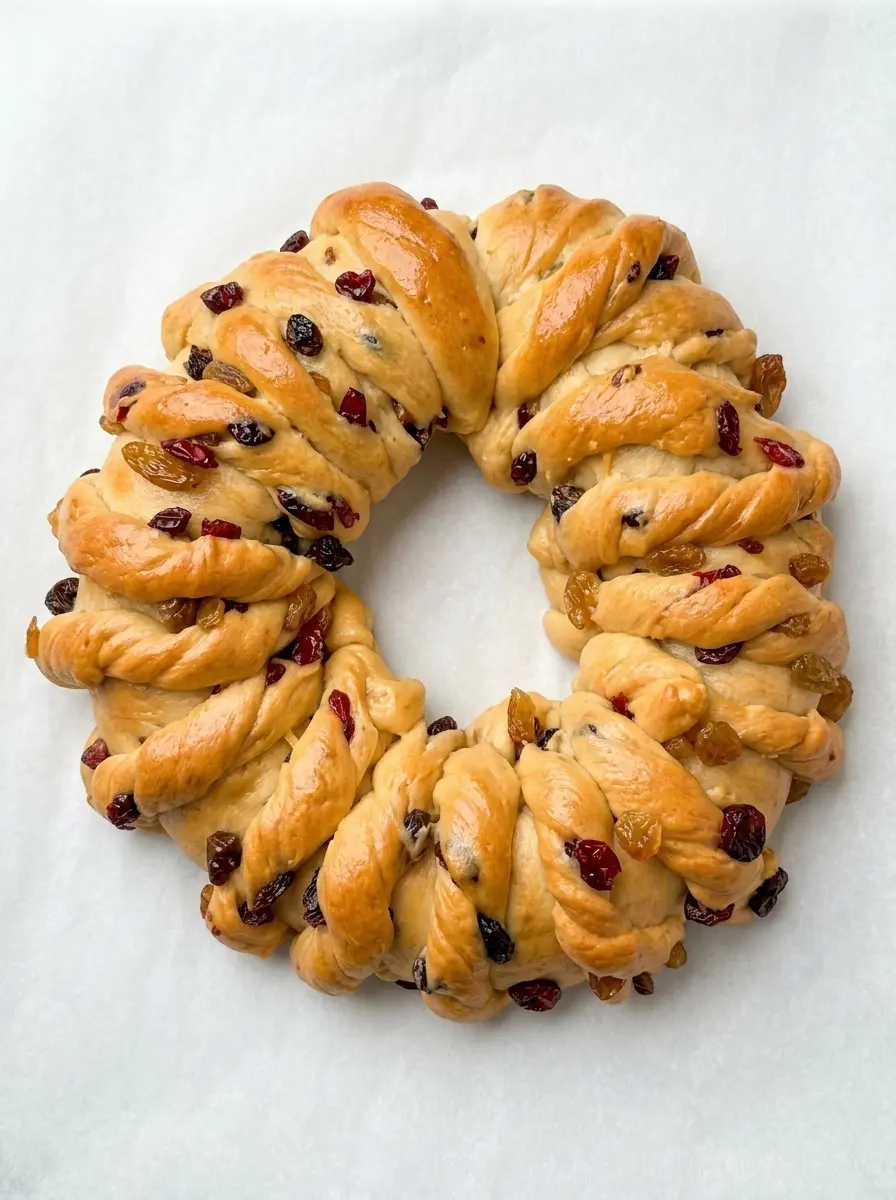
Italian Christmas Bread, better known as Panettone, is one of Italy’s most beloved holiday traditions. This tall, soft, buttery sweet bread has a beautifully airy crumb, a delicate citrus aroma, and a generous amount of raisins and candied orange.
Making homemade Panettone takes patience because the enriched dough needs time to rise, but the process is straightforward when divided into manageable steps. The result is a festive centerpiece that feels right at home on a Christmas breakfast table, dessert spread, or holiday gift basket.
What Is Italian Christmas Bread?
Italian Christmas Bread refers most famously to Panettone, a traditional sweet yeast bread associated with Christmas in Italy. Panettone is particularly associated with Milan and is recognized by its tall shape, tender crumb, raisins, and candied citrus.
Unlike an ordinary loaf of bread, Panettone is an enriched dough containing ingredients such as eggs, butter, sugar, and citrus. The dough is fermented and carefully handled to produce its characteristic light texture.
Why You’ll Love This Italian Christmas Bread
| Feature | Details |
|---|---|
| Texture | Soft, airy, and tender |
| Flavor | Buttery, lightly sweet, and citrusy |
| Fruit | Raisins and candied orange |
| Difficulty | Moderate |
| Cuisine | Italian |
| Category | Holiday Bread |
| Best For | Christmas and holiday gatherings |
| Servings | About 10–12 |
A True Christmas Classic
Panettone is strongly associated with Christmas and New Year celebrations in Italy.
Soft and Fragrant
The enriched dough produces a tender crumb with a rich buttery aroma.
Full of Citrus Flavor
Candied orange and citrus zest give the bread a bright, festive character.
Perfect for Sharing
The tall loaf can be sliced into wedges and served for breakfast, dessert, or an afternoon coffee break.
What Does Panettone Taste Like?
Traditional Panettone has a mildly sweet, buttery flavor with fragrant citrus notes. Raisins provide little pockets of natural sweetness, while candied orange adds a distinctive festive aroma.
The texture is very different from a dense fruitcake. A properly prepared Panettone should have a light, airy interior with a soft, pull-apart crumb.
Ingredients You’ll Need
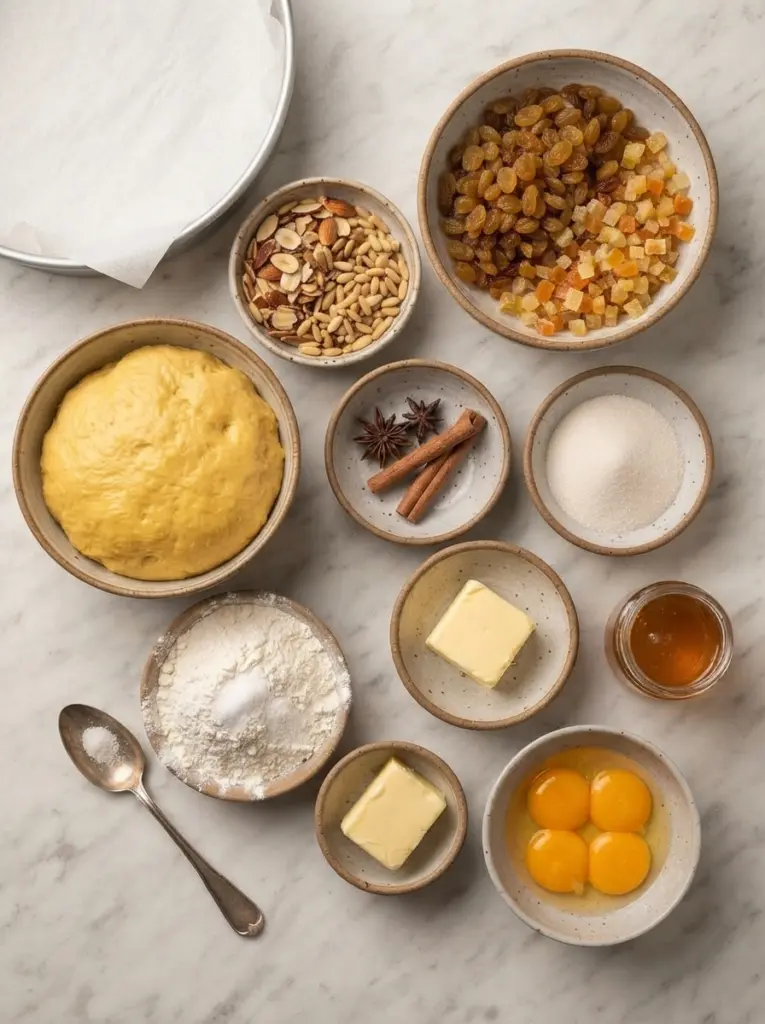
For the Dough
| Ingredient | Amount |
|---|---|
| Bread flour | 4 cups (500 g) |
| Warm whole milk | 3/4 cup (180 ml) |
| Active dry yeast | 2 1/4 teaspoons (7 g) |
| Granulated sugar | 1/2 cup (100 g) |
| Unsalted butter, softened | 1/2 cup (113 g) |
| Large eggs | 3 |
| Egg yolks | 2 |
| Fine salt | 1 teaspoon |
| Vanilla extract | 1 teaspoon |
| Orange zest | From 1 orange |
| Lemon zest | From 1 lemon |
For the Fruit
| Ingredient | Amount |
|---|---|
| Raisins | 1 cup (150 g) |
| Candied orange peel, finely chopped | 3/4 cup (100 g) |
| Warm water or orange juice | For soaking |
For Finishing
| Ingredient | Amount |
|---|---|
| Melted butter | 1 tablespoon |
| Powdered sugar | Optional |
Kitchen Equipment
| Equipment | Purpose |
|---|---|
| Large mixing bowl | Mixing the dough |
| Stand mixer with dough hook | Kneading the enriched dough |
| Measuring cups and spoons | Measuring ingredients |
| Panettone paper mold | Supports the tall loaf |
| Kitchen scale | Accurate ingredient measurement |
| Pastry brush | Brushing the loaf |
| Cooling rack | Cooling the bread |
A tall Panettone mold helps the dough maintain its characteristic height as it rises and bakes.
How to Make Italian Christmas Bread
Step 1: Prepare the Fruit
Place the raisins in a small bowl and cover them with warm water or orange juice.
Let them soak for about 15–20 minutes. Drain thoroughly and pat them dry with paper towels.
This helps prevent dry raisins from pulling moisture from the dough.
Step 2: Activate the Yeast
Warm the milk until it is comfortably warm rather than hot.
Add the yeast and a small pinch of the sugar. Stir gently and allow it to stand for several minutes until the yeast becomes active.
Step 3: Start the Dough
Add the flour, remaining sugar, eggs, egg yolks, vanilla, orange zest, lemon zest, and yeast mixture to a large mixing bowl.
Begin mixing on low speed until the ingredients come together into a sticky dough.
Step 4: Knead the Dough
Continue kneading with a dough hook until the dough becomes smoother and more elastic.
Because Panettone is an enriched dough, it can feel sticky during the early stages. Resist the temptation to add a large amount of extra flour.
Step 5: Add the Butter
Add the softened butter gradually, one small piece at a time.
Wait until each addition is incorporated before adding more.
Continue kneading until the dough becomes smooth, elastic, and glossy.
Step 6: Add the Salt
Add the salt and continue mixing until it is evenly incorporated.
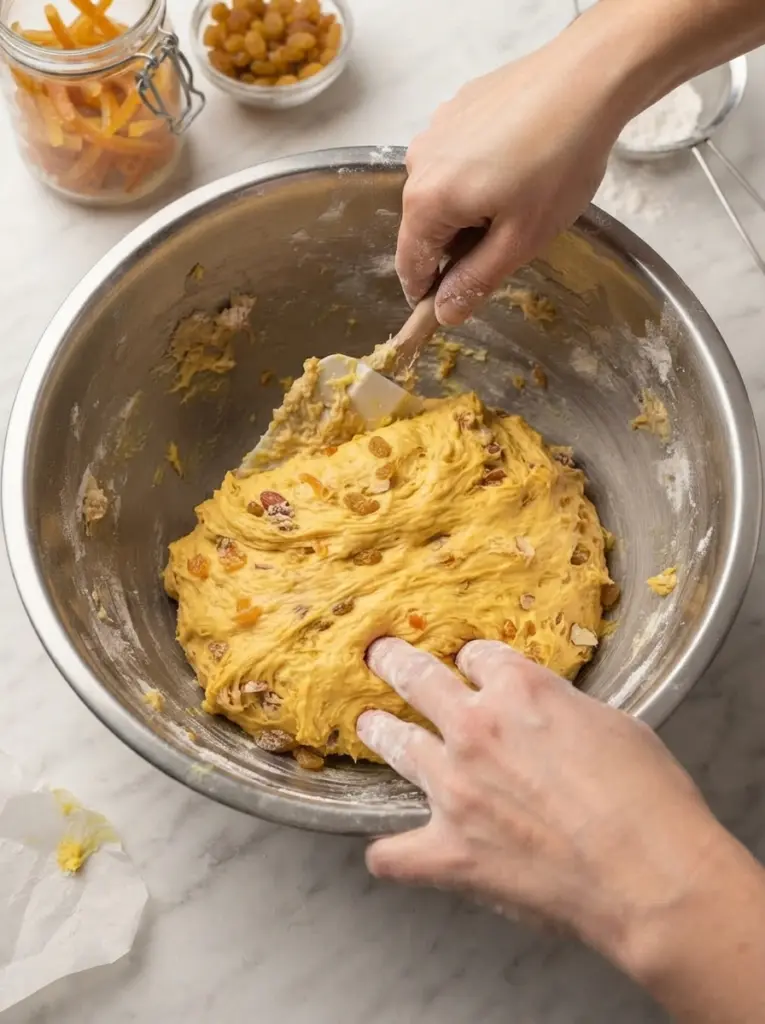
Step 7: Add the Fruit
Gently knead in the drained raisins and chopped candied orange peel.
Distribute the fruit throughout the dough without aggressively mixing it.
Step 8: First Rise
Transfer the dough to a lightly greased bowl.
Cover and leave it in a warm, draft-free place until it has expanded substantially.
The exact rising time depends on the temperature of your kitchen and the activity of the yeast.
Step 9: Shape the Dough
Turn the risen dough onto a lightly greased surface.
Gently shape it into a smooth round ball, keeping the fruit evenly distributed.
Place the dough into a Panettone paper mold.
Step 10: Final Rise
Cover the mold loosely and allow the dough to rise again.
The dough should become noticeably puffy and rise significantly inside the mold.
Avoid rushing this stage. Proper fermentation is important for the final texture.
Step 11: Prepare for Baking
Preheat the oven to 350°F (175°C).
Use a sharp knife to make a shallow cross on the top of the dough if desired.
Brush the surface lightly with melted butter.
Step 12: Bake
Place the Panettone in the preheated oven.
Bake until the loaf is deeply golden and cooked through, approximately 40–50 minutes, depending on the size and shape of your mold.
If the top becomes too dark before the center is finished, loosely cover it with aluminum foil.
Step 13: Cool Completely
Remove the Panettone from the oven and allow it to cool according to the mold manufacturer’s recommendations.
Traditional tall Panettone is often cooled upside down to help prevent the soft crumb from collapsing.
Allow it to cool completely before slicing.
Step 14: Serve
Once completely cooled, dust the top lightly with powdered sugar if desired.
Slice the Panettone into wedges and serve.
Tips for Successful Homemade Panettone
Use Strong Flour
Bread flour provides the gluten structure needed for an enriched dough with eggs, butter, and sugar.
Don’t Add Too Much Flour
Panettone dough can be sticky. Adding excessive flour can make the finished bread heavy rather than soft and airy.
Add Butter Gradually
Adding softened butter little by little helps the dough absorb the fat properly.
Give the Dough Enough Time
Rising time depends heavily on room temperature and yeast activity. Watch the dough rather than relying only on the clock.
Drain the Raisins Well
Excess water from soaked raisins can change the consistency of the dough.
Don’t Rush Cooling
A freshly baked Panettone has a delicate crumb. Allowing it to cool properly helps maintain its structure.
Panettone Variations
Chocolate Panettone
Replace some or all of the candied fruit with chocolate chips or chopped chocolate.
Orange and Raisin Panettone
Increase the amount of candied orange for a stronger citrus flavor.
Lemon Panettone
Use additional lemon zest and finely chopped candied lemon peel.
Chocolate and Orange
Combine dark chocolate pieces with candied orange for a rich holiday variation.
Dried Fruit Panettone
Use a mixture of raisins, dried cranberries, and chopped dried apricots.
How to Serve Italian Christmas Bread
Panettone is delicious on its own, but there are many ways to serve it.
| Serving Idea | Description |
|---|---|
| Breakfast | Toast lightly and serve with butter |
| Coffee | Serve alongside espresso or cappuccino |
| Dessert | Pair with whipped cream or mascarpone |
| Holiday Table | Serve in thick wedges |
| French Toast | Use slices for a rich breakfast |
| Gift | Wrap the cooled loaf for a homemade holiday gift |
Panettone is also well suited to recipes that use leftover slices, including bread-and-butter pudding and French toast.
How to Store Panettone
Keep completely cooled Panettone in an airtight container or tightly wrapped at room temperature.
Avoid refrigerating it unless necessary because cold temperatures can make enriched bread feel firmer and less tender.
For longer storage, wrap the bread securely and freeze it.
Frequently Asked Questions
What is Italian Christmas bread called?
The best-known Italian Christmas bread is Panettone, a tall enriched sweet bread traditionally associated with Christmas.
Is Panettone a bread or a cake?
Panettone is traditionally an enriched sweet bread made with yeast. Its rich ingredients and soft texture can make it seem cake-like, but it is prepared as a leavened bread.
What fruit is traditionally used in Panettone?
Traditional Panettone commonly contains raisins and candied citrus, especially orange and citron.
Why is Panettone so tall?
Panettone is baked in a tall mold that supports the enriched dough as it rises. The tall shape is one of its characteristic features.
Can I make Panettone without candied fruit?
Yes. You can replace the candied fruit with chocolate, dried fruit, or simply omit it, although candied citrus and raisins are characteristic of the traditional version.
Can I make Panettone ahead of Christmas?
Yes. Panettone is well suited to advance preparation. Once completely cooled, wrap it carefully and store it in an airtight environment until serving.
Nutrition Information
These values are approximate and will vary depending on the exact ingredients, portion size, and amount of fruit used.
| Nutrition | Approximate Amount |
|---|---|
| Calories | 365 kcal |
| Carbohydrates | 53 g |
| Protein | 8 g |
| Fat | 14 g |
| Saturated Fat | 8 g |
| Unsaturated Fat | 5 g |
| Trans Fat | 0.3 g |
| Cholesterol | 105 mg |
| Sodium | 250 mg |
| Fiber | 2 g |
| Sugar | 22 g |
Recipe at a Glance
| Detail | Information |
|---|---|
| Recipe | Italian Christmas Bread (Panettone) |
| Prep Time | 30 minutes |
| Rise Time | About 3–4 hours |
| Cook Time | 40–50 minutes |
| Total Time | About 4 hours 30 minutes |
| Yield | 10–12 servings |
| Category | Bread, Dessert, Holiday |
| Method | Baking |
| Cuisine | Italian |
| Diet | Vegetarian |
Final Thoughts
Italian Christmas Bread, or Panettone, is a holiday bake that rewards patience. Its rich buttery dough, fragrant citrus, sweet raisins, and candied orange create the unmistakable flavor associated with an Italian Christmas table.
While traditional Panettone can involve lengthy fermentation techniques, this homemade version gives you a practical way to create a beautiful festive loaf in your own kitchen. Serve thick slices with coffee, share it with family, or wrap a loaf as a thoughtful homemade Christmas gift.
Print
Italian Christmas Bread (Panettone)
- Total Time: 4 hours 30 minutes
- Yield: 10–12 servings 1x
- Diet: Vegetarian
Description
Italian Christmas Bread, better known as Panettone, is a soft, buttery Italian holiday bread filled with raisins and candied orange. This festive homemade loaf has a light, airy crumb and fragrant citrus flavor.
Ingredients
4 cups (500 g) bread flour
3/4 cup (180 ml) warm whole milk
2 1/4 teaspoons (7 g) active dry yeast
1/2 cup (100 g) granulated sugar
1/2 cup (113 g) unsalted butter, softened
3 large eggs
2 egg yolks
1 teaspoon fine salt
1 teaspoon vanilla extract
Zest of 1 orange
Zest of 1 lemon
1 cup (150 g) raisins
3/4 cup (100 g) candied orange peel, finely chopped
Warm water or orange juice, for soaking raisins
1 tablespoon melted butter, for finishing
Powdered sugar, optional
Instructions
1. Place the raisins in a small bowl and cover with warm water or orange juice. Soak for 15–20 minutes, then drain and pat dry.
2. Warm the milk until comfortably warm. Add the yeast and a small pinch of the sugar and let stand for several minutes.
3. Combine the flour, remaining sugar, eggs, egg yolks, vanilla, orange zest, lemon zest, and yeast mixture in a large mixing bowl.
4. Knead the dough with a dough hook until it begins to become smooth and elastic.
5. Add the softened butter gradually, one piece at a time, allowing each addition to become incorporated before adding more.
6. Add the salt and continue kneading until the dough is smooth, elastic, and glossy.
7. Gently knead in the drained raisins and chopped candied orange peel.
8. Place the dough in a lightly greased bowl, cover, and let rise in a warm place until substantially expanded.
9. Shape the risen dough into a smooth round ball and place it in a Panettone paper mold.
10. Cover loosely and allow the dough to rise again until noticeably puffy.
11. Preheat the oven to 350°F (175°C).
12. Make a shallow cross on the top of the dough if desired and brush lightly with melted butter.
13. Bake for approximately 40–50 minutes, or until deeply golden and cooked through.
14. If the top browns too quickly, loosely cover it with aluminum foil.
15. Remove from the oven and cool completely according to the mold manufacturer’s recommendations.
16. Dust with powdered sugar if desired, slice, and serve.
Notes
Use bread flour for better structure in this enriched dough.
Avoid adding excessive flour because the dough should remain soft and somewhat sticky.
Add softened butter gradually so it incorporates properly into the dough.
Rising time depends on room temperature and yeast activity, so watch the dough rather than relying only on the clock.
Drain soaked raisins thoroughly before adding them.
Allow the Panettone to cool completely before slicing.
Store completely cooled Panettone tightly wrapped at room temperature or freeze for longer storage.
- Prep Time: 30 minutes
- Cook Time: 45 minutes
- Category: Bread, Dessert, Holiday
- Method: Baking
- Cuisine: Italian
Nutrition
- Serving Size: 1 slice
- Calories: 365
- Sugar: 22 g
- Sodium: 250 mg
- Fat: 14 g
- Saturated Fat: 8 g
- Unsaturated Fat: 5 g
- Trans Fat: 0.3 g
- Carbohydrates: 53 g
- Fiber: 2 g
- Protein: 8 g
- Cholesterol: 105 mg

Gianna Poulef
I’m Gianna Poulef from Poulef Recipes. I love sharing perfected dishes from my kitchen. I’m sure they’ll earn a spot in your heart. Let’s savor this journey together!.
Let’s be friends!