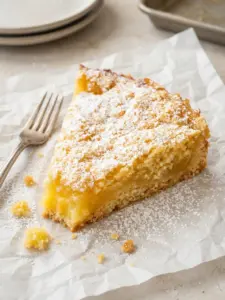

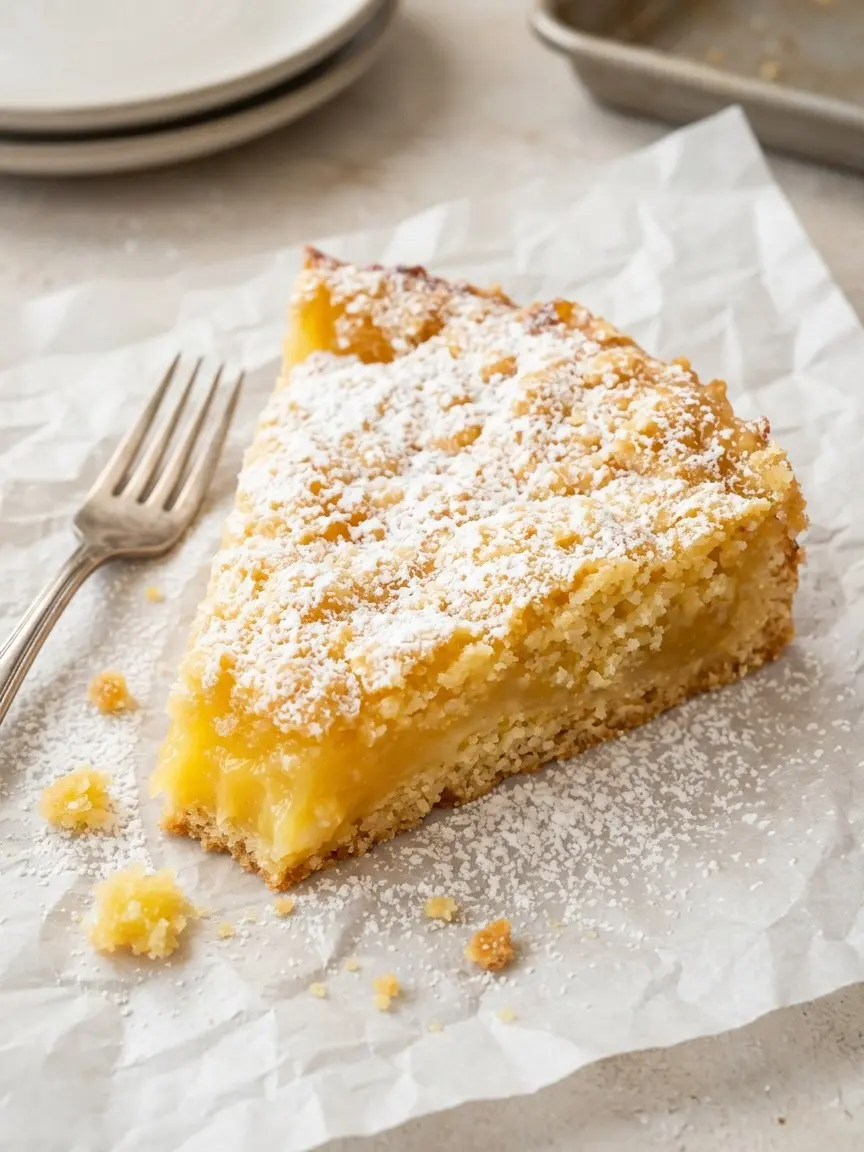
Crispy lemon curd cake is a small, buttery tea cake with a crumbly base, a layer of bright homemade lemon curd and a crumble topping. It is made from one pulsed dough: you whiz flour, baking powder, sugar, butter and an egg in a food processor just until the mixture starts to come together, press two thirds of it into a lined springform tin, pour hot lemon curd over it and crumble the rest on top. After about 30 minutes in the oven it turns lightly golden and crisp at the edges, and once it has cooled completely it gets a dusting of powdered sugar.
The recipe was written to be gluten-free, using a gluten-free all-purpose flour blend, but it works with regular flour too. The curd is made in a saucepan in a few minutes, with no double boiler, as long as you keep the heat low. The cake bakes in a small 17 cm (6.5-inch) tin, so it is a good size for a small gathering or an afternoon tea.
Why You’ll Love This Crispy Lemon Curd Cake
- Crisp and creamy. A crumbly, buttery crust surrounds a soft, tangy lemon curd layer.
- Gluten-free friendly. The recipe uses a gluten-free flour blend, or you can use regular flour.
- One dough, two layers. The same mixture makes the base and the crumble topping.
- Quick curd. The lemon curd cooks in a saucepan with only four ingredients, with no double boiler.
- Small cake. A 17 cm (6.5-inch) springform tin keeps it a manageable size.
- Keeps for a few days. The source says it keeps up to 3 days in the fridge and can be frozen for up to 2 months.
What Does It Taste Like?
The cake tastes like a buttery shortbread-style crust filled with tangy lemon curd. The curd is bright and sweet-tart, and the crumbly base and topping add a lightly crisp texture that contrasts with the soft filling. A dusting of powdered sugar softens the sharpness of the lemon. It is delicious on its own, with a spoonful of whipped cream, or with vanilla ice cream.
Ingredients
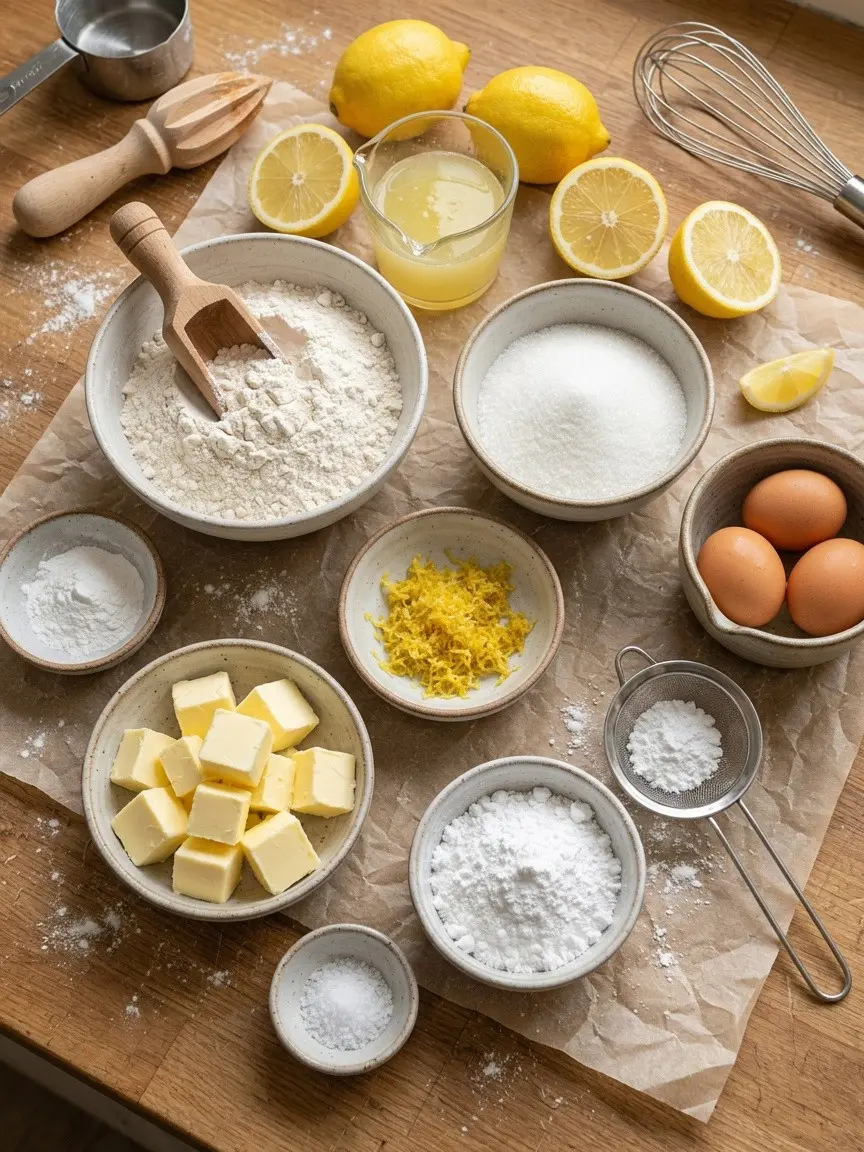
For the cake
- 1 cup (150 g) gluten-free all-purpose/plain flour (see notes)
- 2 teaspoons baking powder
- 1/2 cup (115 g) caster/superfine sugar
- 1/4 cup (60 g) unsalted butter, at cool room temperature
- 1 large egg, lightly beaten, at room temperature
- Icing/powdered sugar, for dusting
For the lemon curd filling
- 1/2 cup (120 ml) lemon juice, strained
- 1/2 cup (115 g) caster/superfine sugar
- 1 large egg, lightly beaten
- 1/4 cup (60 g) unsalted butter, cut into cubes
Ingredient Notes
Flour
The source used a commercial gluten-free all-purpose flour, which is a blend of naturally gluten-free flours that contains xanthan or guar gum to provide structure. Regular all-purpose flour can be used if you do not need the cake to be gluten-free. You can also use self-raising flour and leave out the baking powder.
Butter
The cake uses 1/4 cup (60 g) of unsalted butter at cool room temperature, which is soft but not warm, so it pulses into the flour rather than melting. The filling uses another 1/4 cup, cut into cubes, so it melts evenly into the curd.
Caster (superfine) sugar
Half a cup goes into the cake and another half cup into the curd. Superfine sugar dissolves easily, which helps the curd cook smoothly.
Eggs
The cake uses one lightly beaten egg at room temperature. The curd uses another lightly beaten egg. Keep the curd on low heat, because eggs scramble if the heat is too high.
Lemon juice
Half a cup (120 ml) of strained lemon juice makes the curd. Strain it so there are no seeds or pulp. Lemons vary in acidity, so taste the curd before it goes on the cake.
Powdered sugar
Icing or powdered sugar is for dusting the cooled cake. The quantity is not specified in the source, so dust to taste.
Equipment
- 17 cm (6.5-inch) springform tin
- Non-stick baking paper
- Food processor with a steel blade
- Cling wrap for gathering the mixture
- Small saucepan and a spoon or spatula for the curd
- Strainer for the lemon juice
- Serving platter and a sieve for the powdered sugar
A Note About This Recipe
This recipe is adapted from a published lemon curd tea cake recipe and rewritten in our own words, with the same ingredients, amounts and method. The nutrition is the estimate that comes with the source, and it does not say how many slices the cake makes. The prep and total times shown are our own estimates.
Step-by-Step Instructions
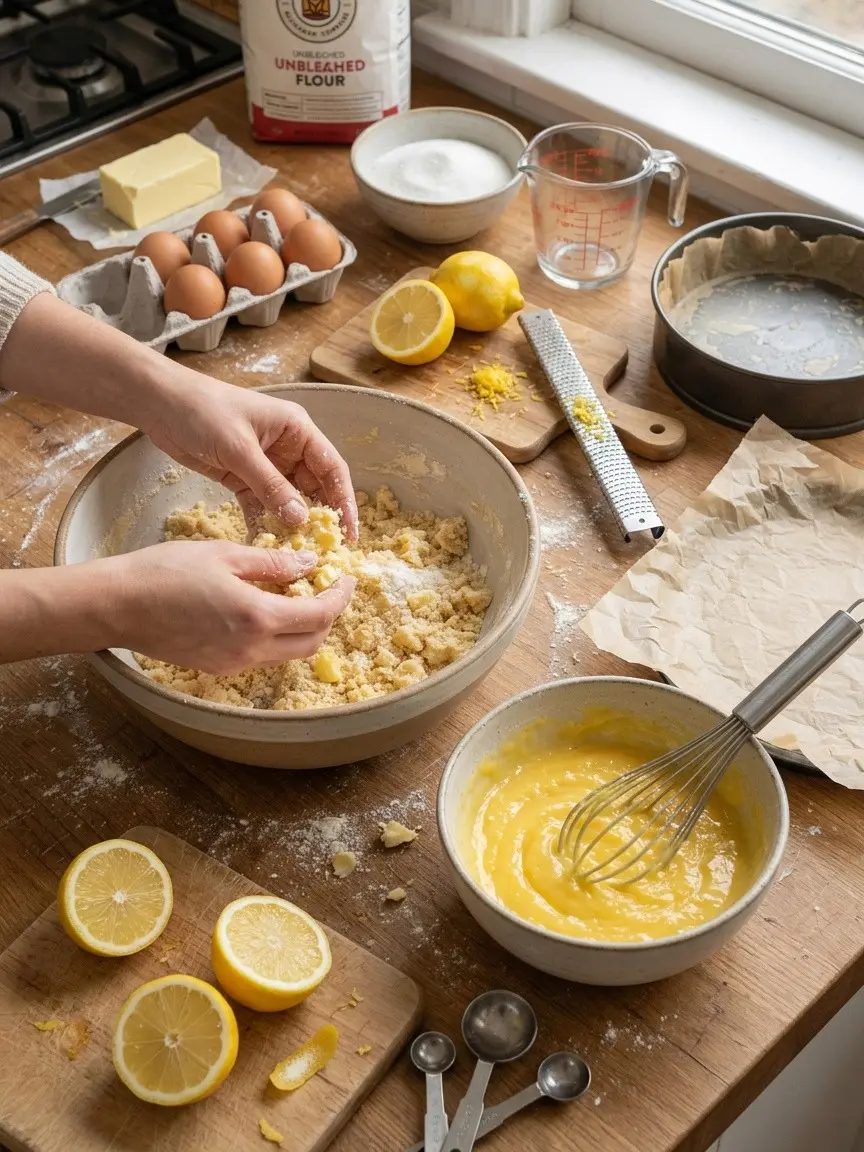
Make the crumble dough
Preheat the oven to 180°C (355°F). Grease and line the base and sides of a 17 cm (6.5-inch) springform tin with non-stick baking paper. Add the flour, baking powder, sugar, butter and lightly beaten egg to a food processor fitted with a steel blade. Pulse until the mixture just starts to come together. Do not process until it forms a ball of dough; you want it to stay a little crumbly.
Press in the base
Tip the mixture onto cling wrap and gently bring it together. Divide it and press two thirds into the base of the prepared tin, keeping the remaining third for the topping. The source weighed the mixture to divide it accurately, but you can estimate if you prefer.
Make the lemon curd
Put the lemon juice, sugar, egg and butter in a saucepan. Over low heat, stir until the butter has melted and the curd thickens, just below boiling point. Do not use high heat to speed things up, or you will end up with scrambled egg. Take the pan off the heat.
Assemble and bake
Pour the hot lemon curd onto the cake base. Crumble the remaining mixture as evenly as you can over the top of the curd. It will spread a little as it bakes. Bake until lightly golden brown, about 30 minutes.
Cool and finish
Remove the cake from the oven and cool it completely in the pan. Gluten-free baked goods are often fragile, so it is important that the cake is cooled before it comes out of the tin. Gently remove the side of the springform tin and the baking paper, place the cake on a serving platter and dust it with powdered sugar.
Tips for the Best Crispy Lemon Curd Cake
- Stop pulsing early. The mixture should just start to come together and still be a little crumbly; do not process it into a ball.
- Keep the curd heat low. Stir over low heat until it thickens, just below boiling point.
- Taste the curd. If it is too tart, stir in a little extra sugar before using it.
- Pour the curd on hot. The recipe pours the hot curd straight onto the base.
- Crumble the topping evenly. It spreads a little during baking.
- Cool completely before unmolding. The recipe stresses this, as gluten-free baking can be fragile.
- Divide the mixture. Press about two thirds into the tin and save a third for the top. Weighing helps, but estimating is fine.
Storage and Freezing
According to the source, this cake is best on the day it is baked, as is common with gluten-free baking. It keeps for up to 3 days in an airtight container in the fridge. To freeze it, let it cool completely, wrap it twice in cling film so it does not get freezer burn, and freeze for up to 2 months.
Variations
- Regular flour. Use regular all-purpose flour if you do not need it to be gluten-free.
- Self-raising flour. You can use self-raising flour and leave out the baking powder.
- Homemade curd. You can use about 2/3 cup of a homemade lemon curd instead of making the quick curd in the recipe.
Substitutions
- Flour: A gluten-free all-purpose blend that contains xanthan or guar gum, or regular all-purpose flour.
- Sugar: The recipe uses caster (superfine) sugar. We have not tested other sugars.
- Nutrition: The estimate applies to the recipe as written.
Serving Suggestions
Serve slices on their own, with a dollop of whipped cream or with vanilla ice cream, as the source suggests. It is a natural match for tea or coffee, and it sits well beside other lemon bakes such as Lemon Curd Almond Cake, Lemon Mini Loaves (or Muffins) with Lemon Syrup and Christmas Baby Lemon Impossible Pie.
Common Mistakes to Avoid
- Cooking the curd on high heat. The egg scrambles.
- Over-processing the dough. It should stay a little crumbly.
- Unmolding while warm. The cake is fragile until it has cooled completely.
- Skipping the lining. Line the base and sides of the tin so the cake lifts out cleanly.
- Using unstrained juice. Strain it so the curd is smooth.
- Forgetting to taste the curd. Lemons vary in acidity.
Frequently Asked Questions
Is this cake gluten-free?
It is when made with a gluten-free all-purpose flour blend, as in the source. Check that your blend and baking powder are labeled gluten-free.
Can I use regular flour?
Yes. The source says regular all-purpose flour can be used if you do not need it to be gluten-free.
What size tin do I need?
A 17 cm (6.5-inch) springform tin, greased and lined.
What temperature do I bake it at?
180°C (355°F), for about 30 minutes, until lightly golden brown.
Do I need a double boiler for the curd?
No. The curd is cooked in a saucepan over low heat, but you must keep the heat low.
How long does it keep?
Up to 3 days in an airtight container in the fridge, though it is best on the day it is baked.
Can I freeze it?
Yes. Cool it completely, wrap it twice in cling film and freeze for up to 2 months.
How many slices does it make?
The source does not say. The nutrition estimate is given per serving.
How many calories are in a serving?
The source’s estimate is 360 calories per serving, with 50g of carbohydrates, 4g of protein and 18g of fat.
Recipe Background
Tea cakes with a crumbly, shortbread-like dough and a fruit curd or jam center are a familiar style of afternoon-tea bake. Pulsing the dough in a food processor keeps it crumbly, which is how the same mixture can serve as both a base and a rustic topping. Lemon curd is a classic filling, a mix of lemon juice, sugar, egg and butter cooked gently until thick, and baking it between two layers of crumble gives a pleasing contrast of crisp and creamy.
Share Your Creation
Did you make this crispy lemon curd cake? Leave a comment below and tell us how it turned out. Did you use a gluten-free blend or regular flour, and how did you serve it? Your tips help other readers.
Conclusion
Crispy lemon curd cake is a charming, small tea cake with a golden crumble crust and a tangy, creamy lemon center. It comes together with a food processor and a saucepan, bakes in about 30 minutes and works with either gluten-free or regular flour.
More Delicious Recipes You’ll Love
- Lemon Curd Almond Cake
- 7 Irresistibly Bright Lemon Curd Cake Secrets for the Perfect Zesty Treat
- Lemon Mini Loaves (or Muffins) with Lemon Syrup
- Christmas Baby Lemon Impossible Pie
- 2-Minute Lemon Ricotta Cottage Cheese Mug Cake
Follow Poulef on Pinterest
Loved this recipe? Save it for later and follow @PoulefRecipe on Pinterest for more lemon desserts and easy cakes: https://www.pinterest.com/poulefrecipe/
Nutritional Information
This is the nutrition estimate that comes with the source recipe. The source does not say how many slices the cake makes, so actual values will vary with how you cut it and the flour you use.
| Nutrient | Amount per Serving |
|---|---|
| Calories | 360 |
| Carbohydrates | 50g |
| Protein | 4g |
| Fat | 18g |
| Saturated Fat | 10g |
| Polyunsaturated Fat | 1g |
| Monounsaturated Fat | 5g |
| Trans Fat | 1g |
| Cholesterol | 103mg |
| Sodium | 27mg |
| Potassium | 184mg |
| Fiber | 2g |
| Sugar | 35g |
| Calcium | 87mg |
| Iron | 1mg |
Crispy Lemon Curd Cake (Gluten-Free Lemon Curd Tea Cake with Crumble Top)
- Total Time: About 1 hour 30 minutes
- Yield: 1 6.5-inch (17 cm) cake 1x
- Diet: Gluten Free
Description
A lemon curd tea cake made from a pulsed, crumbly dough: two thirds is pressed into a springform tin as the base, covered with hot homemade lemon curd, and topped with the remaining crumbs. Baked until lightly golden, cooled completely and dusted with powdered sugar.
Ingredients
For the cake: 1 cup (150 g) gluten-free all-purpose/plain flour (regular all-purpose flour also works; see notes)
2 teaspoons baking powder
1/2 cup (115 g) caster/superfine sugar
1/4 cup (60 g) unsalted butter, at cool room temperature
1 large egg, lightly beaten, at room temperature
Icing/powdered sugar, for dusting
For the lemon curd filling: 1/2 cup (120 ml) lemon juice, strained
1/2 cup (115 g) caster/superfine sugar
1 large egg, lightly beaten
1/4 cup (60 g) unsalted butter, cut into cubes
Instructions
1. Preheat the oven to 180°C (355°F). Grease and line the base and sides of a 17 cm (6.5-inch) springform tin with non-stick baking paper.
2. Add the flour, baking powder, sugar, butter and lightly beaten egg to the bowl of a food processor fitted with a steel blade. Pulse until the mixture just starts to come together. Do not process until it forms a ball of dough; it should still be a little crumbly.
3. Tip the mixture onto some cling wrap. Gently bring it together, then divide it and press two thirds into the base of the prepared tin, reserving the remaining third for the topping. (The source weighed the mixture for accuracy; you can estimate if you prefer.)
4. Make the lemon curd: place the lemon juice, sugar, egg and butter in a saucepan. Over low heat, stir until the butter has melted and the curd thickens, just below boiling point. Do not use high heat, or you will end up with scrambled egg. Remove from the heat.
5. Pour the hot lemon curd onto the cake base.
6. As evenly as possible, crumble the remaining mixture over the top of the curd. It will spread a little during baking.
7. Bake until lightly golden brown, about 30 minutes.
8. Remove from the oven and cool completely in the pan. Gluten-free baked goods are often fragile, so make sure the cake is cooled before removing it from the tin.
9. Gently remove the side of the springform tin and the baking paper, place the cake on a serving platter and dust with icing/powdered sugar.
Notes
Adapted from the lemon curd tea cake recipe provided, rewritten in our own words with the same ingredients, amounts and method.
Flour: the source used a commercial gluten-free all-purpose flour blend that contains xanthan or guar gum. Regular all-purpose flour can be used if you do not need it gluten-free. You can also use self-raising flour and omit the baking powder.
Curd: this curd does not need a double boiler, but it must be cooked over low heat. Taste it before adding it to the cake, and if it is too tart, add a little extra sugar. If you prefer, you can use about 2/3 cup of homemade lemon curd instead.
Serving: lovely on its own, or with whipped cream or vanilla ice cream.
Storage: best on the day it is baked, but it keeps up to 3 days in an airtight container in the fridge. To freeze, cool completely, wrap twice in cling film and freeze for up to 2 months.
Nutrition is the estimate that comes with the source. The source does not say how many slices the cake makes.
The source gave no prep time or total time. The prep time and total time shown are our own estimates built from the method and baking time.
- Prep Time: 20 minutes
- Cook Time: 30 minutes
- Category: Dessert
- Method: Baking
- Cuisine: Belgian
Nutrition
- Serving Size: 1 slice
- Calories: 360
- Sugar: 35g
- Sodium: 27mg
- Fat: 18g
- Saturated Fat: 10g
- Trans Fat: 1g
- Carbohydrates: 50g
- Fiber: 2g
- Protein: 4g
- Cholesterol: 103mg
Table of Contents

Gianna Poulef
I’m Gianna Poulef from Poulef Recipes. I love sharing perfected dishes from my kitchen. I’m sure they’ll earn a spot in your heart. Let’s savor this journey together!.
Let’s be friends!