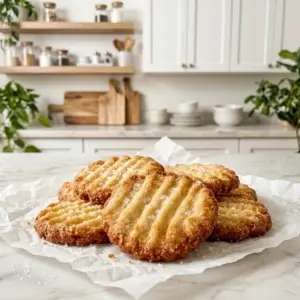

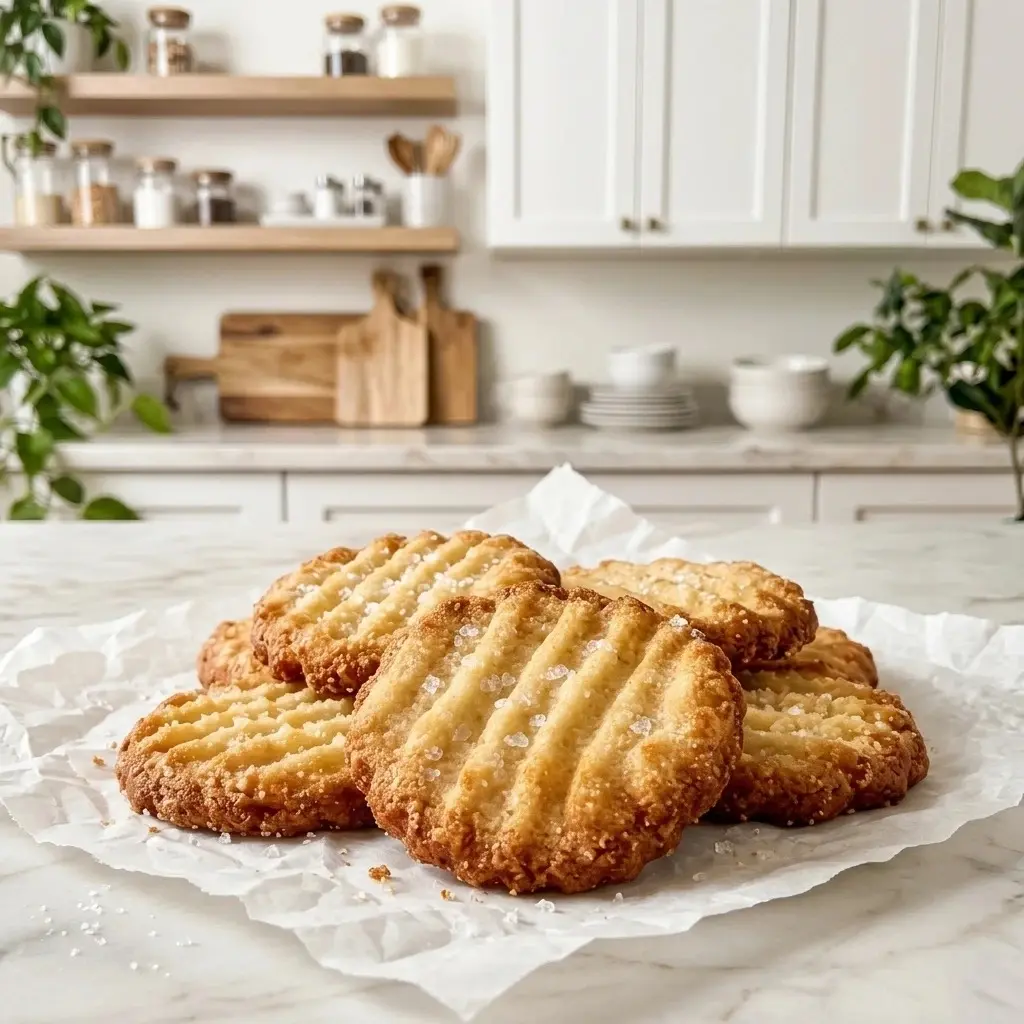
Butter is the whole story in these French salted butter cookies. Known in France as sablés Bretons, they come from Brittany, a region famous for its salted butter, where butter goes into almost everything. The cookies are made from just a handful of ingredients: salted butter, sugar, egg yolks, vanilla, and flour. What comes out of the oven is golden, rich, and tender, with a crumbly, sandy texture, a faint savory edge from the salt, and a pretty crosshatch pattern on top.
The word sablé means sandy in French, and that is exactly how the cookies should feel: dense and crumbly rather than crisp or chewy, melting into a buttery crumb in your mouth. They are the kind of cookie that appears in tins in French bakeries and in lunch boxes across the country, and they pair beautifully with coffee, tea, or a scoop of ice cream.
This recipe is based on the Sablés Bretons recipe shared by Chouquette Kitchen and makes about 20 cookies. It uses a stand mixer, though a hand mixer works too, and the dough is rolled and cut into rounds like a classic shortbread. Use the best butter you can find, since there is nowhere for it to hide.
Why You’ll Love This Recipe
- Authentic French sablé flavor with rich, salty-sweet butter
- Only five main ingredients
- Crumbly, sandy, melt-in-your-mouth texture
- A pretty crosshatch pattern and golden egg yolk shine
- Easy to roll, cut, and bake
- Keeps well, so it is great for gifting and tins
- Delicious with coffee, tea, or ice cream
What Do French Salted Butter Cookies Taste Like?
These cookies taste of pure, golden butter with a little salt to sharpen the sweetness. The texture is tender, short, and crumbly, a little denser than American shortbread cookies and much richer than a sugar cookie. The egg yolks add a rich, almost custard-like flavor and a deep golden color, and the egg wash gives the top a glossy sheen. The flavor deepens over a day or two, so they are even better on day two.
Recipe Overview
- Prep time: About 30 minutes
- Bake time: About 13 to 15 minutes
- Yield: About 20 cookies
- Difficulty: Easy
- Method: Creamed butter dough, rolled, cut, and baked
Ingredients
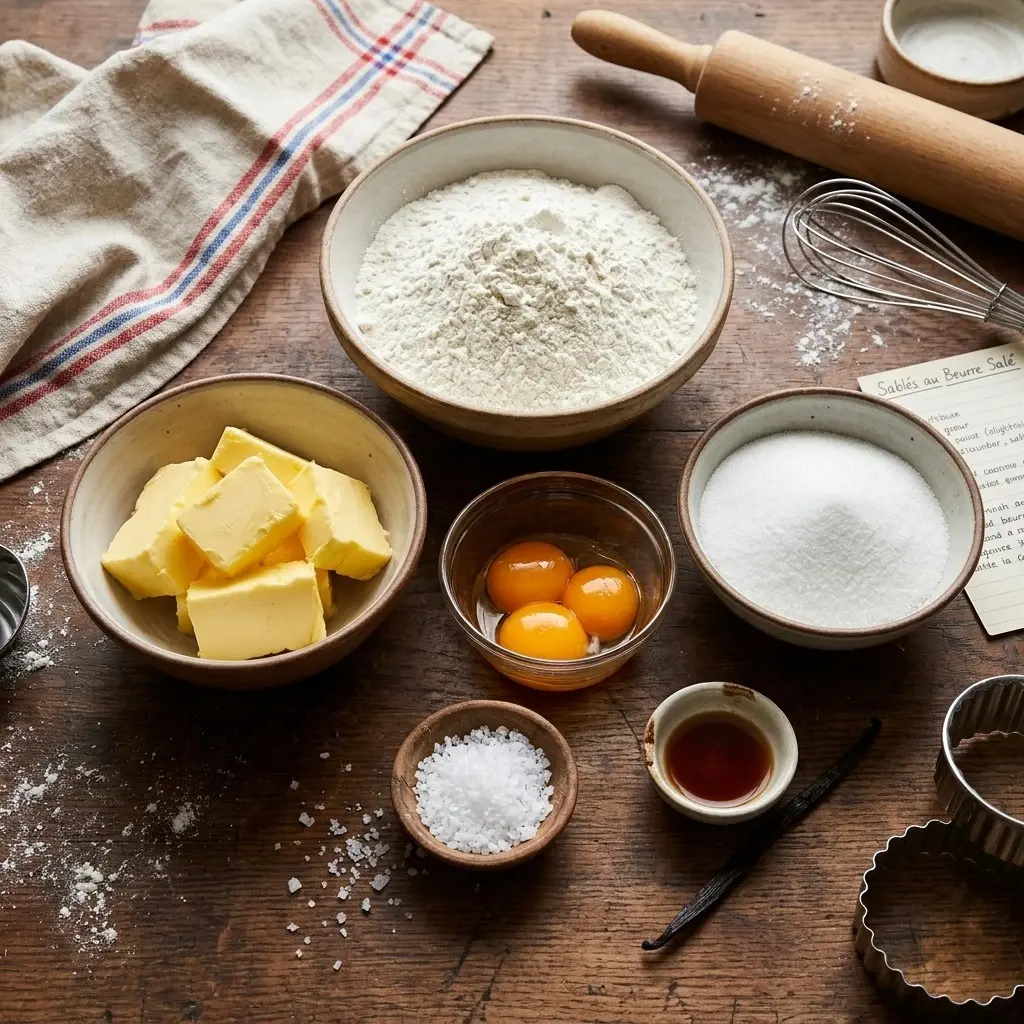
- 1/2 cup plus 5 tablespoons (184 g) salted butter, at room temperature
- 1/2 cup (100 g) granulated sugar
- 1 teaspoon vanilla bean paste or vanilla extract
- 3 large egg yolks, divided
- 2 cups (240 g) all-purpose flour, plus more for dusting
- 1/2 teaspoon water, for the egg wash
Ingredient Notes
Salted butter: This is the defining ingredient. In Brittany, beurre demi-sel, or lightly salted butter, is the traditional choice. Use a high-quality butter with a high fat content, such as a European-style or Irish butter, for the richest flavor and most tender crumb. If you only have unsalted butter, add about 1/2 teaspoon of fine sea salt.
Sugar: Plain granulated sugar sweetens the cookies and gives a slightly sandy bite. Some French recipes use powdered sugar for a finer, more delicate crumb, but this recipe uses granulated.
Egg yolks: Yolks, not whole eggs, add richness and bind the dough without adding extra water, which keeps the cookies short and sandy. Save the whites for meringues or an omelet.
Vanilla: Vanilla bean paste adds specks of vanilla and a rich flavor. Pure vanilla extract works well too.
Flour: Spoon the flour into the measuring cup and level it off, or weigh it. Too much flour makes dry, tough cookies.
Kitchen Tools You’ll Need
- Stand mixer with paddle attachment, or a hand mixer
- Rolling pin
- 2-inch (5 cm) round cookie cutter, or a glass
- Baking sheet and parchment paper
- Fork for the crosshatch pattern
- Pastry brush and small bowl for the egg wash
- Wire cooling rack
Substitutions and Variations
- Unsalted butter: Add about 1/2 teaspoon of salt. Flaky sea salt or fleur de sel on top adds a lovely finish.
- Lemon or orange zest: A teaspoon of zest brightens the dough.
- Chocolate-dipped: Dip half of each cooled cookie in melted dark chocolate for a bakery-style treat.
- Slice-and-bake: Shape the dough into a log, chill it, slice it, and bake. This is not part of the source method and has not been tested here.
- Tart shells: Press the dough into muffin tins or tart pans to make little cookie cups for fruit and cream.
- Sparkle: Sprinkle coarse sugar on top after brushing with egg for a crunchy edge.
- Almond flour: Replace a few tablespoons of flour with almond flour for a nuttier crumb. This has not been tested.
How to Make French Salted Butter Cookies
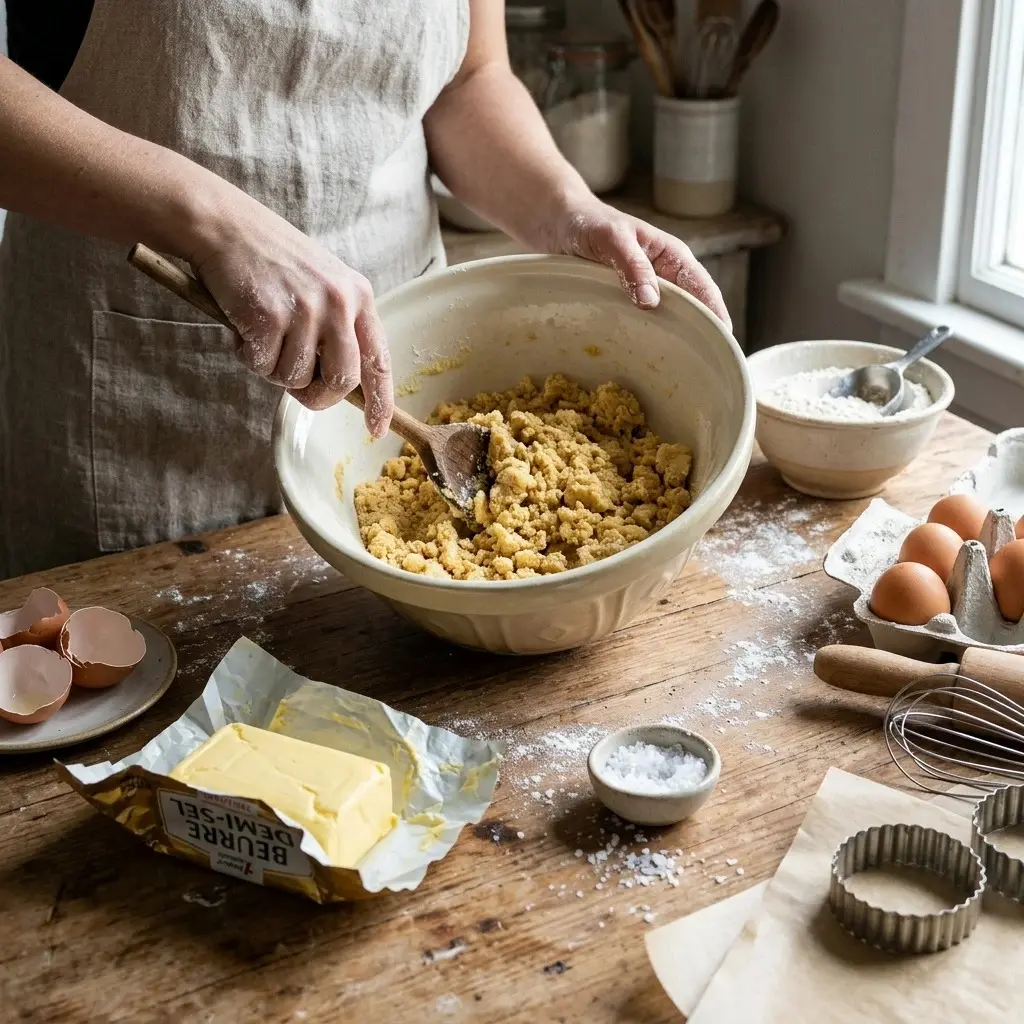
The method is straightforward. You beat the butter and sugar until pale and creamy, mix in two of the egg yolks and the vanilla, then add the flour and mix until the dough just comes together. The dough is rolled out on a floured surface, cut into circles, scored with a fork, brushed with the last egg yolk, and baked until golden. The crosshatch pattern is the traditional finishing touch for sablés.
Step-by-Step Instructions
- Heat the oven. Preheat the oven to 375°F (190°C). Line a baking sheet with parchment paper.
- Cream the butter and sugar. In a stand mixer fitted with the paddle attachment, beat the butter and sugar until well blended and light in color, about 2 minutes.
- Add the yolks and vanilla. Add 2 of the egg yolks and the vanilla and mix until incorporated. Scrape down the sides of the bowl.
- Add the flour. Add the flour and mix on low until the dough begins to come together.
- Roll. Turn the dough out onto a floured work surface and roll it out to 1/4 inch (6 mm) thick, adding flour if it sticks.
- Cut. Cut out circles with a 2-inch (5 cm) cookie cutter or a glass and transfer them to the baking sheet, spacing them about 2 inches (5 cm) apart. Gather and re-roll the scraps.
- Decorate. Beat the remaining egg yolk with the 1/2 teaspoon water. Press a crosshatch pattern onto the top of each cookie with a fork, then brush with the egg yolk.
- Bake. Bake for 13 to 15 minutes, until golden brown.
- Cool. Cool on a wire rack.
Tips for Success
- Let the butter soften to room temperature, but not so much that it turns greasy.
- Do not overmix once the flour goes in. Mix only until the dough comes together.
- Dust the work surface and rolling pin lightly with flour, and brush off the excess so the dough does not dry out.
- If the dough is soft or sticky, chill it for 30 minutes before rolling.
- Roll the dough to an even thickness so the cookies bake evenly.
- Re-roll the scraps gently. Overworking them makes tougher cookies.
- Brush the egg wash on lightly so it does not pool in the fork marks.
- Watch the cookies at the end of baking. The edges brown quickly.
How to Know They Are Done
The cookies are done when they are an even golden brown, with slightly darker edges, and the egg wash looks shiny and set. They will feel soft when they come out of the oven and firm up as they cool on the rack. If the cookies are very pale, they will taste floury, and if they are deep brown, they will taste dry and bitter.
What to Serve With French Salted Butter Cookies
These cookies are lovely with:
- A cup of coffee, café au lait, or tea
- A scoop of vanilla ice cream or sorbet
- Fresh berries and whipped cream
- A cookie platter with World’s Best Butter Cookies and Irresistible Lebkuchen (German Spice Cookies)
- Gift tins tied with ribbon
Storage Instructions
Store the cooled cookies in an airtight container at room temperature for up to a week. They keep their crumbly texture and the flavor improves after a day. Separate layers with parchment paper if you plan to stack them.
Freezing Instructions
Freeze the baked, cooled cookies in an airtight container for up to 2 months and thaw at room temperature. You can also freeze the cut, unbaked rounds on a tray, transfer them to a bag, and bake from frozen, adding a minute or two. Brush with the egg wash just before baking. These freezing methods are general guidance and have not been tested with this exact recipe.
Common Mistakes
- Using unsalted butter without adding salt. The cookies taste flat. Add about 1/2 teaspoon of salt.
- Overmixing the dough. It makes tough cookies instead of tender, sandy ones.
- Rolling too thin. Thin cookies burn easily and lose their sandy bite.
- Warm dough. It sticks to the counter and spreads. Chill it if it feels soft.
- Too much flour on the counter. It dries out the dough. Use only what you need.
- Overbaking. The cookies turn dry and bitter. Take them out when golden.
- Using whole eggs. Extra egg white changes the texture. Use yolks only.
Frequently Asked Questions
What does sablé mean?
Sablé means sandy in French. It describes the crumbly, short texture of the cookie.
Why salted butter?
Salted butter is a signature of Brittany, where these cookies originated. The salt balances the sweetness and makes the butter flavor stand out.
Can I use unsalted butter?
Yes, but add about 1/2 teaspoon of salt to the dough so the cookies do not taste flat.
Do I need to chill the dough?
This method rolls the dough right away. If your kitchen is warm or the dough is sticky, chilling it for 30 minutes makes it easier to roll and cut.
Why are my cookies tough?
The dough was probably overmixed or the scraps were re-rolled too many times. Mix only until the dough comes together.
Can I make them without a cutter?
Yes. Use a glass or a small jar lid, or shape the dough into a log and slice it. The log method has not been tested here.
How many cookies does this make?
About 20 cookies with a 2-inch cutter.
Can I double the recipe?
Yes, though you may need a larger bowl. Mix the dough in one batch and bake the cookies in two rounds.
Recipe Background
Sablés Bretons come from Brittany, in the northwest of France, a region known for its salted butter, buckwheat, and cider. Brittany was historically exempt from the French salt tax, the gabelle, so butter there was salted, and the habit stuck. Salted butter appears in many Breton specialties, including kouign-amann, galettes, and these sablés. The cookies are a close cousin of Scottish shortbread and the French palets Bretons, and they are among the most popular cookies in France. The crosshatch pattern pressed on top with a fork is the traditional look.
Conclusion
French salted butter cookies prove that great baking comes from great ingredients and simple technique. With good salted butter, sugar, egg yolks, vanilla, and flour, you can make golden, crumbly sablés that taste like a French bakery. Bake a batch, pour a coffee, and enjoy a little taste of Brittany.
More Delicious Recipes You’ll Love
- World’s Best Butter Cookies
- Irresistibly Crispy Homemade Butter Cookies
- Irresistibly Buttery Blueberry Almond Shortbread Cookies
- Bakery-Style Strawberry Butter Sandwich Cookies
- Buttery Pecan Snowball Cookies
Follow Poulef on Pinterest
Loved this recipe? Save it for later and follow @PoulefRecipe on Pinterest for more cozy, comforting bakes: https://www.pinterest.com/poulefrecipe/
Nutritional Information
Nutrition is an approximate estimate per cookie (about 20 cookies), calculated from standard ingredient values. Actual numbers will vary with the brands and amounts you use.
| Nutrient | Amount per Serving |
|---|---|
| Calories | 138 |
| Carbohydrates | 14g |
| Protein | 2g |
| Fat | 8g |
| Saturated Fat | 5g |
| Cholesterol | 47mg |
| Sodium | 60mg |
| Fiber | 0g |
| Sugar | 5g |
French Salted Butter Cookies
- Total Time: 45 minutes
- Yield: about 20 cookies 1x
Description
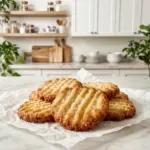
Rich, crumbly, golden French butter cookies (sablés Bretons) made with salted butter, sugar, egg yolks, and flour, finished with a crosshatch pattern and an egg yolk glaze.
Ingredients
1/2 cup plus 5 tablespoons (184 g) salted butter, at room temperature
1/2 cup (100 g) granulated sugar
1 teaspoon vanilla bean paste or vanilla extract
3 large egg yolks, divided
2 cups (240 g) all-purpose flour, plus more for dusting
1/2 teaspoon water, for the egg wash
Instructions
1. Preheat the oven to 375°F (190°C). Line a baking sheet with parchment paper.
2. In a stand mixer fitted with the paddle attachment, beat the butter and sugar until well blended and light in color, about 2 minutes.
3. Add 2 of the egg yolks and the vanilla and mix until incorporated. Scrape down the sides of the bowl.
4. Add the flour and mix on low until the dough begins to come together.
5. Turn the dough out onto a floured work surface and roll it out to 1/4 inch (6 mm) thick, adding flour if it sticks.
6. Cut out circles with a 2-inch (5 cm) cookie cutter or a glass and transfer them to the baking sheet, spacing them about 2 inches (5 cm) apart. Gather and re-roll the scraps.
7. Beat the remaining egg yolk with the 1/2 teaspoon water. Press a crosshatch pattern onto the top of each cookie with a fork, then brush with the egg yolk.
8. Bake for 13 to 15 minutes, until golden brown.
9. Cool on a wire rack.
Notes
Based on the Sablés Bretons recipe shared by Chouquette Kitchen (the butter, sugar, vanilla, egg yolk, and flour quantities, the 375°F oven, the 1/4 inch thickness, the 2-inch cutter, the crosshatch and egg yolk glaze, the 13 to 15 minute bake, and a yield of about 20 cookies are from the source). The mixing details, the water in the egg wash, and the tips below are estimates, and the recipe has not been tested. Use salted butter, ideally a high-fat European-style butter. If you only have unsalted butter, add about 1/2 teaspoon of salt.
If the dough is soft or sticky, chill it for 30 minutes before rolling.
Do not overmix after adding the flour, or the cookies will be tough.
Nutrition is an approximate estimate per cookie (about 20 cookies).
- Prep Time: 30 minutes
- Cook Time: 15 minutes
- Category: Dessert
- Method: Baking
- Cuisine: French
Nutrition
- Serving Size: 1 cookie
- Calories: 138
- Sugar: 5g
- Sodium: 60mg
- Fat: 8g
- Saturated Fat: 5g
- Carbohydrates: 14g
- Fiber: 0g
- Protein: 2g
- Cholesterol: 47mg
Table of Contents

Gianna Poulef
I’m Gianna Poulef from Poulef Recipes. I love sharing perfected dishes from my kitchen. I’m sure they’ll earn a spot in your heart. Let’s savor this journey together!.
Let’s be friends!