
Thanks for being here! I’m so excited to share this with you. Making an Easy No Knead Rosemary Garlic Dutch Oven Loaf changed the way I think about bread—zero fuss, maximum aroma. This loaf is the kind of recipe that makes your kitchen smell like late-afternoon comfort: fragrant rosemary, toasted garlic, that crackly golden crust. It’s perfect for weeknight dinners, cozy brunches, and the nights you want something warm to dip into soup. I promise: if you can stir and wait, you can do this.
Overview of Recipe Content
This recipe is an Easy No Knead Rosemary Garlic Dutch Oven Loaf — a simple, hands-off artisan-style bread baked in a covered Dutch oven for a blistered crust and moist, open crumb. Serve it with soups, stews, olive oil for dipping, or slice and make the best garlic toast you’ve ever had. The taste: earthy rosemary, mellow roasted garlic, a touch of olive oil, and a hint of tang from a slow fermentation (even if you proof overnight in the fridge).
Why you’ll love it:
It’s easy — no kneading, minimal active time.
It’s dramatic — single loaf, beautiful presentation, bakery-quality crust.
It’s versatile — pair with salads, pasta, or a cheese board.
Seasonal benefits — rosemary thrives year-round as an evergreen herb; this loaf fits cozy autumn nights and bright spring dinners alike.
Nutritional benefits: a loaf made with whole-grain or part-whole-grain flours provides fiber and more sustained energy than store-bought sandwich loaves. Plus, adding olive oil and garlic brings heart-healthy monounsaturated fats and immune-supporting compounds.
Ingredients
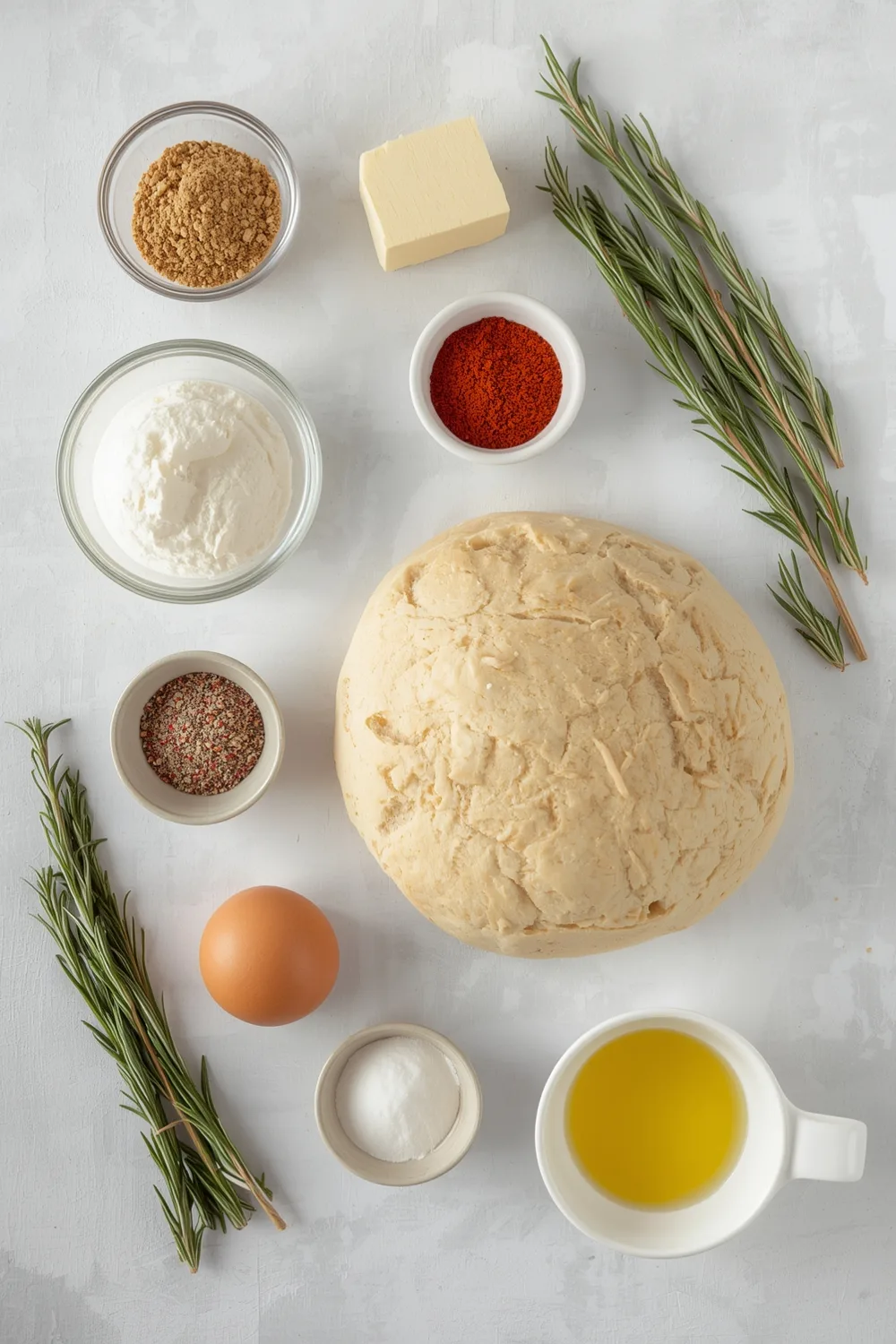
- 3 cups (360 g) bread flour (or 2 cups bread flour + 1 cup whole wheat for nuttier flavor)
- 1 1/2 teaspoons fine sea salt
- 1/2 teaspoon instant yeast (or 1 teaspoon active dry yeast)
- 1 1/2 cups (360 ml) warm water (about 95–105°F / 35–40°C)
- 2 tablespoons extra-virgin olive oil, plus more for drizzling
- 2–3 cloves garlic, finely minced or grated
- 1–2 tablespoons fresh rosemary, finely chopped (or 2 teaspoons dried)
- Optional: coarse sea salt for finishing
Tools Needed
- Large mixing bowl (or a sturdy container)
- Rubber spatula or wooden spoon
- Kitchen scale (highly recommended for accuracy)
- Measuring cups and spoons
- Large Dutch oven with lid (approx. 4–6 quart)
- Parchment paper (optional but helpful)
- Sharp knife or lame for scoring (or a serrated knife)
- Cooling rack
Suggested Substitutions and Additions
- Flour substitutions: all-purpose flour works (bread flour gives better structure); for a heartier loaf, swap 1 cup for whole wheat or spelt.
- Yeast options: instant yeast mixes directly; active dry yeast works if bloomed first in the water.
- Dairy-free: this recipe is naturally dairy-free.
- Add-ins: fold in 1/3 cup chopped olives, toasted pine nuts, or a tablespoon of honey for a hint of sweetness.
- Herb swap: thyme, sage, or a mix of herbs de Provence are great if you’re out of rosemary.
How to Make Easy No Knead Rosemary Garlic Dutch Oven Loaf

Step 1: Mix the Dry Ingredients
In a large bowl, whisk together the flour, salt, and instant yeast. The aroma of the flour is subtle, almost sweet—this is the blank canvas for those bold rosemary-and-garlic flavors.
Make sure the salt is evenly distributed (salt can weaken yeast if clumped).
Step 2: Add Water, Oil, Rosemary, and Garlic
Pour the warm water into the flour and stir gently with a wooden spoon until a shaggy, sticky dough forms. Stir in the olive oil, minced garlic, and chopped rosemary. The dough will be loose and a bit tacky — that’s exactly what you want.
Once combined, scrape the dough into a clean, lightly oiled bowl and cover tightly with plastic wrap or a lid.
Step 3: First Rise—Slow and Flavorful
Let the dough rest at room temperature for 1–2 hours until it puffs slightly. For best flavor and texture, refrigerate overnight (8–18 hours) — the slow cold fermentation deepens flavor and makes the crumb tastier and more complex.
You’ll know it’s ready when your dough has risen and smells mildly fermented with a hint of yeasty sweetness and garlic—that warm, homey scent that tells you bread is happening.
Step 4: Shape the Loaf
Gently turn the dough out onto a floured surface. With lightly floured hands, fold the edges into the center just a few times to create surface tension. Don’t overwork it—no kneading required.
Shape the dough into a round boule by tucking the edges underneath, creating a taut surface on top. Place it seam-side down on a piece of parchment paper for easy transfer, or directly into a floured proofing bowl.
Step 5: Second Rise
Cover and let the shaped loaf rest for 45 minutes to 1 hour at room temperature. It should puff up noticeably, soft to the touch, and airy beneath the surface.
The second rise is when the dough develops those delicious little gas pockets—picture light, billowy dough ready to puff into an airy crumb.
Step 6: Preheat Your Dutch Oven and Bake
About 30 minutes before baking, place your empty Dutch oven (with lid) in the oven and preheat to 450°F (230°C). Preheating the pot is the secret to that restaurant-level crust.
When hot, carefully remove the pot (use oven mitts—very hot!) and lift the dough on the parchment into the pot. Score the top with a sharp knife or lame—one confident slash or a cross pattern will do.
Drizzle a little olive oil on top and sprinkle with coarse sea salt and a few rosemary leaves if you like.
Cover and bake for 25 minutes. Then remove the lid and bake for another 15–20 minutes until the crust is deep golden brown and crackly. You’ll know it’s ready when it smells nutty and golden and the loaf sounds hollow when tapped on the bottom (careful—use an oven mitt to handle it).
Step 7: Cool and Slice
Remove the loaf to a cooling rack and resist slicing for at least 20–30 minutes. The crumb continues to set as it cools—slicing too early gives a gummy texture.
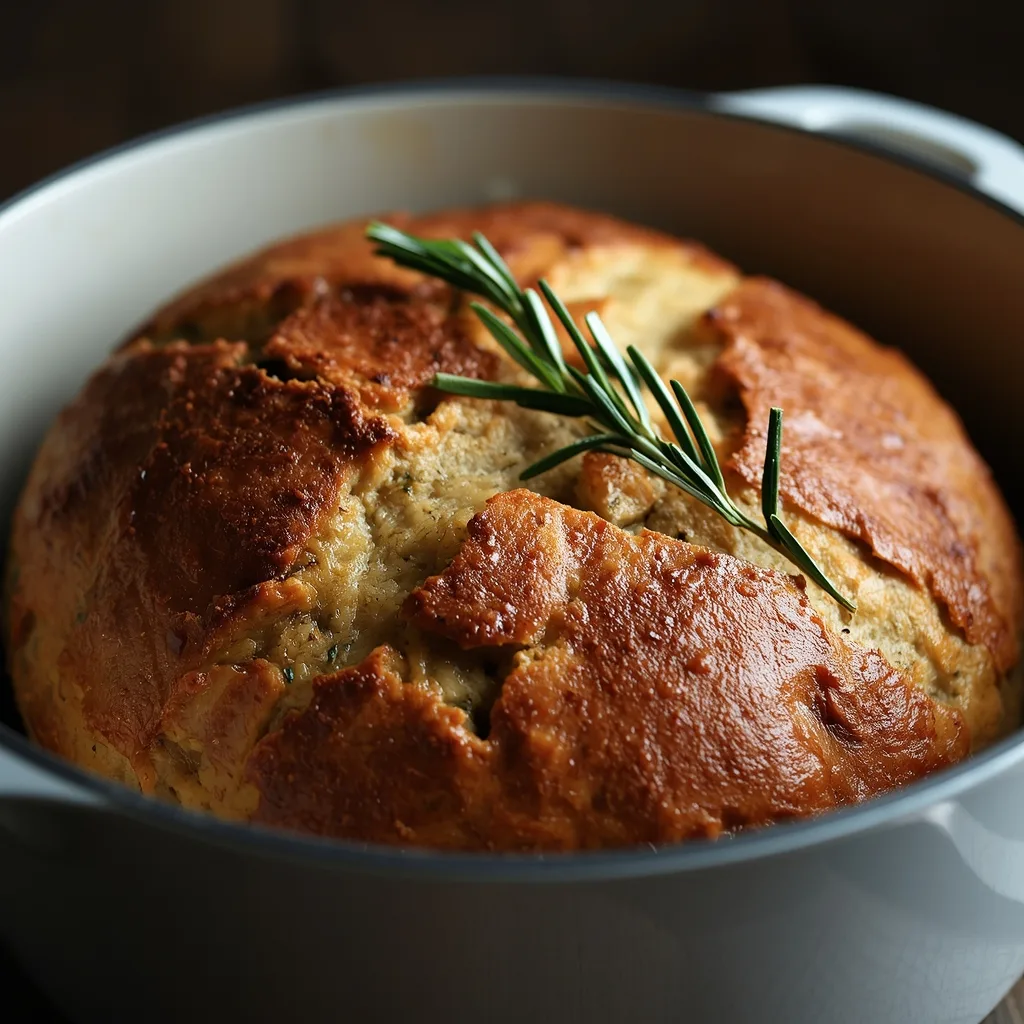
When you slice into this loaf, the crust should crackle, the aroma of rosemary and garlic should lift into the air, and the interior should be open with tender air pockets.
What to Serve with Easy No Knead Rosemary Garlic Dutch Oven Loaf
This loaf makes everything feel special:
- Olive oil and balsamic for dipping (simple and classic)
- A bowl of roasted tomato soup or a hearty lentil stew
- Soft cheeses like ricotta or burrata, drizzled with honey and cracked black pepper
- Use it to make sandwiches—roasted vegetables and goat cheese are a favorite
Related recipe ideas you’ll love:
- Low carb cheesy cauliflower bread
- Easy cottage cheese cloud bread
- For dessert after your bread course: Flourless almond coconut cake with greek yogurt and Flourless banana chocolate coconut cake
Tips for Making It Perfect
What to prep in advance:
- Chop the rosemary and mince the garlic ahead and keep them in the fridge — it speeds up assembly.
- Measure flour by weight the night before so you can mix and pop the dough into the fridge quickly.
How to fix common mistakes:
- Dough too sticky? Resist the urge to add much more flour; instead oil your hands and proceed. A slightly sticky dough yields the best crumb.
- Dough not rising? Check yeast freshness. If using active dry yeast, bloom it in warm water with a pinch of sugar for 5–10 minutes before adding.
How to make it ahead or double the batch:
- Make one big batch and divide into two smaller proofing bowls for two loaves (bake one now, one later), or bake both if you have two Dutch ovens.
- Freeze a fully cooled loaf wrapped tightly; thaw at room temperature and refresh in a 350°F oven for 10–12 minutes.
Extra tip: If you love an ultra-crispy crust, pop the baked loaf back into a 500°F oven for 2–3 minutes—watch closely so it doesn’t darken too much.
Storage Instructions
- Room temperature: Store the loaf wrapped in a tea towel or paper bag for up to 2 days to maintain crust texture. Plastic will soften the crust but keep the crumb moist.
- Refrigeration: Not recommended for bread (it accelerates staling).
- Freezing: Slice the cooled loaf, wrap individual slices or the whole loaf tightly in plastic, then foil. Freeze up to 3 months. Reheat directly from frozen in a 350°F oven for 10–15 minutes, or toast slices.
- Reheating: Sprinkle with a few drops of water and reheat at 350°F for 8–10 minutes to refresh crispness and warmth.
General Information
No-knead bread gained popularity in home baking largely thanks to the 2006 New York Times recipe that made artisan bread accessible to the masses. The method emphasizes time over muscle: long fermentation builds flavor and structure naturally. Rosemary and garlic are classic Mediterranean pairings — rosemary adds piney, resinous notes while garlic brings savory warmth. For me, this loaf is a memory-maker: my first time baking a no-knead loaf, I carried it to a neighbor’s dinner, and we ate it straight from the pot, laughing and stealing slices. Bread makes gatherings easier; it becomes the edible centerpiece.
Cooking Summary:
Prep Time: 15 minutes
Cook Time: 40–45 minutes
First Rise: 1–2 hours at room temp or 8–18 hours in refrigerator
Total Time: 10–19 hours (mostly hands-off)
Yield: 1 medium loaf
Category: Bread
Method: Baking (Dutch oven)
Cuisine: American / Artisan-style
Diet: Vegetarian
Frequently Asked Questions
Q: Can I use all-purpose flour instead of bread flour?
A: Yes. All-purpose will work fine but bread flour gives better chew and oven spring. If you use AP flour, the loaf may be slightly less airy.
Q: How long does this bread stay fresh?
A: Best eaten within 48 hours for crusty texture. Use freezing for longer storage.
Q: My crumb was gummy—what happened?
A: Likely you sliced too early or underbaked slightly. Let the loaf cool fully (20–30 minutes) before slicing and ensure the internal temp is around 200–205°F if you want to be exact.
Q: Can I make this gluten-free?
A: Gluten-free no-knead bread is tricky; it requires a tested GF flour blend and often xanthan gum and different hydration. I recommend using a tested gluten-free dutch oven loaf recipe.
Q: Can I add cheese or olives?
A: Absolutely—fold in 1/3 to 1/2 cup of mix-ins gently during the shaping stage.
Conclusion
There’s something quietly magical about turning four simple pantry ingredients into a loaf that fills a home with scent and warmth. The Easy No Knead Rosemary Garlic Dutch Oven Loaf is forgiving, delicious, and makes any meal feel complete — whether you’re serving a humble soup or an elaborate cheese board. The method lets time do the work, and the reward is a crust that crackles and a crumb that invites butter and conversation.
Here are some recipes related to Easy No Knead Rosemary Garlic Dutch Oven Loaf ideas:
- Low carb cheesy cauliflower bread, Easy cottage cheese cloud bread, Flourless almond coconut cake with greek yogurt, Flourless banana chocolate coconut cake
If you love cozy recipes like this, subscribe to my email list!
Interactive Elements
Please leave a review or comment below — I read every one and love hearing how your loaf turned out. Share a photo on https://www.pinterest.com/poulefrecipe/ so I can see your beautiful crusts!
Nutritional Information
Approximate per serving (1/8 of loaf)
- Calories: 220 kcal
- Carbohydrates: 42 g
- Protein: 6 g
- Fat: 4.5 g
- Fiber: 2.5 g
- Sodium: 380 mg
Thank you for spending time here in my kitchen—bake something warm, share it with someone you love, and come back to tell me all about it. Warmly, and happy baking!

Gianna Poulef
I’m Gianna Poulef from Poulef Recipes. I love sharing perfected dishes from my kitchen. I’m sure they’ll earn a spot in your heart. Let’s savor this journey together!.
Let’s be friends!
Comforting Easy No Knead Rosemary Garlic Dutch Oven Loaf
By Gianna Poulef
Ingredients
Instructions
Save & Follow ❤️
PoulefRecipes : Easy recipes - Dinner ideas & More
Save to Pinterest Follow Account