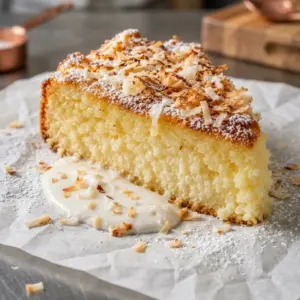


This Coconut Ricotta Custard Cake takes a simple butter cake and transforms it with whole milk ricotta, which bakes into a soft, custard-like crumb unlike anything a standard cake batter can achieve on its own. Sweetened shredded coconut folds in for texture and flavor, making this a genuinely easy cake with a genuinely special result — no layering, no filling, just one bowl, one pan, and a wonderfully tender bite.
Why You’ll Love This Recipe
- Ricotta bakes into a soft, custard-like crumb you won’t get from a standard cake batter
- Sweetened shredded coconut adds texture and flavor throughout
- Simple one-pan method — no layering or filling required
- Just a handful of pantry staples plus ricotta and coconut
- A generous 10 slices from one 9-inch cake
Because it bakes as a single round layer with no frosting or filling to assemble, this cake also comes together with very little hands-on time, making it an easy option for a weeknight bake that still feels a little special.
What Does It Taste Like?
This cake has a soft, tender, almost custardy crumb thanks to the ricotta folded into the batter, with a mild sweetness and a subtle tang from the cheese. The shredded coconut adds pockets of chew and a warm, tropical flavor throughout, while the vanilla rounds everything out. It’s rich without being heavy, and moist enough to enjoy plain, with no frosting needed.
Recipe Overview
- Prep Time: 15 minutes
- Cook Time: 50 minutes
- Total Time: 65 minutes
- Servings: 10 slices
Ingredients
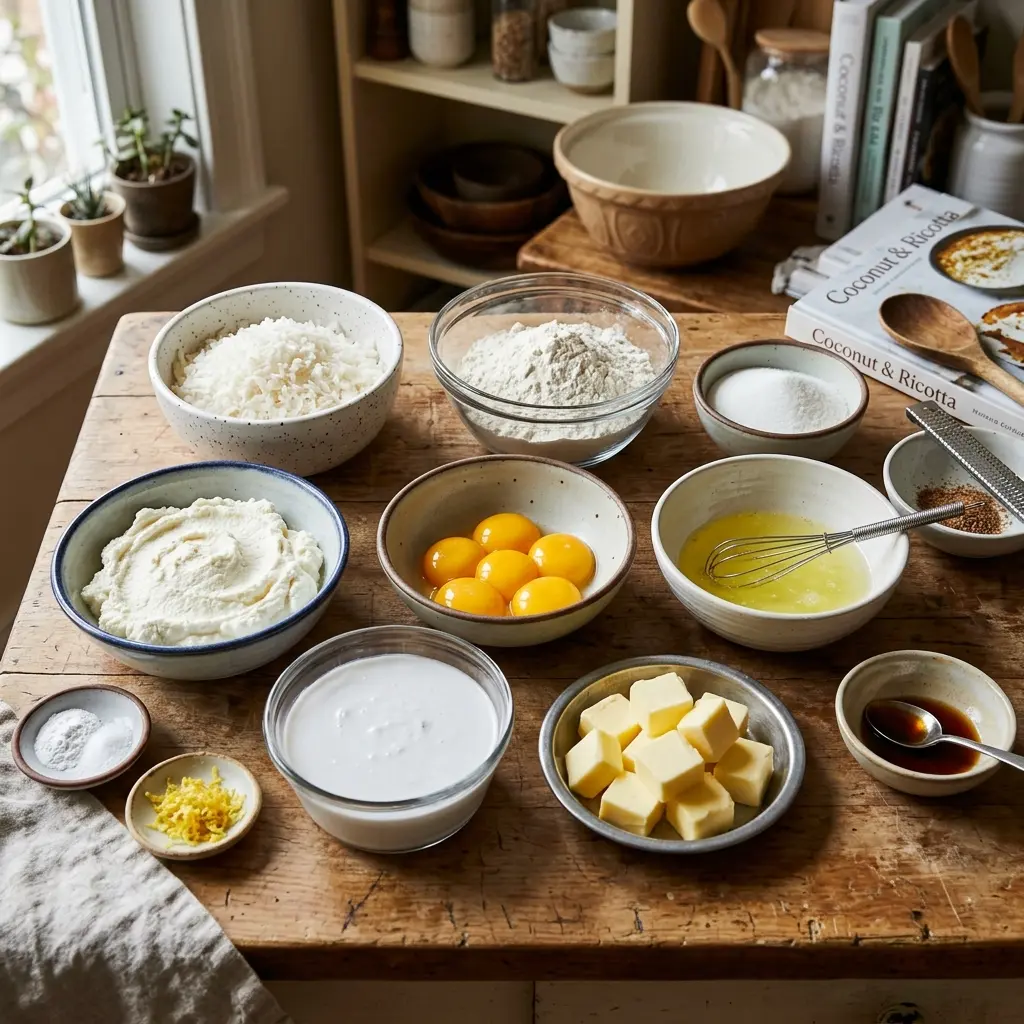
- 1½ cups all-purpose flour
- 1 cup granulated sugar
- 2 teaspoons baking powder
- ½ teaspoon salt
- ½ cup unsalted butter, softened
- 3 large eggs, room temperature
- 15 oz whole milk ricotta cheese
- 1 teaspoon vanilla extract
- 1 cup sweetened shredded coconut
Ingredient Notes
Whole milk ricotta cheese: Full-fat ricotta is essential here — lower-fat versions have more water content and won’t give the cake its signature moist, custardy texture.
Butter: Softened to room temperature so it creams properly with the sugar for a light, fluffy base.
Eggs: Added one at a time so each fully incorporates into the batter before the next goes in.
Sweetened shredded coconut: Folded in gently at the end so it stays distributed through the batter rather than sinking.
Baking powder: The leavening agent here — make sure it’s fresh so the cake rises properly despite the moisture from the ricotta.
Kitchen Tools You’ll Need
- 9-inch round cake pan
- Electric mixer (stand or hand)
- Mixing bowls
- Rubber spatula
- Wire cooling rack
A stand mixer isn’t strictly required — a hand mixer works just as well here, since the batter doesn’t need extended beating once the ricotta and eggs are incorporated.
Substitutions and Variations
These are optional ideas, not part of the original recipe:
- A light dusting of powdered sugar on top makes an easy, no-fuss finishing touch since this cake doesn’t call for frosting.
- Toast the shredded coconut before folding it in for a deeper, nuttier coconut flavor.
- Serve with a spoonful of whipped cream or fresh berries on the side.
How to Make the Recipe
This is a classic creaming-method cake with a twist: butter and sugar are beaten together first, then eggs are added one at a time along with the ricotta, before the dry ingredients and coconut are folded in. The ricotta is what sets this cake apart, softening the crumb into something closer to a custard than a typical butter cake.
Step-by-Step Instructions
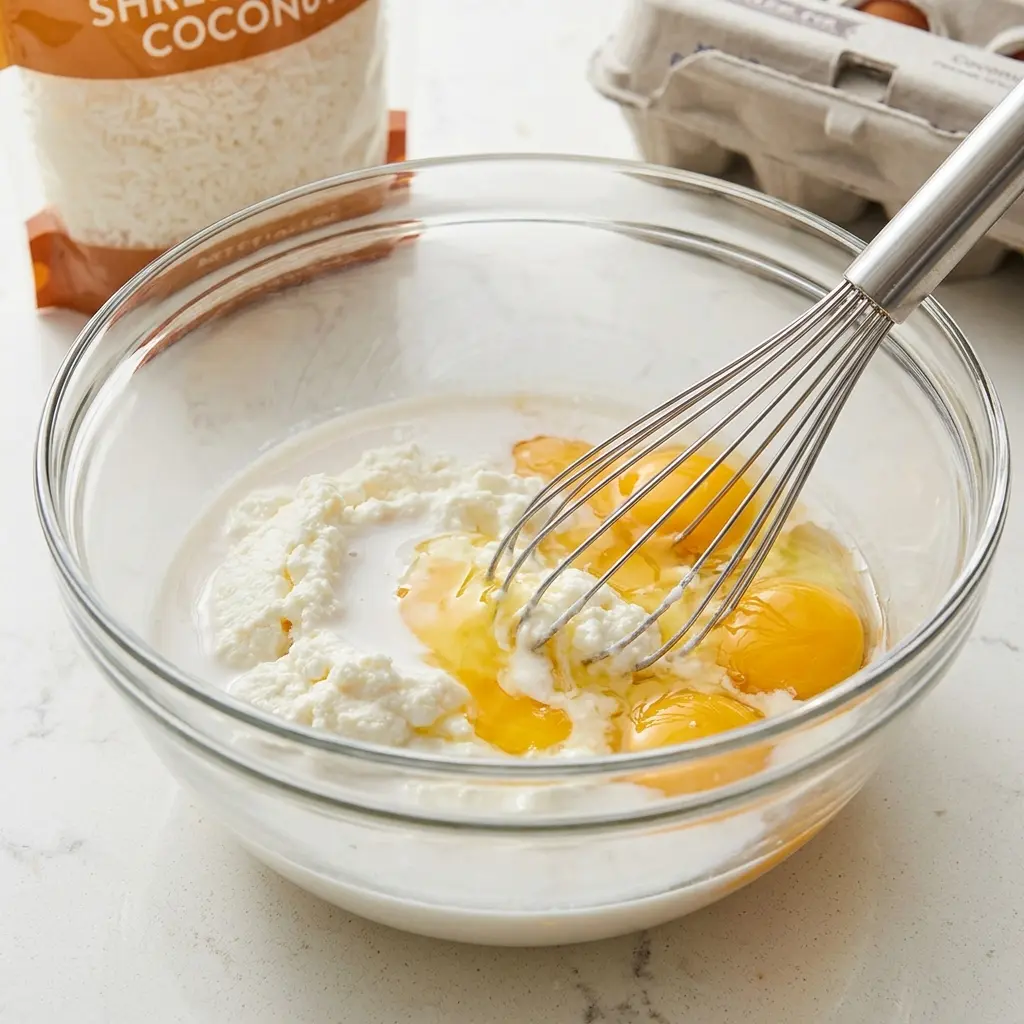
- Preheat the oven to 350°F. Grease and flour a 9-inch round cake pan.
- Whisk together the flour, baking powder, and salt in a medium bowl; set aside.
- Using an electric mixer, beat the softened butter and sugar until light and fluffy, about 3–4 minutes.
- Add the eggs one at a time, then mix in the ricotta cheese and vanilla until just combined.
- Reduce the mixer speed to low and gradually add the dry ingredients, mixing only until the flour disappears.
- Gently fold in the shredded coconut with a spatula.
- Pour the batter into the prepared pan and bake 45–55 minutes, until a skewer inserted into the center comes out clean.
- Cool in the pan for 15 minutes, then invert onto a wire rack to cool completely.
Tips for Success
- Use room temperature butter and eggs so the batter comes together smoothly.
- Avoid overmixing once the flour is added — mix only until it disappears to keep the cake tender.
- Fold in the coconut gently rather than stirring vigorously, so it stays evenly distributed.
- Let the cake cool in the pan for the full 15 minutes before inverting, so it releases cleanly.
If the top browns faster than the center sets, loosely tent the pan with foil for the last 10-15 minutes of baking so the crumb finishes cooking through without the surface over-darkening.
How to Know It’s Done
The cake is done when a skewer inserted into the center comes out clean, with no wet batter clinging to it, and the top is lightly golden.
What to Serve With It
This cake is lovely on its own with coffee or tea. For more ricotta and coconut inspiration from Poulef, try our Almond Ricotta Coffee Cake with Pistachio or our Sticky Coconut Cake.
A hot cup of espresso or a milky chai also pairs nicely with the cake’s coconut and vanilla notes, if you’re looking for a drink pairing beyond plain coffee or tea.
Storage Instructions
The recipe source didn’t specify an exact storage duration. As general guidance for a moist, ricotta-based cake like this one: store it covered at room temperature for a day or so, or in the refrigerator for closer to a week, since the ricotta makes it more perishable than a typical butter cake.
Freezing Instructions
The recipe source didn’t provide specific freezing instructions. As general guidance: this cake likely freezes well wrapped tightly for up to a couple of months, given its moist, custardy crumb; thaw in the refrigerator before serving.
Common Mistakes
- Using low-fat ricotta instead of whole milk ricotta, which can leave the cake watery instead of moist and tender.
- Overmixing the batter once the flour is added, which can make the cake dense instead of soft.
- Not cooling the cake in the pan long enough before inverting, which can cause it to break apart.
- Skipping room-temperature ingredients, which can make the batter harder to combine smoothly.
Frequently Asked Questions
Can I use low-fat ricotta instead of whole milk ricotta?
The recipe calls for whole milk ricotta specifically, since lower-fat versions have more water content and won’t give the same moist, custardy texture.
Do I need to frost this cake?
No, the recipe doesn’t include a frosting — it’s designed to be enjoyed plain, though a dusting of powdered sugar is a simple optional finish.
Why is my cake dense instead of light?
This is usually from overmixing the batter once the flour is added — mix only until the flour disappears.
Can I use unsweetened shredded coconut instead of sweetened?
Can I add lemon zest to this cake?
The recipe as written keeps the flavor simple with vanilla and coconut, but a bit of lemon or orange zest folded in with the dry ingredients is a natural addition if you’d like extra brightness alongside the coconut.
The recipe calls for sweetened shredded coconut; swapping in unsweetened isn’t part of the original recipe and will result in a less sweet cake.
Recipe Background
Ricotta cakes are a staple of Italian home baking, prized for how the cheese’s moisture bakes into the crumb rather than sitting on top, giving the finished cake a soft, almost custard-like texture without any separate custard layer or filling. Adding coconut is a simple way to bring extra flavor and texture to that same base, turning a classic technique into a cake with its own distinct character.
What makes ricotta especially useful in cakes is how differently it behaves compared to sour cream or yogurt, two other common moisture-adding ingredients in baking. Its curds carry more structure and less liquid, which is part of why a ricotta cake bakes up softer and more delicate rather than simply denser — the cheese folds into the batter and bakes into the crumb itself instead of just adding tang. That’s the quality this cake leans on, letting the coconut add flavor and texture on top of a base that’s already doing something a little unusual for a simple butter cake.
Conclusion
This Coconut Ricotta Custard Cake proves that a few humble ingredients — butter, eggs, ricotta, and coconut — can bake into something genuinely special. Simple to make and even easier to enjoy, it’s a cake worth keeping on repeat. Happy baking!
More Delicious Recipes You’ll Love
- Almond Ricotta Coffee Cake with Pistachio
- Vanilla Bean Ricotta Breakfast Loaf
- Sticky Coconut Cake
- The Dreamy Lemon Coconut Custard Bake
- Irresistible Italian Lemon Ricotta Cake
Follow Poulef on Pinterest
Loved this recipe? Save it for later and follow @PoulefRecipe on Pinterest for more cozy, comforting bakes: https://www.pinterest.com/poulefrecipe/
Nutritional Information
Nutrition is per slice (10 servings), as provided by the recipe source.
| Nutrient | Amount per Serving |
|---|---|
| Calories | 350 |

Coconut Ricotta Custard Cake
- Total Time: 1 hour 5 minutes
- Yield: 10 slices 1x
Description
A tender, custardy Coconut Ricotta Custard Cake made with whole milk ricotta and sweetened shredded coconut folded into a simple butter cake batter.
Ingredients
1½ cups all-purpose flour
1 cup granulated sugar
2 teaspoons baking powder
½ teaspoon salt
½ cup unsalted butter, softened
3 large eggs, room temperature
15 oz whole milk ricotta cheese
1 teaspoon vanilla extract
1 cup sweetened shredded coconut
Instructions
1. Preheat the oven to 350°F. Grease and flour a 9-inch round cake pan.
2. Whisk together the flour, baking powder, and salt in a medium bowl; set aside.
3. Using an electric mixer, beat the softened butter and sugar until light and fluffy, about 3–4 minutes.
4. Add the eggs one at a time, then mix in the ricotta cheese and vanilla until just combined.
5. Reduce the mixer speed to low and gradually add the dry ingredients, mixing only until the flour disappears.
6. Gently fold in the shredded coconut with a spatula.
7. Pour the batter into the prepared pan and bake 45–55 minutes, until a skewer inserted into the center comes out clean.
8. Cool in the pan for 15 minutes, then invert onto a wire rack to cool completely.
Notes
Use room temperature butter and eggs so the batter comes together smoothly.
Avoid overmixing once the flour is added — mix only until it disappears.
Full-fat ricotta is essential for the signature moist, custardy texture.
- Prep Time: 15 minutes
- Cook Time: 50 minutes
- Category: Dessert
- Method: Baking
- Cuisine: Italian
Nutrition
- Serving Size: 1 slice
- Calories: 350
Table of Contents

Gianna Poulef
I’m Gianna Poulef from Poulef Recipes. I love sharing perfected dishes from my kitchen. I’m sure they’ll earn a spot in your heart. Let’s savor this journey together!.
Let’s be friends!