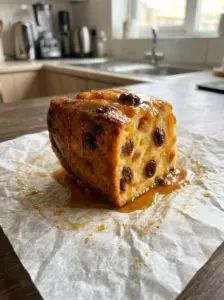

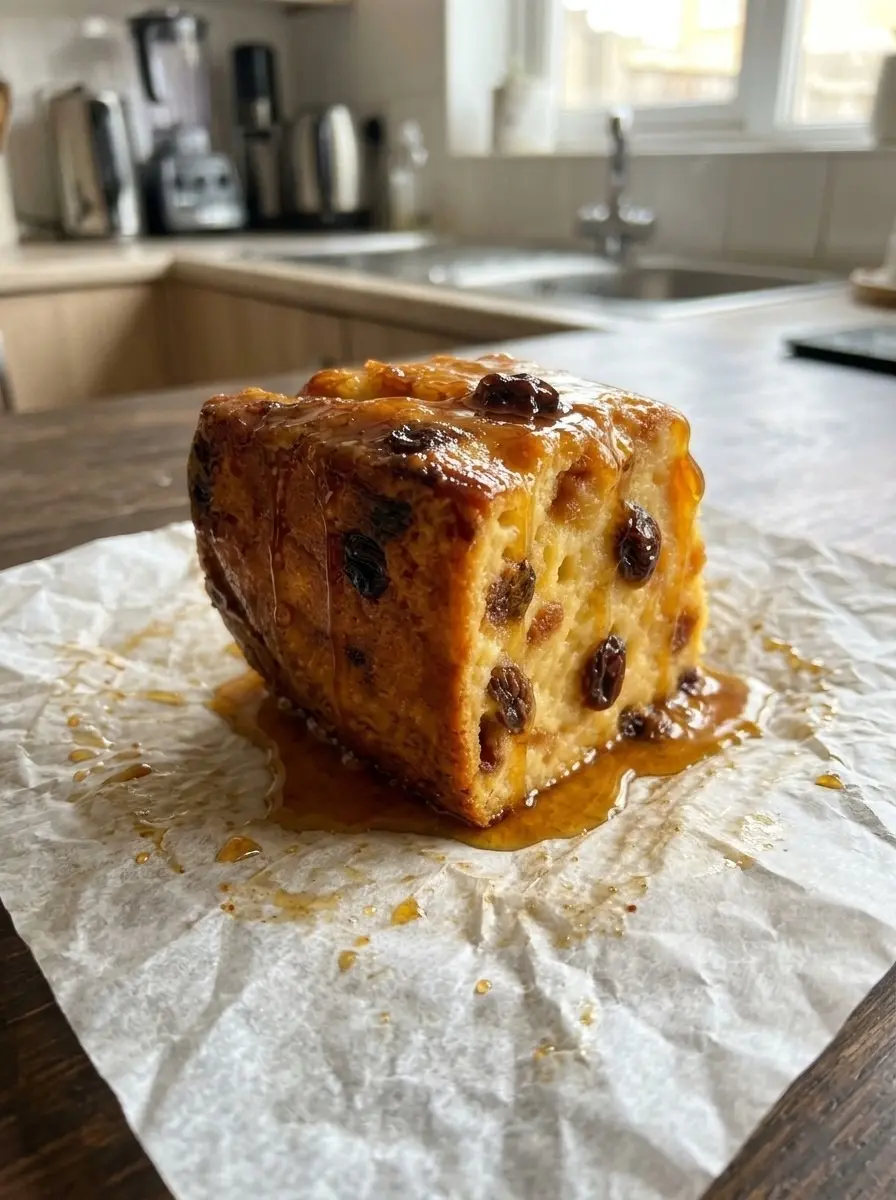
If you love bread pudding and a dessert that turns humble leftovers into something comforting, Calatrava bread is a recipe you will want to know. Known in Spain as pan de Calatrava, it is a creamy bread pudding made from day-old bread, milk, eggs, and sugar, scented with cinnamon and lemon. This version is studded with plump raisins, sweetened with brown sugar, baked gently in a water bath, and finished with a generous drizzle of golden caramel syrup.
Calatrava bread is a traditional dessert from the Murcia region of southeastern Spain, and it is a classic example of thrifty home cooking that makes the best of what is on hand. Stale bread, a bit of milk, and a few eggs become a tender, custardy pudding. The traditional version is baked over caramel and unmolded like a flan, while this Poulef version is baked in a simple square dish and topped with caramel syrup, so it is easy to cut into squares and serve warm or chilled.
Why You’ll Love This Recipe
- A smart, thrifty way to use up day-old bread or leftover sponge cake
- A silky, custardy texture with soft bread and sweet raisins
- Gentle cinnamon and lemon flavor inspired by the Spanish original
- A golden caramel syrup topping that makes every square extra decadent
- Can be made ahead and served warm or chilled
- Only a handful of simple pantry ingredients
- Serves 9 and cuts neatly into squares
It also keeps well, so you can bake it a day ahead and relax when guests arrive.
What Does Calatrava Bread Taste Like?
Calatrava bread tastes sweet, creamy, and gently spiced. The custard is smooth and tender, with warm cinnamon, a whisper of lemon, and the caramel-like depth of brown sugar. The bread softens into the custard while the raisins add chewy, juicy pops of sweetness. The top bakes to a golden brown, and the caramel syrup adds a glossy, slightly bittersweet finish. Served warm it is cozy, and served cold it is firm, creamy, and refreshing.
Recipe Overview
- Prep time: about 30 minutes, including soaking
- Bake time: 50 to 60 minutes
- Yield: 1 8-inch pudding, 9 servings
- Difficulty: Easy
- Method: Custard-soaked bread baked in a water bath
Ingredients
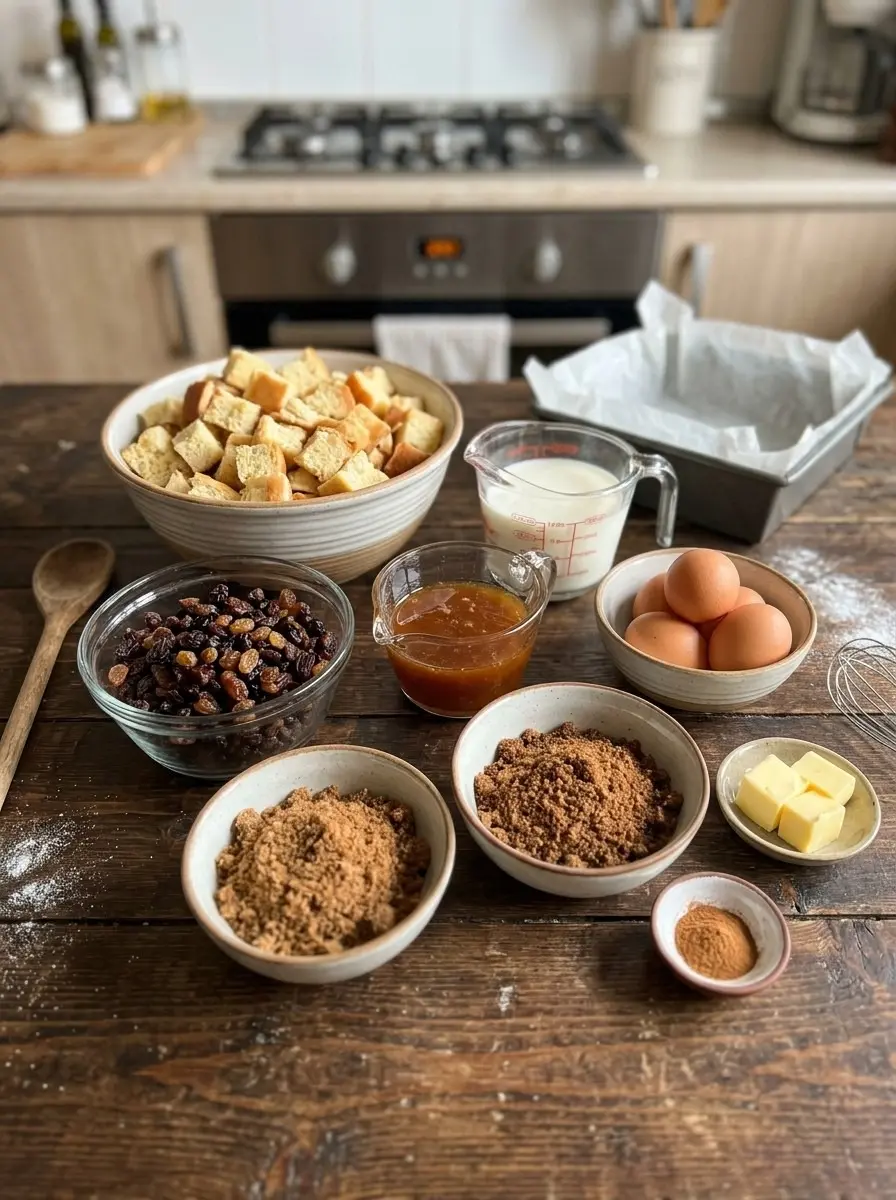
- 250 g (about 9 ounces) day-old bread or plain sponge cake, cut into 2 cm (3/4 inch) cubes
- 650 ml (about 2 3/4 cups) whole milk
- 5 large eggs
- 150 g (3/4 cup, packed) brown sugar
- 2 tablespoons (28 g) unsalted butter, melted, plus extra for the pan
- 1 teaspoon ground cinnamon
- 1 teaspoon finely grated lemon zest
- 1/2 cup (75 g) raisins
- 1/2 cup (120 ml) caramel syrup or sauce, for finishing
Ingredient Notes
Bread: Day-old white bread, a plain baguette, or leftover sponge cake and plain pastries all work. Many Spanish cooks use a mixture of whatever is on hand. Avoid bread with strong flavors, seeds, or heavy crusts, since they will change the taste and texture.
Milk: Whole milk gives the creamiest custard. Semi-skimmed milk can be used, but the pudding will be a little less rich.
Cinnamon and lemon zest: Cinnamon and lemon are the traditional flavorings of pan de Calatrava. Ground cinnamon mixes evenly through the custard, and the lemon zest keeps the pudding from tasting heavy. Use only the yellow part of the zest.
Brown sugar: It adds moisture and a deeper, caramel-like flavor than white sugar. Light or dark brown sugar both work.
Raisins: They plump in the custard as the pudding soaks and bakes. Soak them in a little warm water or rum for 10 minutes first if they are very dry.
Eggs: Five eggs set the pudding firmly enough to cut into squares but keep it tender. Use large eggs at room temperature for the smoothest mix.
Caramel syrup: Store-bought caramel sauce or a thin homemade caramel works. Warm it slightly so it drizzles easily.
Kitchen Tools You’ll Need
- 8-inch (20 cm) square baking dish
- Larger baking pan for the water bath
- Medium saucepan for the milk
- Large bowl and whisk
- Parchment paper
- Wire cooling rack
- Small jug for drizzling the caramel syrup
Substitutions and Variations
- Vanilla: Add 1 teaspoon of vanilla extract to the custard for extra warmth.
- Orange zest: Replace the lemon zest with orange zest for a sweeter citrus note.
- Rum raisins: Soak the raisins in a little rum or brandy before adding them.
- Traditional style: For the classic unmolded pudding, melt sugar into caramel in a loaf pan, pour in the custard, bake, and chill for at least 24 hours before unmolding.
- Individual cups: Bake the mixture in ramekins and reduce the baking time.
- Dairy-free: Use an unsweetened plant milk and dairy-free butter, though the texture will be less creamy.
How to Make Calatrava Bread
The process is simple: warm the milk, whisk the custard, soak the bread and raisins, bake in a water bath, and finish with caramel. The water bath is the one step that matters most, since it keeps the custard silky.
Step-by-Step Instructions
- Prepare the dish. Preheat the oven to 150°C (300°F). Butter an 8-inch (20 cm) square baking dish and line the bottom with parchment paper.
- Warm the milk. Warm the milk until steaming but not boiling. Remove from the heat.
- Make the custard. In a large bowl, whisk the eggs, brown sugar, melted butter, cinnamon, and lemon zest until smooth. Slowly whisk in the warm milk.
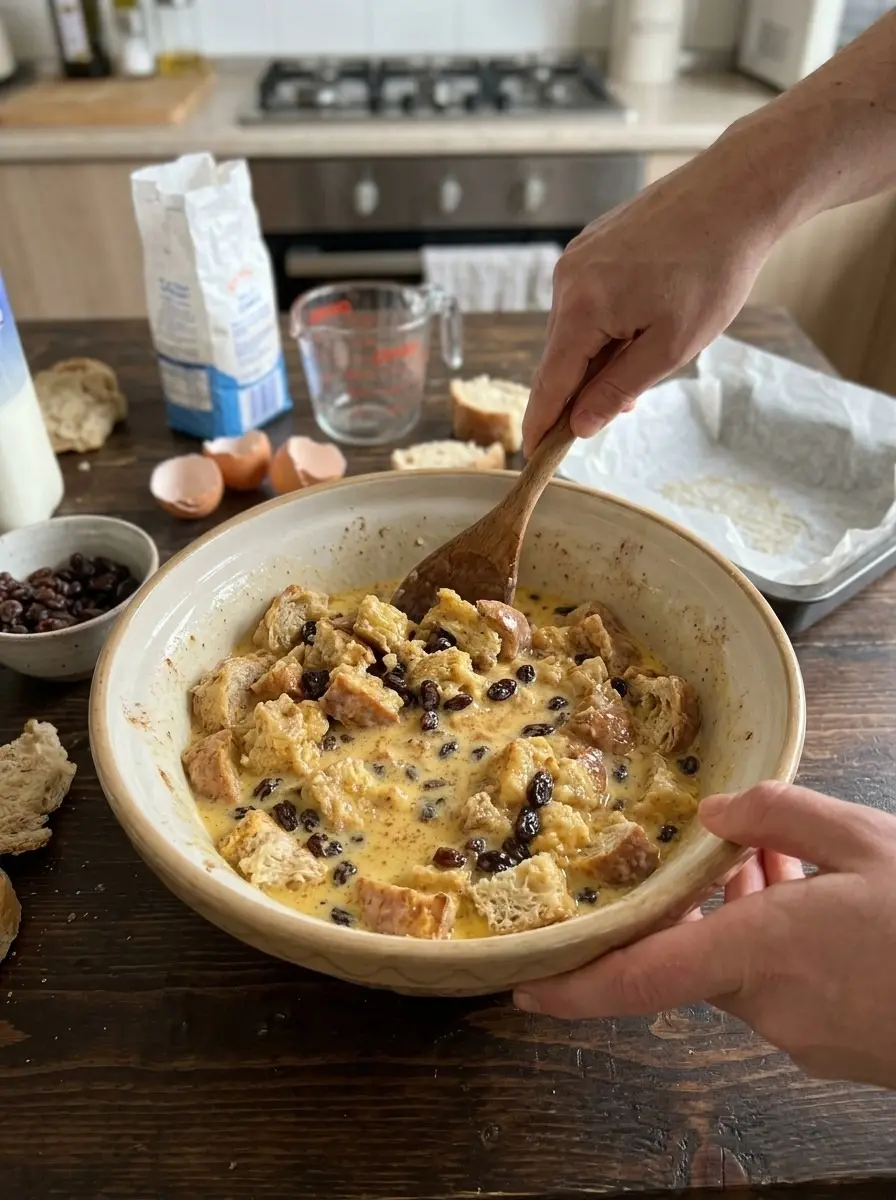
- Soak the bread. Add the bread cubes and raisins and stir gently. Let the mixture soak for 15 minutes, stirring once or twice, until the bread is soft.
- Bake in a water bath. Pour the mixture into the prepared dish. Place the dish in a larger baking pan and add hot water to come halfway up the sides. Bake for 50 to 60 minutes, until set and a knife inserted in the center comes out clean.
- Cool and serve. Cool for at least 30 minutes. Serve warm or chilled, drizzled generously with caramel syrup.
Tips for Success
- Let the bread soak fully so the pudding is creamy throughout rather than dry in spots.
- Do not let the milk boil, which can cook the eggs when combined.
- Use a water bath so the custard cooks gently and does not crack or turn rubbery.
- Stir the mixture once more before pouring so the raisins are evenly distributed.
- Check for doneness with a knife in the center. It should come out clean.
- For neat squares, chill the pudding for a few hours before cutting.
- Warm the caramel syrup slightly so it drizzles in ribbons.
How to Know It’s Done
The pudding is done when the top is golden brown, the edges are set, and the center barely jiggles. A knife inserted in the middle should come out clean. It will firm up further as it cools and chills.
What to Serve With Calatrava Bread
Calatrava bread is rich and sweet, so it pairs well with something fresh or bitter:
- Strong coffee or café con leche
- Fresh berries or orange segments
- A dollop of whipped cream
- A small glass of sweet sherry or dessert wine
For a creamy dessert spread, add San Sebastian Cheesecake and Carrot and Pecan Sticky Pudding with Brown Sugar Cream.
Storage Instructions
Cover the pudding and keep it in the refrigerator for up to 4 days. Reheat individual squares in the microwave for 20 to 30 seconds if you prefer to serve them warm. Keep the caramel syrup separate and drizzle it on just before serving so the top stays glossy.
Freezing Instructions
Calatrava bread can be frozen, though the texture of the custard may change slightly. Wrap individual slices tightly in plastic wrap and then foil, and freeze for up to 1 month. Thaw overnight in the refrigerator before serving. For the best texture, enjoy it fresh from the refrigerator.
Common Mistakes
- Skipping the water bath. Direct heat makes the custard rubbery and can cause it to crack.
- Baking at too high a temperature. A low, gentle oven keeps the texture silky.
- Not soaking the bread. Dry cubes bake up tough instead of creamy.
- Using fresh, soft bread. It turns mushy. Day-old bread holds up better.
- Letting the milk boil. Hot milk can scramble the eggs when combined.
- Cutting too soon. A warm pudding is soft, so chill it briefly for clean squares.
Frequently Asked Questions
What is Calatrava bread?
Calatrava bread, or pan de Calatrava, is a traditional Spanish dessert from the Murcia region. It is a caramel-topped pudding made with leftover bread, milk, eggs, and sugar.
Is Calatrava bread the same as flan?
It is similar, since both are caramel-topped baked custards, but Calatrava bread also contains bread or sponge cake, which gives it a denser, more bread-pudding-like texture.
Can I use sponge cake instead of bread?
Yes. Many traditional versions use stale sponge cake, plain pastries, or a mixture of bread and cake.
Why is the traditional version chilled for 24 hours?
Traditional pan de Calatrava is unmolded from a caramel-lined pan, so it needs a long chill to firm up and release cleanly. This squared version can be served warm or after a shorter chill.
Can I make it without a water bath?
The water bath is strongly recommended because it gives gentle, even heat and prevents a rubbery texture.
Can I use other dried fruit?
Yes. Currants, sultanas, or chopped dried apricots work well in place of raisins.
Recipe Background
Pan de Calatrava is a traditional dessert from the Region of Murcia in southeastern Spain, often associated with the town of Calatrava and with thrifty household baking. Like many bread puddings around the world, it was created to avoid wasting stale bread, turning leftovers into a sweet treat with milk, eggs, and sugar. Published versions vary slightly in their flavorings, the type of bread or sponge cake used, and the cooking method, from oven baking to steaming. This Poulef version keeps the common formula of cinnamon and lemon flavored custard and a slow bake in a water bath, and adds raisins, brown sugar, and a caramel syrup topping.
Conclusion
Calatrava bread is proof that simple ingredients and a little patience can create something truly special. It is creamy, fragrant, and generously topped with caramel, which makes it feel far more special than its humble ingredients. Make it ahead for your next dinner, serve it warm or chilled with coffee, and enjoy a taste of Spanish-style home baking.
More Delicious Recipes You’ll Love
- Easy Caramel Flan
- Classic New Orleans Bread Pudding
- 1-Hour Cinnamon Raisin Bread Pudding
- Mary Berry Bread and Butter Pudding
- Sticky Toffee Pudding Tray Bake
Follow Poulef on Pinterest
Loved this recipe? Save it for later and follow @PoulefRecipe on Pinterest for more cozy, comforting bakes: https://www.pinterest.com/poulefrecipe/
Nutritional Information
Nutrition is an approximate estimate per square (9 servings), calculated from standard ingredient values. Actual numbers will vary with the brands you use.
| Nutrient | Amount per Serving |
|---|---|
| Calories | 324 |
| Carbohydrates | 50g |
| Protein | 9g |
| Fat | 9g |
| Saturated Fat | 4g |
| Cholesterol | 120mg |
| Sodium | 228mg |
| Fiber | 1g |
| Sugar | 34g |
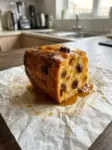
Calatrava Bread (Pan de Calatrava)
- Total Time: 1 hour 30 minutes
- Yield: 1 8-inch pudding (9 servings) 1x
Description
A Spanish-style bread pudding made from day-old bread and raisins soaked in a brown sugar, cinnamon, and lemon scented milk and egg custard, baked in a water bath and finished with golden caramel syrup.
Ingredients
250 g (about 9 ounces) day-old bread or plain sponge cake, cut into 2 cm (3/4 inch) cubes
650 ml (about 2 3/4 cups) whole milk
5 large eggs
150 g (3/4 cup, packed) brown sugar
2 tablespoons (28 g) unsalted butter, melted, plus extra for the pan
1 teaspoon ground cinnamon
1 teaspoon finely grated lemon zest
1/2 cup (75 g) raisins
1/2 cup (120 ml) caramel syrup or sauce, for finishing
Instructions
1. Preheat the oven to 150°C (300°F). Butter an 8-inch (20 cm) square baking dish and line the bottom with parchment paper.
2. Warm the milk until steaming but not boiling. Remove from the heat.
3. In a large bowl, whisk the eggs, brown sugar, melted butter, cinnamon, and lemon zest until smooth. Slowly whisk in the warm milk.
4. Add the bread cubes and raisins and stir gently. Let the mixture soak for 15 minutes, stirring once or twice, until the bread is soft.
5. Pour the mixture into the prepared dish. Place the dish in a larger baking pan and add hot water to come halfway up the sides.
6. Bake for 50 to 60 minutes, until set and a knife inserted in the center comes out clean.
7. Cool for at least 30 minutes. Serve warm or chilled, drizzled generously with caramel syrup.
Notes
Original Poulef recipe adapted from published pan de Calatrava recipes (Bread & Onions, Claudia & Julia, Thermorecetas, and a Region of Murcia tourism guide) that use 650 ml milk, 150 g sugar, 5 eggs, and about 200 g day-old bread or sponge cake for 6 servings, flavor the custard with cinnamon and lemon, bake in a water bath at about 150°C for about 60 minutes, and chill. This version swaps brown sugar for the white sugar, adds raisins, butter, and a caramel syrup topping, and bakes in a square dish. Those changes, the amount of bread, the pan size, and the bake time are estimates, so the recipe has not been tested.
Traditional pan de Calatrava is baked over a caramel layer and unmolded. This version is finished with caramel syrup instead.
Chilling overnight gives a firmer, sliceable pudding.
Nutrition is an approximate estimate per serving (9 servings).
- Prep Time: 30 minutes
- Cook Time: 60 minutes
- Category: Dessert
- Method: Baking
- Cuisine: Spanish
Nutrition
- Serving Size: 1 square
- Calories: 324
- Sugar: 34g
- Sodium: 228mg
- Fat: 9g
- Saturated Fat: 4g
- Carbohydrates: 50g
- Fiber: 1g
- Protein: 9g
- Cholesterol: 120mg
Table of Contents

Gianna Poulef
I’m Gianna Poulef from Poulef Recipes. I love sharing perfected dishes from my kitchen. I’m sure they’ll earn a spot in your heart. Let’s savor this journey together!.
Let’s be friends!