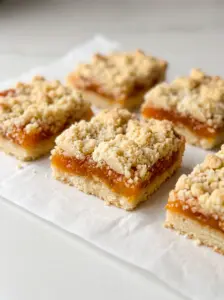

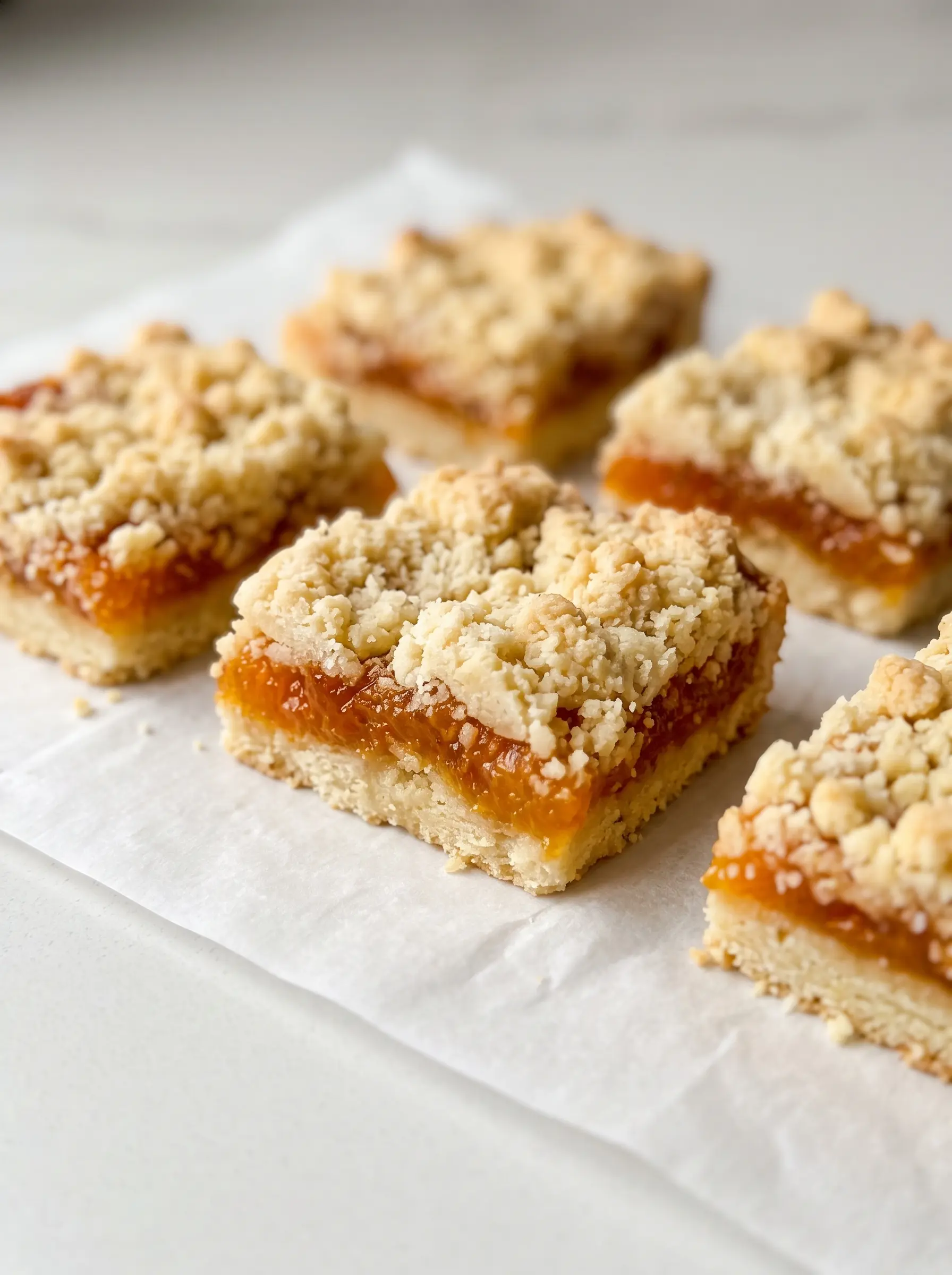
These Apricot Coconut Hungarian Tarts are the kind of old-fashioned little pastries that disappear almost as soon as they hit the dessert table. A tender, buttery cream-cheese pastry forms the base, while sweet apricot preserves and a lightly golden coconut filling create a beautiful contrast of textures and flavors.
The combination is especially delicious because the bright, slightly tangy apricot flavor keeps the coconut filling from tasting overly sweet. Each tart is rich without being heavy, with crisp golden edges and a soft, chewy center.
If you love traditional European pastries, homemade jam tarts, coconut desserts, or vintage family recipes, these little Hungarian-inspired tarts are worth adding to your baking list.
What Are Apricot Coconut Hungarian Tarts?
Hungarian tarts are an old-fashioned style of filled pastry made with a rich dough and a variety of fillings. Traditional versions can include nut fillings, fruit preserves, or coconut. Historical recipe collections describe a cream-cheese pastry made with butter and flour, pressed into small tart pans, then filled with preserves and coconut or other fillings.
For this Apricot Coconut Hungarian Tarts version, apricot preserves are spread into the bottom of each pastry shell before the coconut mixture is added.
The result is a small, elegant tart with three delicious layers:
| Layer | What it adds |
|---|---|
| Cream-cheese pastry | Buttery, tender, lightly tangy crust |
| Apricot preserves | Bright fruity sweetness and moisture |
| Coconut filling | Chewy texture and toasted coconut flavor |
Why You’ll Love These Apricot Coconut Hungarian Tarts
There are plenty of reasons these little pastries deserve a place in your holiday baking lineup.
Buttery and tender
The cream cheese and butter create a pastry that is rich and delicate rather than tough.
Sweet apricot flavor
Apricot preserves bring a fruity brightness that pairs beautifully with coconut.
Coconut adds texture
The shredded coconut becomes lightly golden as the tarts bake, giving the filling a wonderful chewy texture.
Perfectly portioned
Instead of cutting a large tart into slices, these are already individual servings.
Great for holidays
Their small size makes them perfect for Christmas cookie trays, afternoon tea, dessert tables, and homemade edible gifts.
Make-ahead friendly
The pastry dough can be prepared ahead of time, making these easier to fit into a busy baking schedule.
What Do Apricot Coconut Hungarian Tarts Taste Like?
The first flavor you notice is the buttery pastry, followed by sweet-tart apricot preserves.
Then comes the coconut filling, which adds a soft, chewy texture and a subtle toasted flavor as it bakes.
The overall flavor is sweet, but the apricot helps balance the richness of the pastry. If you enjoy the combination of apricot and coconut, these tarts have a particularly satisfying contrast between fruity, buttery, and nutty flavors.
Ingredients You’ll Need
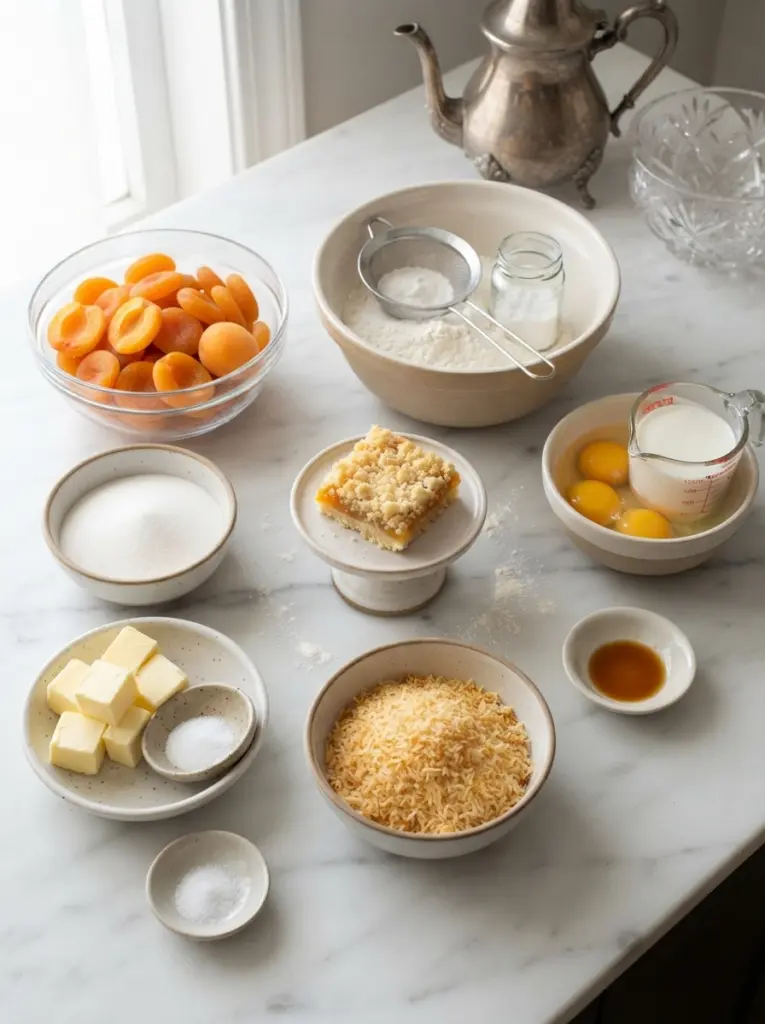
For the pastry
| Ingredient | Amount |
|---|---|
| Cream cheese, softened | 8 oz (226 g) |
| Unsalted butter, softened | 1 cup (226 g) |
| All-purpose flour | 2 cups (240 g) |
| Granulated sugar | 2 tablespoons |
| Vanilla extract | 1 teaspoon |
For the apricot layer
| Ingredient | Amount |
|---|---|
| Apricot preserves or thick apricot jam | 1/2 cup (160 g) |
For the coconut filling
| Ingredient | Amount |
|---|---|
| Large eggs | 2 |
| Granulated sugar | 1 cup (200 g) |
| Unsweetened shredded coconut | 2 cups (170 g) |
| Unsalted butter, melted | 1 teaspoon |
| Vanilla extract | 1 teaspoon |
The traditional recipe family uses a cream-cheese pastry and coconut filling, with preserves placed beneath the filling.
Kitchen Tools
You don’t need complicated equipment to make these tarts.
- Small tart pans or mini tart pans
- Mixing bowls
- Electric mixer
- Rolling pin
- Small spoon or offset spatula
- Measuring cups and spoons
- Wire cooling rack
- Baking sheet
How to Make Apricot Coconut Hungarian Tarts
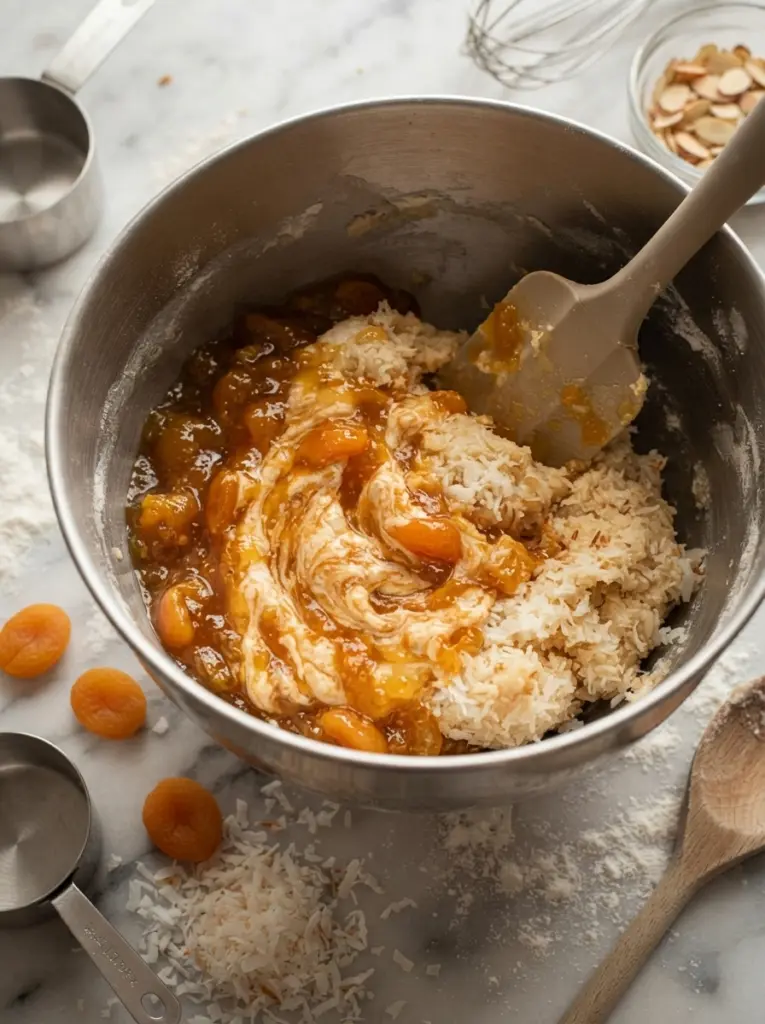
1. Prepare the pastry dough
Place the softened cream cheese and butter in a large mixing bowl.
Beat until smooth and creamy.
Add the sugar and vanilla and mix until combined.
Gradually add the flour, mixing just until a soft dough forms. Avoid overmixing once the flour has been incorporated.
The finished dough should be soft but workable.
2. Chill the dough
Shape the dough into a disk and wrap it well.
Refrigerate for about 30 minutes.
Chilling makes the dough easier to handle and helps the pastry keep its shape while baking.
3. Prepare the coconut filling
While the dough chills, make the filling.
Beat the eggs and sugar together until well combined.
Add the melted butter and vanilla.
Fold in the shredded coconut until the mixture is evenly combined.
The filling should be thick rather than runny.
4. Prepare the tart pans
Preheat the oven to 350°F (175°C).
Lightly grease the small tart pans.
Divide the chilled pastry dough into small portions.
Roll each portion gently and press it into the bottom and sides of the tart pans.
Try to keep the pastry layer reasonably even so the edges bake at the same rate as the bottoms.
5. Add the apricot preserves
Place a small amount of apricot preserves in the bottom of each pastry shell.
Spread it gently into an even layer.
Don’t overfill the shells with jam because the preserves will soften and spread slightly as they bake.
6. Add the coconut filling
Spoon the coconut mixture over the apricot preserves.
Fill each tart about three-quarters full, leaving a little room for the filling to expand during baking.
Smooth the tops lightly with the back of a spoon.
7. Bake
Place the tart pans on a baking sheet and bake at 350°F (175°C).
Bake for approximately 20–30 minutes, or until the pastry edges are golden and the coconut filling is lightly browned and set.
The exact baking time will depend on the size and depth of your tart pans.
8. Cool
Remove the tarts from the oven and allow them to cool in the pans for several minutes.
Once they are cool enough to handle, carefully transfer them to a wire rack.
Let them cool completely before serving.
The apricot layer will continue to set as the tarts cool.
How to Tell When They’re Done
The pastry should have lightly golden edges, while the coconut topping should look set and lightly browned.
Use these visual cues rather than relying only on the timer:
| What to look for | What it means |
|---|---|
| Golden pastry edges | The crust is baked |
| Lightly browned coconut | The filling has developed flavor and texture |
| Set center | The coconut mixture is cooked |
| Jam bubbling slightly | The fruit layer is hot and properly baked |
Avoid overbaking the tarts because the coconut topping can become dry and the pastry can lose its tender texture.
Tips for Perfect Hungarian Tarts
Use softened butter and cream cheese
Cold ingredients won’t blend as smoothly and can make the pastry harder to work with.
Don’t overwork the dough
Mix only until the flour disappears. Overworking pastry can make it less tender.
Chill before shaping
A short chilling period makes the dough easier to press into the tart pans.
Use thick apricot preserves
A thick jam works better than a very runny preserve because it stays between the pastry and coconut layers.
Don’t overfill
Leave a little space at the top of each tart for the coconut filling.
Let them cool completely
These tarts are easier to remove from the pans after cooling, and the filling becomes firmer as it reaches room temperature.
Can I Use Apricot Jam Instead of Preserves?
Yes.
Apricot jam and apricot preserves can both work well. Choose a thick product with a strong apricot flavor.
If your jam contains large pieces of fruit, you can leave them intact for a more rustic texture or warm the jam slightly and stir it until smooth before adding it to the pastry shells.
Can I Use Sweetened Coconut?
Yes, but keep in mind that sweetened coconut will make the filling noticeably sweeter.
For a more balanced tart, unsweetened shredded coconut works particularly well because the sugar and apricot preserves already provide plenty of sweetness.
Variations
Apricot Almond Hungarian Tarts
Replace part of the coconut with finely ground almonds and add a small amount of almond extract.
Apricot Orange Tarts
Add a little finely grated orange zest to the coconut filling. Orange and apricot make a naturally complementary combination.
Apricot Coconut Chocolate Tarts
Drizzle the cooled tarts with melted dark chocolate for a richer dessert.
Raspberry Coconut Tarts
Use raspberry preserves instead of apricot for a more intensely tart fruit flavor.
Peach Coconut Tarts
Peach preserves can be substituted for apricot when you want a softer, more delicate fruit flavor.
How to Serve Apricot Coconut Hungarian Tarts
These tarts are delicious at room temperature and make a beautiful addition to a dessert platter.
Serve them with:
- Hot coffee
- Black tea
- Vanilla tea
- Fresh berries
- Whipped cream
- A light dusting of powdered sugar
- Vanilla ice cream
For a holiday dessert table, arrange the tarts on a large platter and add a small dusting of powdered sugar just before serving.
Storage
Store completely cooled tarts in an airtight container.
| Storage method | Approximate storage |
|---|---|
| Room temperature | 1–2 days |
| Refrigerator | Up to 5 days |
| Freezer | Up to 2 months |
If refrigerated, allow the tarts to sit at room temperature for several minutes before serving so the pastry can soften slightly.
For freezing, place the cooled tarts in a freezer-safe container with parchment paper between layers.
Can You Freeze Hungarian Tarts?
Yes.
Let the baked tarts cool completely first.
Arrange them in a single layer on a tray and freeze until firm. Transfer them to an airtight freezer container or freezer bag.
Thaw them in the refrigerator or at room temperature.
For the best texture, avoid freezing them while they are still warm because condensation can make the pastry soggy.
Frequently Asked Questions
What are Hungarian Tarts?
Hungarian tarts are small filled pastries traditionally made with a rich pastry dough and different fillings, including fruit preserves, nuts, or coconut. Historical recipes describe a cream-cheese, butter, and flour pastry used for individual tarts.
Can I make these without cream cheese?
The cream cheese is an important part of this particular pastry because it contributes tenderness and a slight tang. For the closest result, it is best to keep it in the recipe.
What kind of apricot jam should I use?
Use a thick apricot jam or preserve with a concentrated fruity flavor. Avoid very watery jam because it can make the pastry base soggy.
Why did my coconut filling become too dry?
Overbaking is the most common reason. Remove the tarts once the coconut filling is set and lightly golden rather than deeply browned.
Why is my pastry difficult to press into the tart pans?
The dough may be too cold. Let it sit at room temperature for a few minutes before shaping. If it is still difficult to work with, gently knead it between your fingers just until pliable.
Can I make the dough ahead?
Yes. The pastry dough can be wrapped tightly and refrigerated before baking. Let it soften slightly before shaping.
Are these good for Christmas cookie trays?
Absolutely. Their small individual size and apricot-coconut flavor make them especially suitable for holiday dessert platters and cookie exchanges.
Recipe at a Glance
| Detail | Information |
|---|---|
| Recipe | Apricot Coconut Hungarian Tarts |
| Prep Time | 30 minutes |
| Chill Time | 30 minutes |
| Cook Time | 25 minutes |
| Total Time | About 1 hour 25 minutes |
| Yield | 12 small tarts |
| Category | Dessert |
| Method | Baking |
| Cuisine | Hungarian-inspired |
| Main Flavor | Apricot and coconut |
| Best Served | Room temperature |
Approximate Nutrition
Nutrition will vary according to the size of the tarts and the specific brands of cream cheese, preserves, butter, and coconut used.
| Nutrient | Per tart |
|---|---|
| Calories | 300 kcal |
| Carbohydrates | 32 g |
| Protein | 4 g |
| Fat | 18 g |
| Saturated Fat | 10 g |
| Unsaturated Fat | 6 g |
| Trans Fat | 0.3 g |
| Cholesterol | 65 mg |
| Sodium | 135 mg |
| Fiber | 2 g |
| Sugar | 19 g |
Final Thoughts
These Apricot Coconut Hungarian Tarts are a wonderful example of how a few simple ingredients can create an elegant homemade dessert.
The tender cream-cheese pastry provides a rich foundation, the apricot preserves add bright fruity flavor, and the coconut filling becomes lightly golden and chewy in the oven.
They’re small enough for a cookie tray but special enough for a holiday dessert table. Make them ahead, let them cool completely, and serve them alongside coffee or tea for an old-fashioned treat everyone will want to reach for again.
Print
Apricot Coconut Hungarian Tarts
- Total Time: 1 hour 25 minutes
- Yield: 12 small tarts 1x
- Diet: Vegetarian
Description
These Apricot Coconut Hungarian Tarts feature a tender cream-cheese pastry filled with sweet apricot preserves and a lightly golden coconut topping. They are buttery, fruity, chewy, and perfect for holidays, tea time, and dessert trays.
Ingredients
For the pastry:
8 oz (226 g) cream cheese, softened
1 cup (226 g) unsalted butter, softened
2 cups (240 g) all-purpose flour
2 tablespoons granulated sugar
1 teaspoon vanilla extract
For the apricot layer:
1/2 cup (160 g) apricot preserves or thick apricot jam
For the coconut filling:
2 large eggs
1 cup (200 g) granulated sugar
2 cups (170 g) unsweetened shredded coconut
1 teaspoon unsalted butter, melted
1 teaspoon vanilla extract
Instructions
1. Prepare the pastry by beating the softened cream cheese and butter until smooth and creamy.
2. Add the sugar and vanilla and mix until combined.
3. Gradually add the flour and mix just until a soft dough forms.
4. Shape the dough into a disk, wrap it, and refrigerate for about 30 minutes.
5. Preheat the oven to 350°F (175°C) and lightly grease small tart pans.
6. Divide the chilled dough into small portions and press each portion into the bottom and sides of the tart pans.
7. Place a small amount of apricot preserves in the bottom of each pastry shell and spread gently.
8. Prepare the coconut filling by beating the eggs and sugar together until combined.
9. Add the melted butter and vanilla, then fold in the shredded coconut.
10. Spoon the coconut filling over the apricot preserves, filling each tart about three-quarters full.
11. Place the tart pans on a baking sheet and bake for about 20–30 minutes, or until the pastry edges are golden and the coconut filling is lightly browned and set.
12. Remove from the oven and allow the tarts to cool in the pans for several minutes.
13. Transfer the tarts to a wire rack and cool completely before serving.
Notes
Use thick apricot preserves rather than very runny jam so the fruit layer stays between the pastry and coconut filling.
Do not overwork the pastry dough or the tarts may become less tender.
Chill the dough before shaping for easier handling.
For a less sweet filling, use unsweetened shredded coconut.
Store cooled tarts in an airtight container at room temperature for 1–2 days or in the refrigerator for up to 5 days.
The baked tarts can be frozen for up to 2 months.
- Prep Time: 30 minutes
- Cook Time: 25 minutes
- Category: Dessert
- Method: Baking
- Cuisine: Hungarian-inspired
Nutrition
- Serving Size: 1 tart
- Calories: 300
- Sugar: 19 g
- Sodium: 135 mg
- Fat: 18 g
- Saturated Fat: 10 g
- Unsaturated Fat: 6 g
- Trans Fat: 0.3 g
- Carbohydrates: 32 g
- Fiber: 2 g
- Protein: 4 g
- Cholesterol: 65 mg

Gianna Poulef
I’m Gianna Poulef from Poulef Recipes. I love sharing perfected dishes from my kitchen. I’m sure they’ll earn a spot in your heart. Let’s savor this journey together!.
Let’s be friends!